



LONDON (AP) — The British economy grew at its fastest rate in a year during the first quarter of 2025, official figures showed Thursday, in a welcome boost to the Labour government, which has made lifting the country’s growth its top priority.
The Office for National Statistics said growth, as measured by gross domestic product, increased by 0.7% in the first quarter of the year from the final three months of 2024, with the country’s dominant services sector doing particularly well.
The first quarter increase makes the British economy the fastest-growing among the Group of Seven leading industrial nations.
Growth was modestly ahead of market expectations for a 0.6% increase. It was also the biggest increase since the first quarter of 2024, when the economy expanded by 0.9%.
Treasury chief Rachel Reeves welcomed the growth leap, and said the figures showed the choices made by Labour since it was elected last July were beginning to pay off.
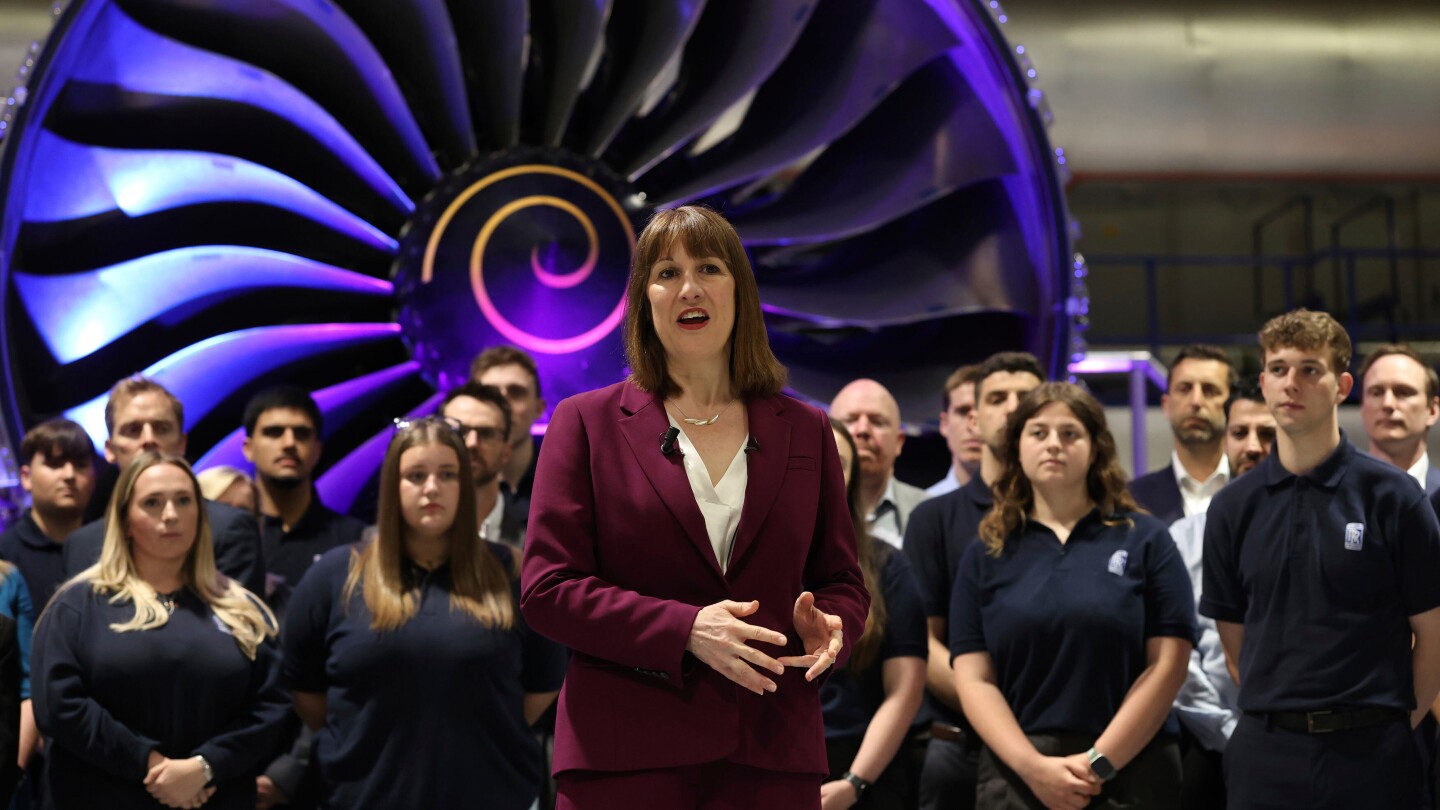
“We’re set to be the fastest growing economy in the G-7 in the first three months of this year and that’s incredibly welcome, but I know that there is more to do,” she said while on a visit to a Rolls-Royce factory in Derby, northern England.
Most economists think is likely to slow down in the second quarter of the year, partly because of the global uncertainty generated by U.S. President Donald Trump’s tariff policies.
Though most tariffs were paused for 90 days following the ensuing market turmoil, including the 10% baseline tariff applied to U.K. goods entering the U.S., the backdrop for the global economy remains highly uncertain, particularly if the U.S.-China trade war persists.
Some of that uncertainty, with regard to the British economy, lifted Thursday when both Trump and British Prime Minister Keir Starmer separately outlined details of a trade deal between the U.S. and the U.K. Though Trump kept the 10% baseline tariffs on U.K., he agreed to reduce the levies on British autos, steel and aluminum.
Sanjay Raja, chief U.K. economist at Deutsche Bank, said the growth uptick will likely be short-lived, especially during the second quarter when trade uncertainty will be at its peak.
“Exporters will likely see reduced demand as well from higher U.S. tariffs and weaker global demand,” he said.
Economists said growth will likely falter in the second quarter as new taxes on business were imposed in April. Also a raft of price rises during the month, including domestic energy and water bills, are expected to keep a lid on consumer demand.



Follow