



Katy WatsonAustralia correspondent, in Brisbane
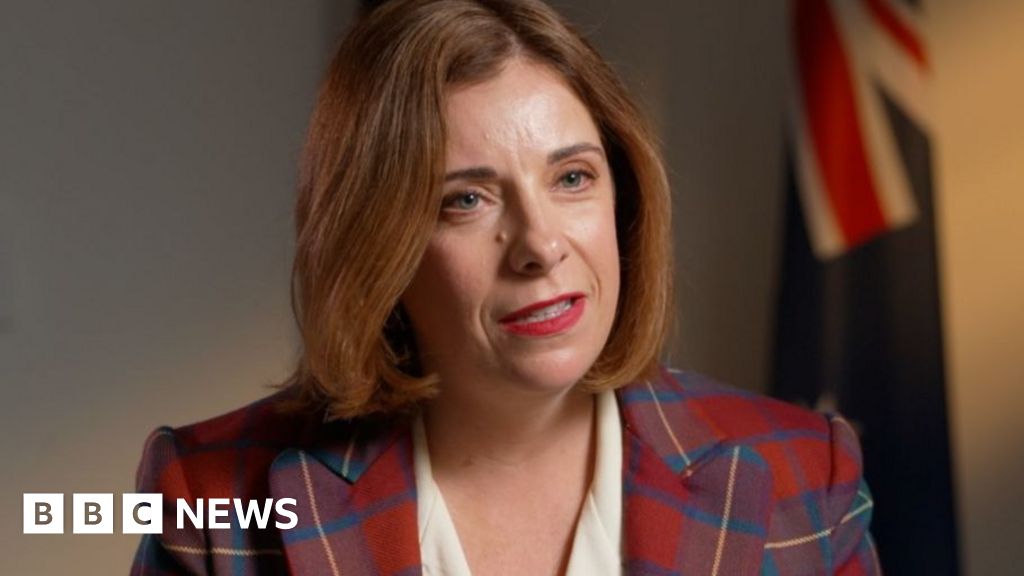
Australia’s Communications Minister Anika Wells has told the BBC she is not intimidated by technology companies who disagree with the country’s “world-leading” social media ban and is ready if Washington weighs in.
From December 10, ten social media firms including Snapchat, Meta, TikTok and YouTube will have to take what the government says are “reasonable steps” to stop children under 16 from having accounts on their platforms.
“We stand firm on the side of parents and not on the platforms,” Wells said.
Companies including Meta have said they agree more is needed to keep young people safe online, but don’t think a ban is the answer, with some experts raising similar concerns.
Speaking to the BBC in Brisbane, Wells said the tech companies have had plenty of time – 15 to 20 years – to improve their practices, in light of research indicating their platforms cause harm.
“I am not intimidated by big tech because I understand the moral imperative of what we’re doing,” she said, adding that speaking to parents whose children have suffered online kept her strong.
She said the policy is the envy of many countries around the world, rattling off a list of leaders she says have contacted her government for advice emulating it.
“We’re pleased to be the first, we’re proud to be the first, and we stand ready to help any other jurisdictions who seek to do these things.”
However, US President Donald Trump has previously said he would stand up to any country that attacked US tech companies. Australia’s e-Safety Commissioner – who has been charged with overseeing the social media ban – has also been called to testify in front of US Congress.
Wells said the White House and Congress have a right to weigh in, and to examine Australia’s actions, but she and her officials won’t be distracted.
“We are very much concerned with doing our duty to Australians and Australian taxpayers who pay us to look after good public policy.”
She also said tech companies are right to be worried about this legislation in Australia – to have fears it could be the first of many countries to restrict social media for teens.
“If you don’t have a safe operating model and if people are losing their lives as a result of your operating model, I think you can expect public policymakers to act.”
Australia’s legislation, while popular, has not been without criticism. Some experts have argued other measures – like greater restrictions, more parental controls and more robust digital education – would have worked better.
Though the law is being touted as a world-first in terms of its scope, some other jurisdictions have tried to implement similar policies with little success and critics worry about enforcement here too. Several states in the US, for example, have tried to implement similar legislation but have been pushed back by the courts. In Australia, two teenagers last week launched a High Court challenge, arguing the ban disregards the rights of children.
One of the biggest criticisms of the ban, however, has been the exclusion of online gaming, which parents and online safety researchers say also cause significant harm. The platform Roblox has been singled out by many as a concern.
“The safety e-Commissioner definitely has her eye on Roblox and you would have seen that Roblox even in recent weeks has had to take steps to make their platform safer,” said Wells.
Over the next two years, the government will review the ban. “This isn’t a cure, it’s a treatment plan, and treatment plans will always evolve as we can adapt and address harm and see what works and what doesn’t,” Wells said.
She has repeatedly sought to manage expectations, saying rollout of this policy might be messy, but the social change will ultimately be worthwhile.
“In the same way that people under 18 aren’t allowed to drink alcohol in Australia, there will be people today under 18 that drink alcohol… they may even be supported in doing that by their parents.
“That still doesn’t mean that we shouldn’t have a law that prevents under 18s from drinking alcohol in Australia because the public health evidence tells us that is a good and proper thing to do.”
Wells herself has three young children, and told the BBC policing screen-time and social media use is a challenge in her household too – one which largely falls to her husband given the travel demands of her job.
“So in a funny way, me being the lawmaker for this social media ban is my own contribution to helping those kinds of fights,” she said, adding that many parents have thanked her for her work on the policy.
“You can’t parent an algorithm and this is giving parents another weapon in their arsenal.”



Follow