



LONDON — In February Britain’s cash-strapped Labour government cut international development spending — and barely anyone made a noise.
The center-left party announced it would slice the country’s spending on aid down to only 0.3 percent of gross domestic income — from 0.5 percent — in order to fund a hike in defense spending.
MPs, aid experts and officials have told POLITICO that the scale of the cuts is on a par with — or even exceeding — those of both the previous center-right Conservative government or the United States under Donald Trump. This leaves Britain’s development arm, once globally envied as a vehicle for poverty alleviation, a shadow of its former self.
The move — prompted by U.S. demands to up its NATO spending, and mirroring the Trump administration’s move to gut its own USAID development budget — shocked Labour’s progressive MPs, supporters and backers in the aid sector.
But unlike attempted cuts to British welfare spending, the real-world backlash was muted, with the resignation of Britain’s development minister prompting little further dissent or change in policy. There was no mutiny in parliament, and only limited domestic and international condemnation outside of an aid sector torn between making their voices heard — and keeping in Whitehall’s good books over slices of the shrinking pie.
Some fear a return grab over the aid budget could still be on the cards — but that the government will find that there is little left to cut.
Gideon Rabinowitz, director of policy and advocacy at Bond, the U.K. network for NGOs, warned that, instead of “reversing the cuts by the previous Conservative government, Labour has compounded them, and lives will be lost as a result.”
“These cuts will further tarnish the U.K.’s reputation as it continues to be known as an unreliable global partner, breaking Labour’s manifesto commitment,” he warned. “The Conservatives started the fire, but instead of putting it out, this Labour government threw petrol on it.”
‘It was the perfect time to do it’
When Prime Minister Keir Starmer announced the cut to international aid — a bid to save over £6 billion by 2027 — Labour MPs, including those who worked in the sector before being elected, were notably silent.
The move followed a 2021 Conservative cut to aid spending — from 0.7 percent in the Tory brand-rebuilding David Cameron years down to 0.5 percent. At the time, Labour MPs had met that Tory cut with howls of outrage. This time it was different.
Some were genuinely shocked, while others feared retribution from a Downing Street that had flexed its muscles at MPs who rebelled on what they saw as points of conscience.
“No one was expecting it, so there was no opportunity to campaign around it,” said one Labour MP. “Literally none of us had any idea it was coming.”
The same MP noted that there are around 50 Labour MPs from the new 2024 intake who had some form of development background before coming into parliament. Yet they were put “completely under the cosh” by Downing Street and government whips. “It was the perfect time to do it,” the MP said.
A number of MPs who might have been vocal have since been made parliamentary private secretaries — the most junior government role. “They have basically gagged the people who would be most likely to be outspoken on it,” the MP above said. The department’s ministerial team is now more likely to be loyal to the Starmer project.
“I just felt hurt, and wounded. We were stunned. None of us saw it coming,” said one MP from the 2024 cohort, adding: “They priced in that backlash wouldn’t come.” But they added: “If we were culpable so were NGOs, too inward-looking and focused on peripheral issues.”
The lack of outcry from MPs would, however, seem to put them largely in step with the wider British public. Polling and focus groups from think tank More in Common suggest that despite the majority of voters thinking spending on international aid is the right thing to do in a variety of circumstances, only around 20 percent of the public think the budget was cut too much.
The second new-intake Labour MP quoted above said the policy was therefore an “easy thing to sell on the doorstep,” and “in my area, there’s not going to be shouting from the rooftops to spend more money on aid.”
Diminished and demoralized
The cuts to aid come at a time when Britain’s Foreign Office is undergoing a radical overhaul.
While the department describes its plans as “more agile,” staff, programs and entire areas of focus are all ripe for cuts to save money. The department is looking to make redundancies for around 25 percent of staff based in the U.K. MPs have voiced concern that development staff will be among the first to make the jump due to the government’s shift away from aid.
The department insists that no final decisions have been taken over the size and shape of the organization.
Major cuts are expected across work on education, conflict, and WASH (Water, Sanitation, and Hygiene.) The government’s Integrated Security Fund — which funds key counter-terror programs abroad — is also looking to scale back work abroad which does not have a clear link to Britain’s national security.
The British Council — a key soft-power organization viewed as helping combat Chinese and Russian reach across the world — told MPs it is in “real financial peril” and would be cutting its presence in 35 of the 97 countries it operates. The BBC’s World Service is seeing similar cuts to its global reach. The Independent Commission for Aid Impact (ICAI), the watchdog for aid spending, is also not safe from the ax as the government continues its bonfire of regulators.
The FCDO did not refute the expected pathway of cuts. Published breakdowns of spending allocations for the next three years are due to be published in the coming months, an official said.
A review of Britain’s development and diplomacy policies conducted by economist Minouche Shafik — who has since been moved into Downing Street — sits discarded in the department. The government refuses to publish its findings.
The second 2024 intake MP quoted earlier in the piece said that following the U.S. decisions on aid and foreign policy “there was an expectation that the U.K., as a responsible international partner, as a leader on a lot of this stuff, would fill the gap to some extent, and then take more of a leadership role on it, and we’ve done the opposite.”
Nothing left to cut
Aid spending was spared a repeat visit by Chancellor Rachel Reeves in her government-wide budget last month — but that hasn’t stopped MPs worrying about a second bite. While few MPs or those in the aid sector feel Britain will ever return to the lofty heights of its 0.7 percent commitment, they predict there will be harder resistance if the government comes back for more.
“I don’t think they’re going to try and do it again, as there’s no money left,” the second 2024 intake MP said. But they pointed out that a large portion of the remaining aid budget is spent on in-country costs such as accommodation for asylum seekers. Savings identified from the asylum budget would be sent back to the Treasury, rather than put back into the aid budget, they noted.
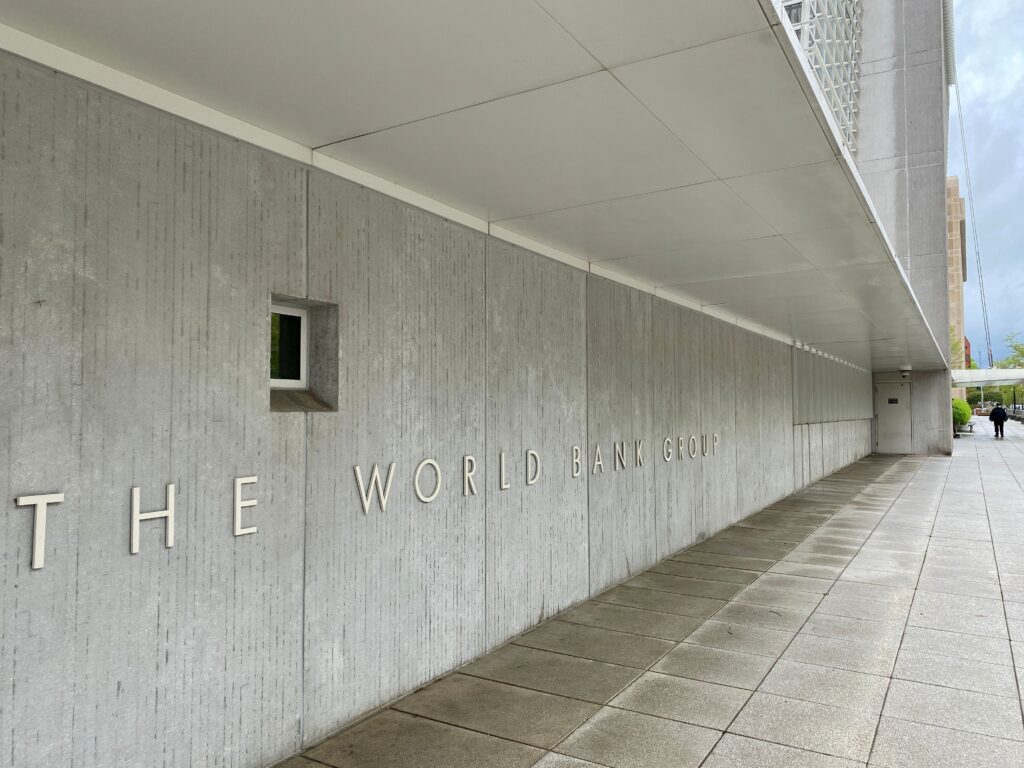
Remaining spending is largely mandatory contributions to organizations such as the World Bank or the United Nations and would, they warned, involve “getting rid of international agreements and chopping up longstanding influence at big international institutions that we are one of the leading people in.”
The United Nations is already facing its own funding crisis as it struggles to adjust to the global downturn in aid spending. British diplomat Tom Fletcher — who leads the UN’s humanitarian response — said earlier this year that the organization has been “forced into a triage of human survival,” adding: “The math is cruel, and the consequences are heartbreaking.”
The government still has a commitment to returning to 0.7 percent of GNI “as soon as the fiscal circumstances allow.” The tests for this ramp back up were set out four years ago. Britain must not be borrowing for day-to-day spending and underlying debt must be falling. The last two budgets have forecast that the government will not meet these tests in this parliament.
Farage circles
In the meantime, Labour’s opponents feel emboldened to go further.
Both the Conservatives and Reform UK have said that they would further cut the aid budget. The Tories have vowed to slice it down to 0.1 percent of GNI, while Nigel Farage’s Reform UK is eyeing fresh cuts of at least by £7-8 billion a year. A third 2024 Labour MP said that there was a degree of pressure among some colleagues to match the Conservatives’ 0.1 percent pledge.
Though no country has gone as far as Uganda’s Idi Amin in setting up a “save Britain fund” for its “former colonial masters,” Britain’s departure on international aid gives space for other countries wanting to step up to further their own foreign policy aims.
The space vacated by Britain and America has prompted warnings that China will step in, while countries newer to international development such as Gulf states could try and fill the void. Many of these nations are unlikely to ever fund the same projects as the U.K. and the U.S., forcing NGOs to look to alternate donors such as philanthropists to fund their work.
“There’ll be a big, big gap, and it won’t be completely filled,” the second new intake MP said.
An FCDO spokesperson said the department was undergoing “an unprecedented transformation,” and added: “We remain resolutely committed to international development and have been clear we must modernize our approach to development to reflect the changing global context. We will bring U.K. expertise and investment to where it is needed most, including global health solutions and humanitarian support.”



Follow