



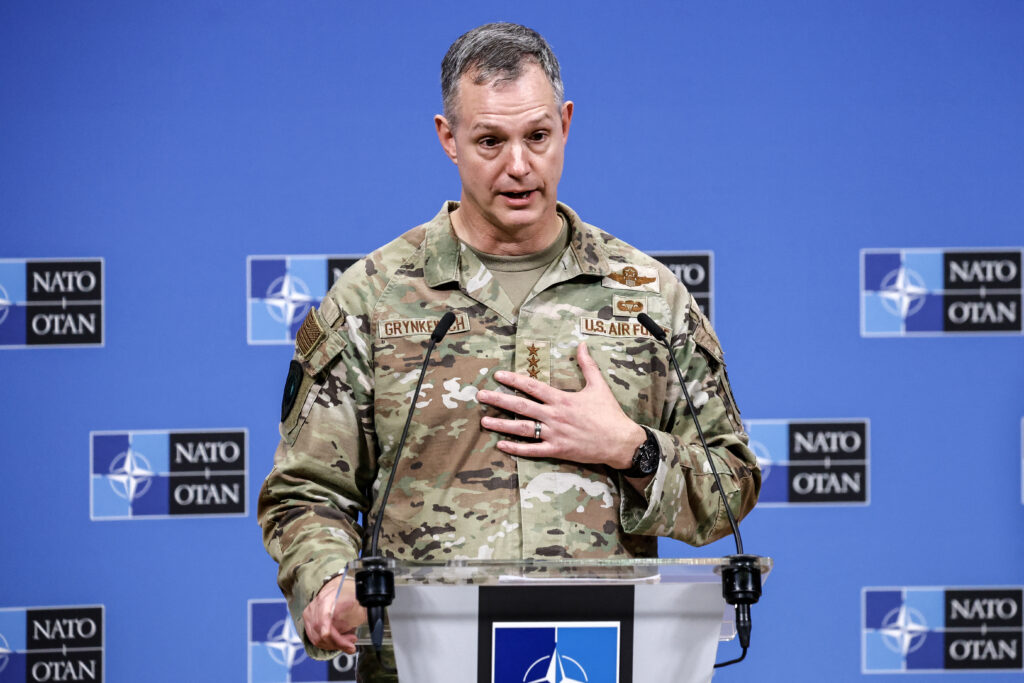
MONS, Belgium — Fewer American troops in Europe will not strain the continent’s defenses, said NATO’s Supreme Allied Commander Europe Gen. Alexus Grynkewich, brushing off unease around U.S. commitment to the alliance.
“I am confident in the capabilities” of Europe and Canada, the four-star U.S. general said at the alliance’s sprawling military operational command in southern Belgium. “We’re ready today to meet any crisis or contingency.”
Grynkewich’s comments come amid concerns around an anticipated pullback ofAmerican troops from Europe resulting from President Donald Trump’s upcoming defense strategy. The so-called posture review is widely expected to involve a redeployment of U.S. forces from Europe to the Indo-Pacific.
That shift has already begun, with the U.S. pulling 800 troops out of Romania last month — a decision Bucharest called on Washington to overturn.
The worry about a reduction in the 85,000 U.S. troops in Europe also reflects a broader debate around Washington’s commitment to the alliance under Trump.
Trump has praised the promise by NATO allies to ramp up defense spending to 5 percent of GDP by 2035 but previously questioned the alliance’s collective defense pledge, equivocated over a recent Russian drone incursion into Poland, and repeatedly pressured European allies to step up.
Earlier this year, Treasury Secretary Scott Bessent said: “Now [Russian President Vladimir] Putin has started making incursions into the NATO borders. The one thing I can tell you is the U.S. is not going to get involved with troops or any of that.”
European leaders are privately worried about a Trump-backed effort to end the war in Ukraine that some see as currently favoring Russia, with French President Emmanuel Macron reportedly warning in a leaked call that the U.S. could be about to “betray” Ukraine.
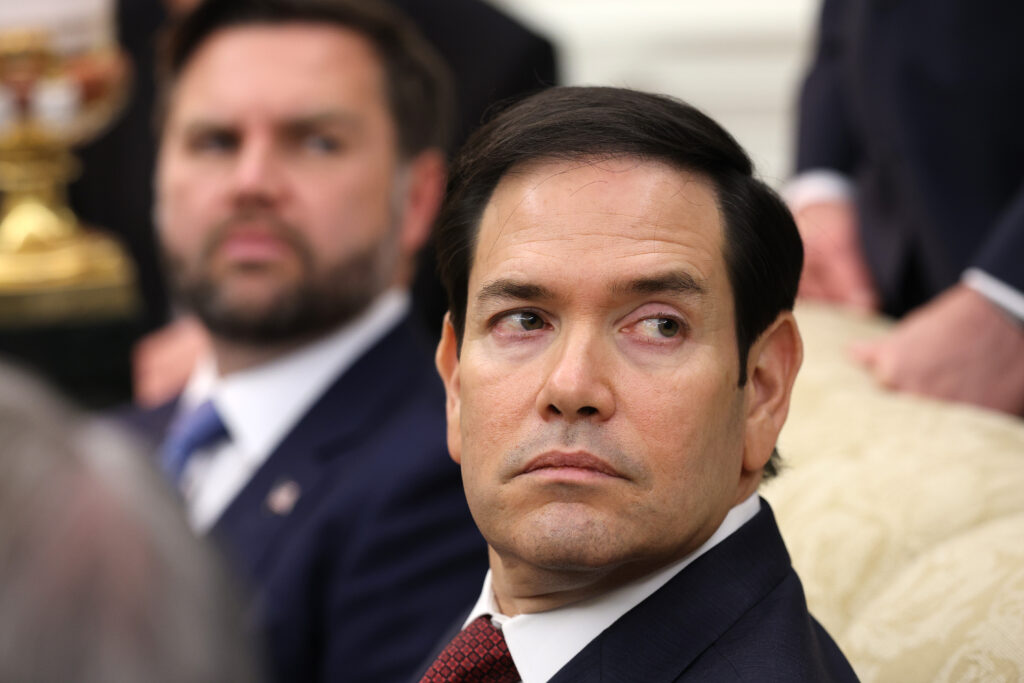
That tumultuous relationship was on display again this week after U.S. Secretary of State Marco Rubio skipped a meeting of NATO foreign ministers — something that has almost never happened since NATO’s founding in 1949. Meanwhile, his deputy berated allies in a closed-door meeting for prioritizing their own arms industries instead of continuing to spend on U.S. kit.
Almost two-thirds of European defense spending goes to the U.S., but the EU is trying to change that with programs aimed at boosting local production.
In private some European allies are worried about the U.S., but in public they insist that NATO is still a force to be reckoned with.
“All the processes of NATO are functioning flawlessly,” Polish Deputy Defense Minister Paweł Zalewski told POLITICO. “In a practical sense, the Americans are fulfilling their obligations very well.”
New normal
Grynkewich insisted that any political tensions related to peace talks have had “no impact … in terms of the ability to accomplish our mission from a NATO perspective.” Vows by the allies to ramp up their defense spending, he added, means NATO will “be more ready tomorrow and we’ll be more ready the day after that” to stand up to Russia and respond to any further troop withdrawals.
Last month the U.S. ambassador to NATO, Matthew Whitaker, raised eyebrows when he said he “look[ed] forward to the day when Germany … says that ‘we’re ready to take over the Supreme Allied Commander position,’” in a yet another example of Washington’s push for European allies to do more while the U.S. hints it could step back.
The Trump administration reportedly mulled not appointing an American general as Supreme Allied Commander Europe earlier this year, before nominating Grynkewich. The SACEUR has always been a U.S. officer as the post commands all allied troops in Europe and oversees the American nuclear deterrent on the continent.
“There’s always rebalancing amongst the positions that different nations fill across the alliance,” Grynkewich said, adding that “it’s natural that some of that will happen … over the course of the next several months [and] several years.”
“As far as who holds the SACEUR position,” he told reporters, “I’d rather just leave it to politicians to make those judgments.”
Europe’s disquiet over the reliability of its alliance with the U.S. comes as the full-scale war in Ukraine nears its fourth year, intelligence assessments warn of Russia being ready for an attack on a NATO country by the end of the decade, and Russian-linked hybrid attacks ramp up across the continent.
Putin said this week he was “ready” for war with Europe.
Grynkewich said he had “concern” that Russia may test NATO’s collective defense in the “near term” — as well as in the “mid term and in clearly [the] long term.”
Russia’s hybrid attacks are a “real issue,” the air force pilot said, and echoed a call by several European capitals to respond more forcefully to hybrid activities.
“We also do think about being proactive,” he said, declining to give further details. “If Russia is attempting to provide dilemmas to us, then maybe there are ways that we could provide dilemmas to them.”
Jan Cienski contributed reporting.



Follow