



Winter vacation can’t start soon enough for Pedro Sánchez.
Spain’s governing Socialist Party is being battered by a deluge of sexual harassment scandals that is prompting the resignation or dismissal of mayors, regional leaders and even officials employed in the prime minister’s palace.
Within the party, there’s open recognition that its self-proclaimed status as the country’s premier progressive political entity is being severely undermined. The scandals are also provoking major fractures within Sánchez’s coalition government and parliamentary alliance, with even his most reliable collaborators demanding he make major changes — or call snap elections.
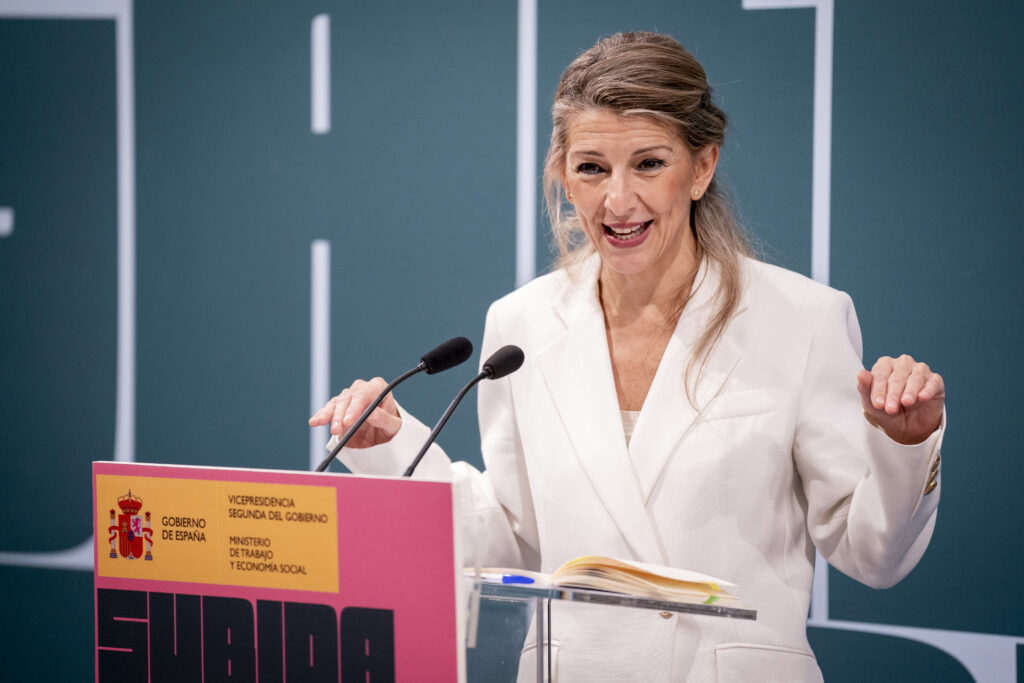
Deputy Prime Minister Yolanda Díaz, whose far-left Sumar party is the junior partner in Sánchez’s coalition government, said on Friday that a “profound Cabinet reshuffle” was needed to make a clean break with the rot. Aitor Esteban, president of the Basque Nationalist Party — one of the government’s most reliable parliamentary partners — said if the Socialists fail to halt the “daily hemorrhage of news stories,” snap elections must be held.
Spain’s Socialists are no strangers to scandal, having spent the past two years dealing with endless headline-grabbing revelations detailing the alleged embezzlement of public funds by former Transport Minister José Luis Ábalos and party boss Santos Cerdán — both of whom maintain their innocence. Sánchez has so far weathered the storms by insisting the corruption cases are limited to just a few bad apples, and arguing that only his government can keep the country on a socially liberal track.
But the scale of the sexual harassment scandals revealed in recent days — which have coincided with anti-corruption raids in government buildings — represent an unprecedented challenge for the prime minister. There are serious doubts that Sánchez’s “stay-the-course” playbook will suffice to see his government through this latest political earthquake.
Growing skepticism
When Sánchez came to power in 2018 he boasted that he led “the most feminist government in history,” with 11 of the country’s 17 ministries led by women. Over the past seven years his successive administrations have passed legislation to ensure gender balance in key sectors, fight gender-based violence and promote gender equality abroad.
But the actions of some of Sa´nchez’s fellow Socialists are fueling growing skepticism about whether the governing party truly respects women. Last summer the prime minister apologized to supporters and expressed his “shame” after the release of wiretaps on which the Spanish police alleged former Transport Minister Ábalos could be heard describing his trysts with female sex workers. Ábalos, for his part, claims the recordings have been manipulated and the voice they capture is not his.
Weeks later, sexual harassment complaints against another of the prime minister’s long-time collaborators, Francisco Salazar, forced his resignation on the very day he was meant to assume a new role as one of the party’s top leaders. That scandal resurfaced this month after Spanish media revealed the party had slow-walked its investigation into the alleged abuses committed by Salazar, who maintains his innocence.
Last week Sánchez said he took “personal responsibility” for the botched investigation and apologized for not reaching out to Salazar’s victims. He also ordered the dismissal of Antonio Hernández, an official employed in the prime minister’s palace whom Salazar’s victims had singled out as the harasser’s alleged “accomplice.” Hernández denies the accusation.
Sánchez’s attempts to contain the situation don’t appear to have quelled indignation over the party’s failure to address Salazar’s alleged abuses, and the frustration has resulted in a version of the #MeToo movement within the Socialists’ ranks.
Over recent days, the party’s boss in Torremolinos has been suspended from his post after being denounced for sexual harassment by an alderman, who also accused the Socialists of failing to act when she first reported the alleged abuses last summer. Belalcázar’s mayor has also stepped down following the publication of sexually explicit messages to a municipal employee, and the launch of an investigation for alleged harassment has prompted the Socialists’ deputy secretary in the province of Valencia to leave the party.
The three officials deny the accusations against them.
So, too, does José Tomé, who insists the multiple sexual harassment complaints that resulted in his resignation as president of the Provincial Council of Lugo this week are completely unfounded. The admission of regional leader José Ramón Gómez Besteiro that he had been aware of the allegations against Tomé for months prompted the party’s regional equality czar to step down in disgust, and are generating doubts regarding the Socialists’ political future in the Galicia.
Troubled times
The barrage of sexual harassment complaints are a major problem for Sánchez.
Women are a key segment of his party’s voter base: Female voters tend to participate in elections to a greater extent than men, and have historically mobilized in favor of the Socialists. But surveys by the country’s national polling institute reveal that women are becoming increasingly disenchanted with the party. In a poll carried out shortly after the Ábalos recordings were released, support for the Socialists among female voters dropped from 26.2 percent to 19.4 percent.
Pilar Bernabé, the party’s equality secretary, admitted on Friday that the wave of harassment complaints marked a “before and after” moment for the Socialists, who now had to prove that they have zero tolerance for abuse. “Sexism is incompatible with Socialism,” she added.
The challenges to the party’s bona fides are less than welcome at a moment when it faces multiple corruption investigations. In addition to the ongoing probes into Ábalos and Cerdán — both of whom were ordered jailed without bond last month — this week former Socialist Party member Leire Díez along with Vicente Fernández, the former head of the state-owned agency charged with managing Spain’s business holdings, were arrested for alleged embezzlement and influence peddling. At their respective bail hearings, Díez invoked her right to remain silent, while Fernández denied any wrongdoing.
Days later, the elite anti-corruption unit of Spain’s Civil Guard raided several agencies managed by the Ministry of Finance and the Ministry of Ecological Transition and the Demographic Challenge, as well as the headquarters of the Spanish Postal Service, as part of a related investigation into the alleged rigging of public contracts.
Can Sánchez carry on?
During a campaign event headlined by Sa´nchez on Sunday, party members urged the prime minister to act. “Take a firm hand to the harassers, the womanizers, the chauvinists!” said Irene Pozas, head of the Socialist Youth in the province of Cáceres. “Don’t hold back, Pedro: The women of the Socialist Party must not have any cause for regret!”
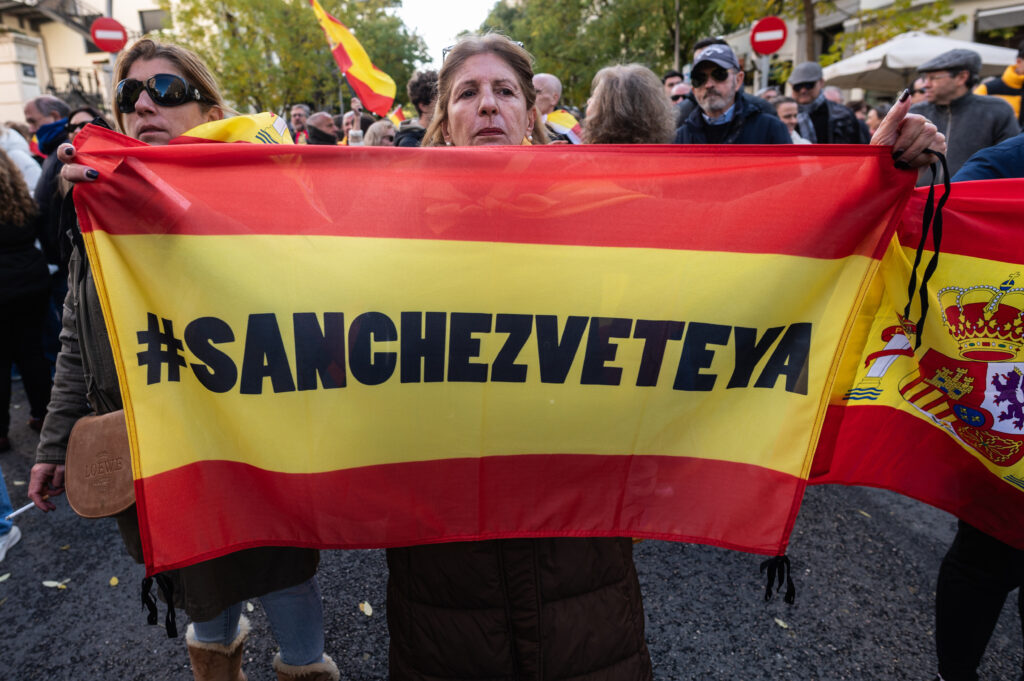
While admitting shortcomings in the party’s internal mechanisms for handling complaints, Sánchez defended the Socialists’ determination to “act decisively and transparently” to tackle sexism and corruption. The prime minister also defiantly asserted his will to carry on, telling supporters that “governing means facing the music and staying strong through thick and thin.”
Sánchez may be hoping for relief from the scandals during the upcoming holiday break in Spain, but it’s unclear if his party, and the weak coalition government it leads, will be able to recover. Although the prime minister insists he intends to govern until the current legislative term ends in 2027, his inability to pass a fresh budget and wider difficulties in passing legislation jeopardize that goal.
The Socialists’ parliamentary allies are reluctant to see Sánchez fall because they know snap elections will almost certainly produce a right-wing government influenced by the far-right Vox party. But they are also wary of being associated misogyny and fraud — especially if voters may soon be heading to the polls.
“Stopping the far right and the extreme right is always a non-negotiable duty, but it is not achieved merely by saying it, but by demonstrating that we are better,” tweeted the president of the Republican Left of Catalonia, Oriol Junqueras. “Those who abuse and become corrupt cannot regenerate democracy.”



Follow