



BRUSSELS ― A summit of EU leaders Thursday will test whether the bloc will hold together — or whether Donald Trump can divide it.
A high-stakes disagreement between European governments on using Russian assets frozen since Vladimir Putin’s invasion of Ukraine to fund the county’s rebuilding lays bare a deeper division across the continent over how to deal with a new world order and unprecedented pressure from the U.S.
“They want to make us weak,” said a senior EU official with knowledge of the transatlantic relationship and preparations for the summit.
The European Council this week must do two things. Leaders need tangible results, particularly on financing Ukraine. But mainstream governments also say they need to stick up for the EU when the White House is trying to influence policy, and more European leaders than ever ― from Hungary’s Viktor Orbán to Czechia’s Andrej Babiš ― reject Brussels’ accepted wisdom.
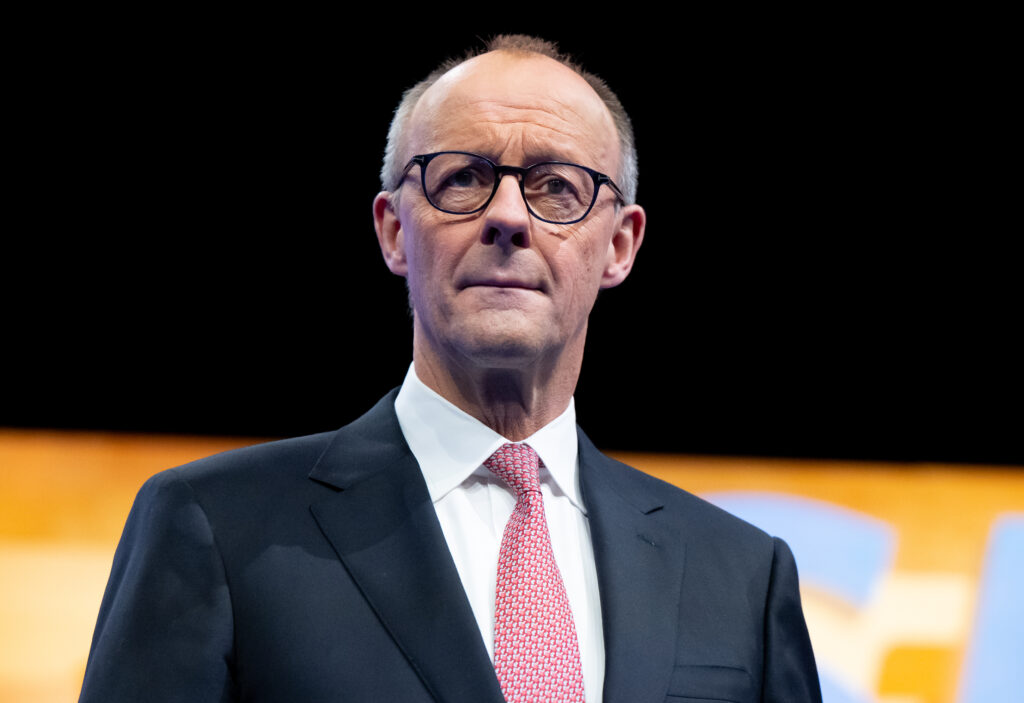
The EU would be “severely damaged for years” if it fails to do a deal on funding Ukraine, said German Chancellor Friedrich Merz in a German TV interview. “And we will show the world that, at such a crucial moment in our history, we are incapable of standing together and acting to defend our own political order on this European continent.”
Trump administration officials have been pushing European governments ― those they consider friendliest at least ― to reject the plan to use €210 billion in Russian assets to fund Ukraine, four EU officials involved with the discussions told POLITICO.
When EU leaders met in Brussels in October they failed to reach a deal on the immobilized cash because Belgium opposed it. Two months later, it’s clear the EU’s problem isn’t really Belgium, it’s Trump.
The European Commission and the most influential capitals have been negotiating with each other over that period, trying to get Belgian Prime Minister Bart De Wever ― whose support is crucial because his country is home to most of the Russian assets frozen in Europe ― onside. Discussions have become more intense over the past week as the EU has sought to give Belgium guarantees.
But the odds of getting a deal became worse rather than better even over the course of Tuesday, said the senior official, who was granted anonymity to speak freely. “I wanted to cry,” they said about the mood of a meeting in Brussels of EU affairs ministers who were preparing for the summit.
‘No longer leader of the free world’
Ukraine desperately needs money as it faces a budget shortfall of €71.7 billion next year. If the cash doesn’t start flowing by April, it will have to cut public spending, which could hit morale and its ability to continue defending itself, nearly four years since Russia’s full-scale invasion.
The Belgian government says its opposition to the use of the Russian assets to fund the loan is down to the need to protect its own taxpayers from being on the hook in case the money ever needs to be repaid.
For other European countries, it’s about wider geopolitics.
The American influence campaign that has seen Trump administration officials bypassing Brussels and backchanneling with capitals has led to Italy, Bulgaria, Malta and Czechia joining the group of dissenting countries.
Failure would be a catastrophe for the EU’s standing in the world, European officials said, given the message it would send. Not only to the pugnacious Trump administration — which, in its National Security Strategy released earlier this month said it would back Euroskeptic forces — but also to Russian President Vladimir Putin, who openly questions the sovereignty of former Soviet states.
Manfred Weber, the leader of the center-right European People’s Party, the EU’s largest political family, gave a striking assessment Tuesday about the deteriorating state of relations.
“The U.S. is obviously no longer leader of the free world,” he told reporters in Strasbourg, where the European Parliament is in session this week. The Trump administration is “distancing themselves from us.”
A broke Ukraine would have a weaker hand to play in peace talks, undermining its chances of getting the lasting peace it needs to rebuild from the devastation of four years of all-out war.
“I don’t even have the right word,” Estonian Prime Minister Kristen Michal told POLITICO when asked what would happen if the EU fails to get a loan deal. Kyiv needs to know “that Europe is backing up Ukraine no matter what. That they don’t have to accept the bad deal.”
According to a leaked draft peace plan negotiated by the White House and the Kremlin, Washington wants to use part of Russia’s frozen assets to fund U.S.-led reconstruction efforts. Releasing the frozen assets to Ukraine as part of a reparation loan would allow Kyiv to decide where to direct the money, with France pushing for a Europe-first approach to arms spending.
Trump is also exerting pressure on Ukraine’s President Volodymyr Zelenskyy to cede swathes of heavily fortified and strategically important territory in the Donbas to Russia — land the Kremlin does not currently control.
The White House brushed off Brussels’ accusations of meddling.
“Spitballing from anonymous sources who were not present for these discussions should not be taken seriously,” said White House deputy press secretary Anna Kelly. “The United States’ only objective is bringing peace to this conflict … Both the Ukrainians and the Russians have clearly stated positions regarding the frozen assets, and our only job is to facilitate a back-and-forth that can ultimately result in a deal.
The flagging negotiations on Tuesday saw EU officials and leaders increasingly raise the nuclear option: ramming the reparations loan through with qualified majority voting ― in other words, ignoring some countries’ objections and plowing ahead anyway. But some officials said this would rip open an already fractured bloc and likely plunge it into into real crisis.
Another alternative is for some countries simply to offer limited bilateral loans.
“It is important to have Belgium in” on the deal, “but let’s see,” Latvian Prime Minister Evika Siliņa told POLITICO on Tuesday. “If this [a qualified majority vote] will be the only [option], why not?”
“It’s important for the EU to show its strength as well as ability to make a strong decision because we have been working for quite a long time already and we promised Ukraine that we will help them with financial resources — and frozen assets is really a good source,” she said.
Siliņa added pointedly: “For Belgium, I think I don’t wish them to become second Hungary.” POLITICO reported last week that diplomats had warned that Belgium risked becoming alienated in EU decision-making as a result of its recalcitrance on the assets deal.
For Ukraine, the reparation loan funded by Russian assets would be the best solution to its financial black hole — IMF support for the country hinges on the plan.
But Zelenskyy, in a WhatsApp chat with reporters on Monday, was pragmatic. He doesn’t care how Ukraine gets the money, as long as it gets it.
“Of course, we would really like to use the [Russian assets] to restore our state,” as “it is fair that the Russians should pay for the destruction.” But, he added, “a reparations loan or any format based on the amount of Russia’s frozen assets — between $150 and $200–210 billion in total — is indeed a game changer.”
With talks between European officials failing to get agreement, leaders in person will have the unusual task at the summit on Thursday of having to work out a solution themselves.
Victor Jack reported from Helsinki. Gabriel Gavin and Nick Vinocur in Brussels, Veronika Melkozerova in Kyiv, Max Griera in Strasbourg and Daniella Cheslow in Washington contributed to this article.



Follow