



LONDON — British students will once again be able to take part in the EU’s Erasmus+ exchange scheme from January 2027 — following a six-year hiatus due to Brexit.
U.K. ministers say they have secured a 30 percent discount on payments to re-enter the program that strikes “a fair balance between our contribution and the benefits” it offers.
The move is one of the first tangible changes out of Keir Starmer’s EU “reset,” which is designed to smooth the harder edges off Boris Johnson’s Brexit settlement while staying outside the bloc’s orbit.
In an announcement on Wednesday Brussels and London also confirmed they were formally beginning negotiations on U.K. re-entry into the EU’s internal market for electricity.
Both sides hope the move, which was called for by industry in both sides of the Channel, will cut energy bills while also making it easier to invest in North Sea green energy projects — which have been plagued by Brexit complications.
They also pledged to finish ongoing talks on linking the U.K. and EU carbon trading systems, as well as a new food and drink (SPS) deal, by the time they meet for an EU-U.K. summit in 2026.
The planned meeting, which will take place in Brussels, does not yet have a date but is expected around the same time as this year’s May gathering in London.
The announcements give more forward momentum to the “reset,” which faltered earlier this month after failing to reach an agreement on British membership of an EU defense industry financing program, SAFE. The two sides could not agree on the appropriate level of U.K. financial contribution.
The pledge to finalize carbon trading (ETS) linkage next year is significant because it will help British businesses avoid a new EU carbon border tax — CBAM — which starts from Jan. 1 2026.
While the tax, which charges firms for the greenhouse gas emissions in their products, begins on Jan. 1, payments are not due until 2027, by which time the U.K. is expected to be exempt.
But it is not yet clear whether British firms will have to make back payments on previous imports once the deal is secured, and there is no sign of any deal to bridge the gap.
Widening horizons
EU Relations Minister Nick Thomas-Symonds, who negotiated the agreement, said the move was “a huge win for our young people” and would break down barriers and widen horizons so that “everyone, from every background, has the opportunity to study and train abroad.”
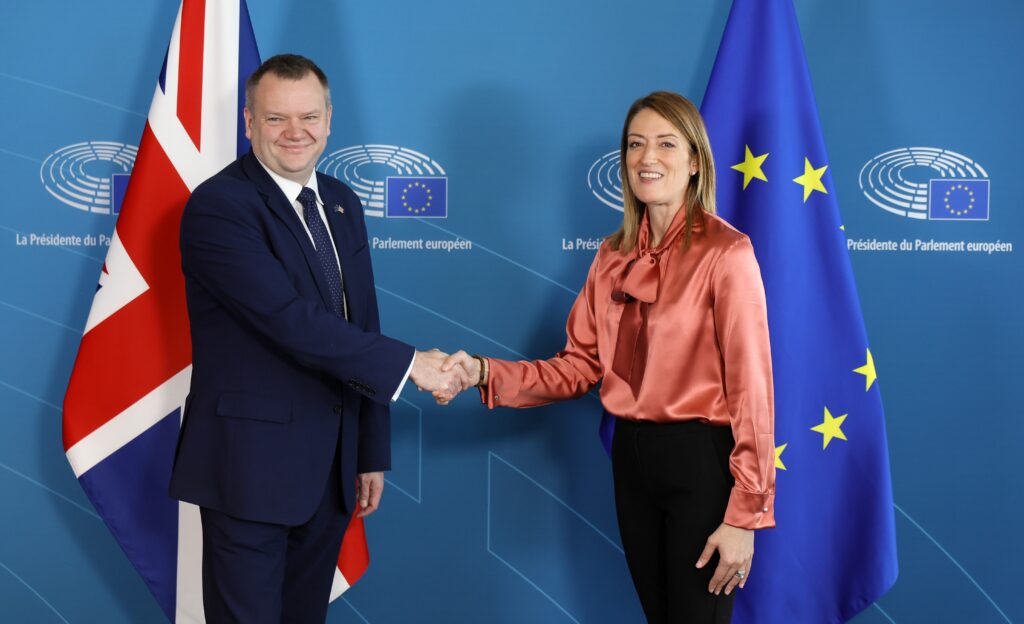
“This is about more than just travel: it’s about future skills, academic success, and giving the next generation access to the best possible opportunities,” he said.
“Today’s agreements prove that our new partnership with the EU is working. We have focused on the public’s priorities and secured a deal that puts opportunity first.”
The expected cost of the U.K.’s membership of the Erasmus+ program in 2027 will be £570 million.
Skills Minister Jacqui Smith said Erasmus+ membership is “about breaking down barriers to opportunity, giving learners the chance to build skills, confidence and international experience that employers value.”
Liberal Democrat Universities Spokesperson Ian Sollom also welcomed U.K. re-entry into the exchange scheme but said it should be a “first step” in a closer relationship with the EU.
“This is a moment of real opportunity and a clear step towards repairing the disastrous Conservative Brexit deal,” he said.
“However while this is a welcome breakthrough, it must be viewed as a crucial first step on a clear roadmap to a closer relationship with Europe. Starting with negotiating a bespoke UK-EU customs union, and committing to a youth mobility scheme for benefit of the next generation.”



Follow