



The five Jamaican women I spoke to all shared this sentiment. The silence on the island was absolute. The darkness that swallowed whole communities without electricity was disorienting and, for many, frightening.
In the storm’s wake, roofs were torn apart and scattered haphazardly across once-green yards, and roads collapsed beneath floodwater. Communities were left isolated because uprooted trees, cellphone towers and debris made entire roads impassable. Mobile networks went down, clean water became scarce in some areas, and daily life came to a halt. Once-busy marketplaces like the one in Black River, St Elizabeth — alive with vendors selling produce, loud music and the constant movement of taxis on tight roads — were reduced to rubble. In some neighbourhoods, a heavy sour smell lingered in the air, caused by stagnant water that had flooded homes and streets.
And then, as government systems stalled, these five women stepped up, lending relief in creative and impactful ways.
They didn’t wait for instructions or official mandates. They moved with what they had: cars, access to warehouses, WhatsApp groups, family businesses and borrowed trucks. Some were on the island, navigating roads that no longer existed. Others were thousands of miles away, watching the destruction unfold from screens, paralysed by distance.
After the storm hit, Mina packed her Starlink — a portable satellite internet system that provides connectivity through low-Earth-orbit satellites — and hit the road to reach severely damaged communities in the red zone. After the hurricane, Starlink has become essential across the island, allowing residents, organisers and aid workers to stay connected when traditional networks fail.
“I cannot build 10,000 houses, but maybe I can give one mother a bit of relief. One child in London who hasn’t heard from her parents or grandparents,” Robertson explains. She has helped residents make phone calls to their family and friends on and off the island, offering a simple but vital message: I’m alive.
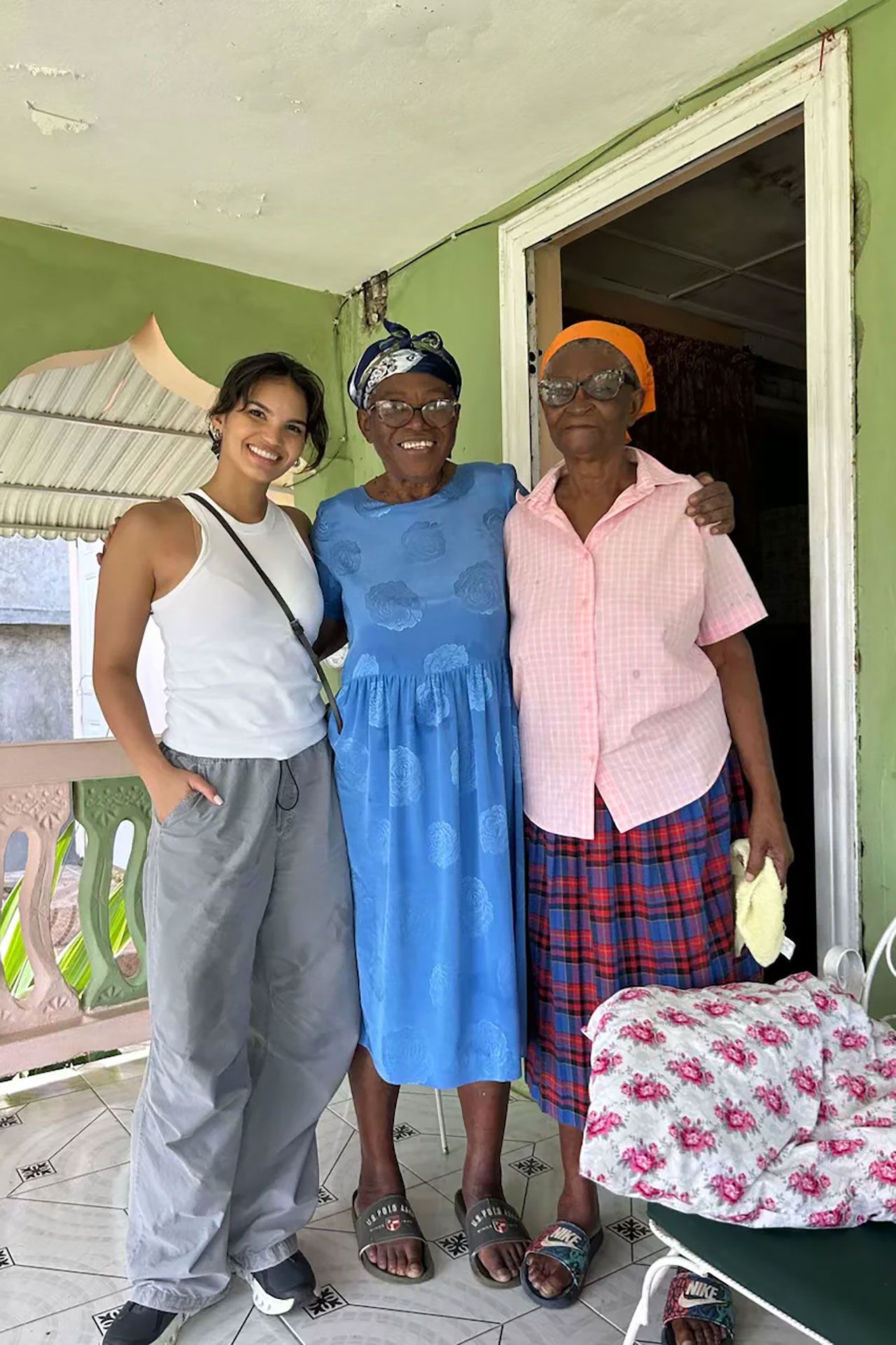
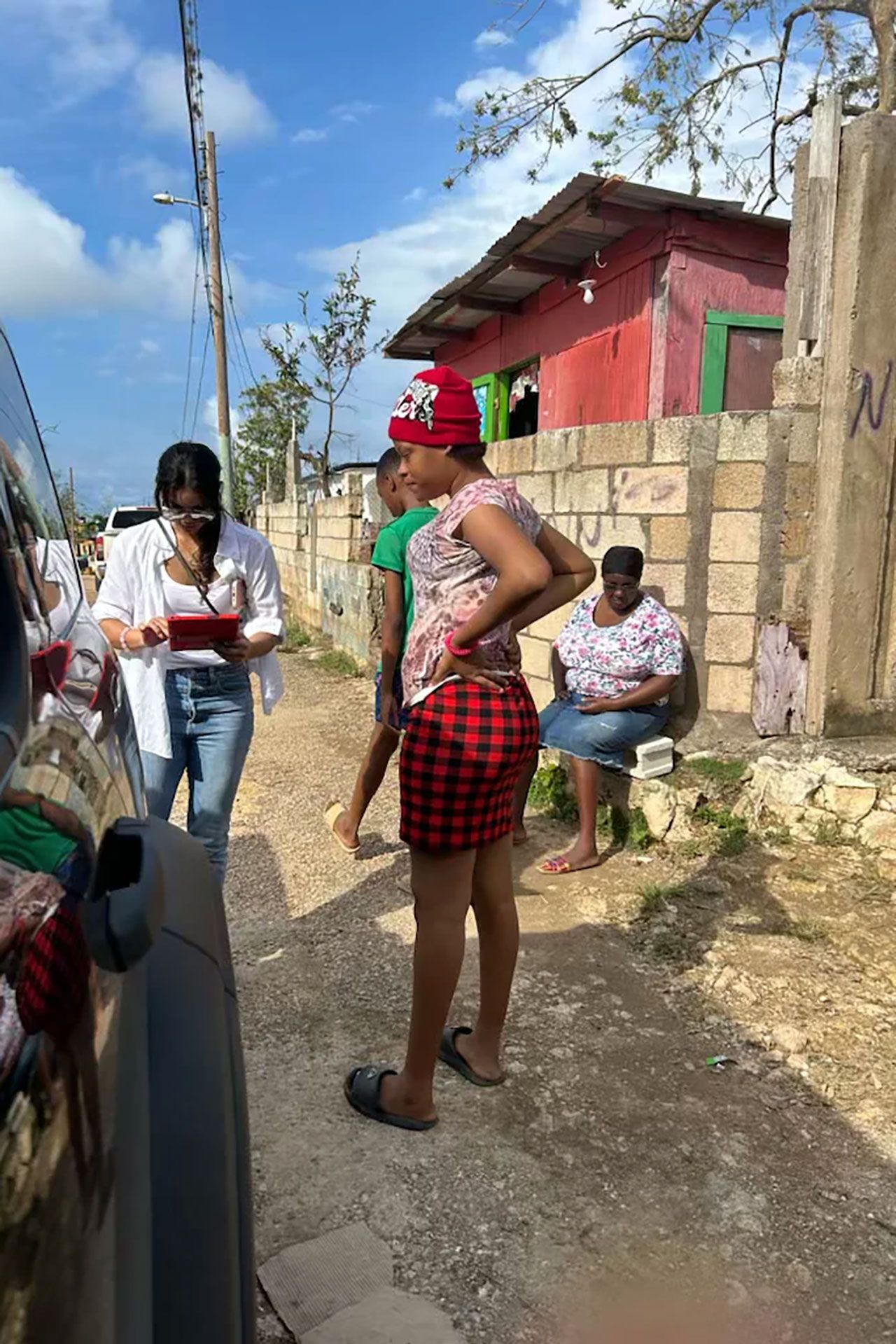
Mina Robertson/ @minahaveli
Another no-brainer for Robertson was to check on Thickets, a community located in the parish of St. Ann. During the pandemic she had launched a bracelet-making initiative in the community to help generate income. She provided materials, ran training sessions, and sold the pieces through her physical Haveli store. The proceeds were then reinvested directly back into the community.
When former Miss Jamaica Universe and entrepreneur April Jackson, 36, watched the aftermath of Hurricane Melissa unfold from thousands of miles away in London, the scale of the damage was overwhelming. “I couldn’t believe what I was seeing,” she says. “I don’t think for the first two weeks there was a day I didn’t cry.”
She jumped into action, offering shipping discounts and aid through her family’s company, W.I Freight, one of the largest shippers to the Caribbean. Her family’s business was quickly overwhelmed by demand, particularly from people who had never shipped anything before. Instead of turning them away, they supported them through the unfamiliar process.
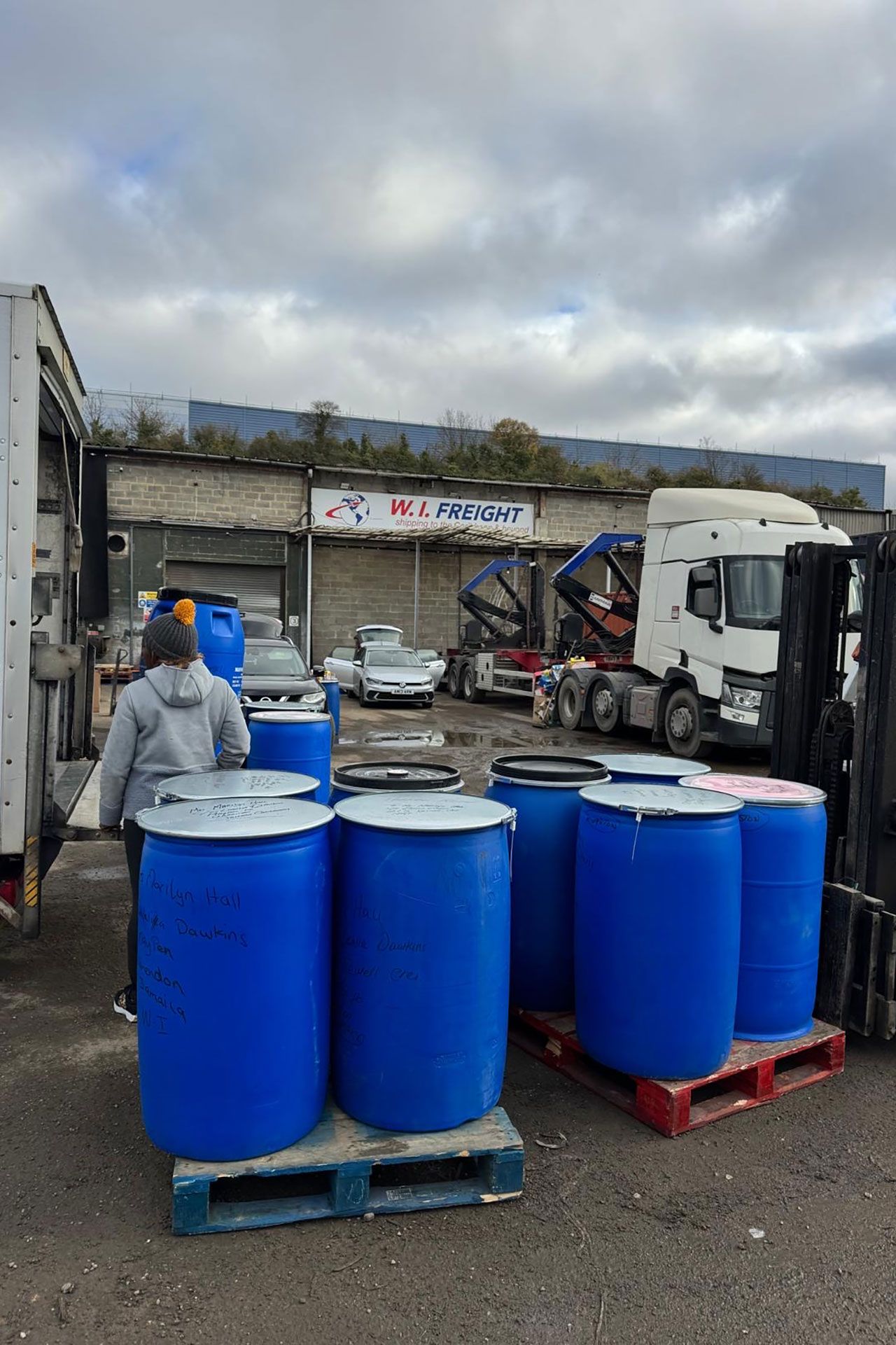
Courtesy of April Jackson



Follow