



It’s here you’ll find rocks that are over one million years old, caves created from sand blasts over the years and mica that twinkles beautifully in the golden sunlight. Yet despite the vast, dry ecosystem, on the ground it’s very much alive. Our nine-room camp overlooked a valley where baboons played beside my room and sand bees hummed by the terrace.
This part of the world is also home to some of the last remaining desert adapted lions, immortalised in the acclaimed Vanishing Kings documentary (which we were privileged to be able to watch the third installation of during our trip). Having this context of the lions’ history and upbringing meant that it felt all the more special when we did finally find Alpha and Obi lounging in the shade on an evening safari drive.
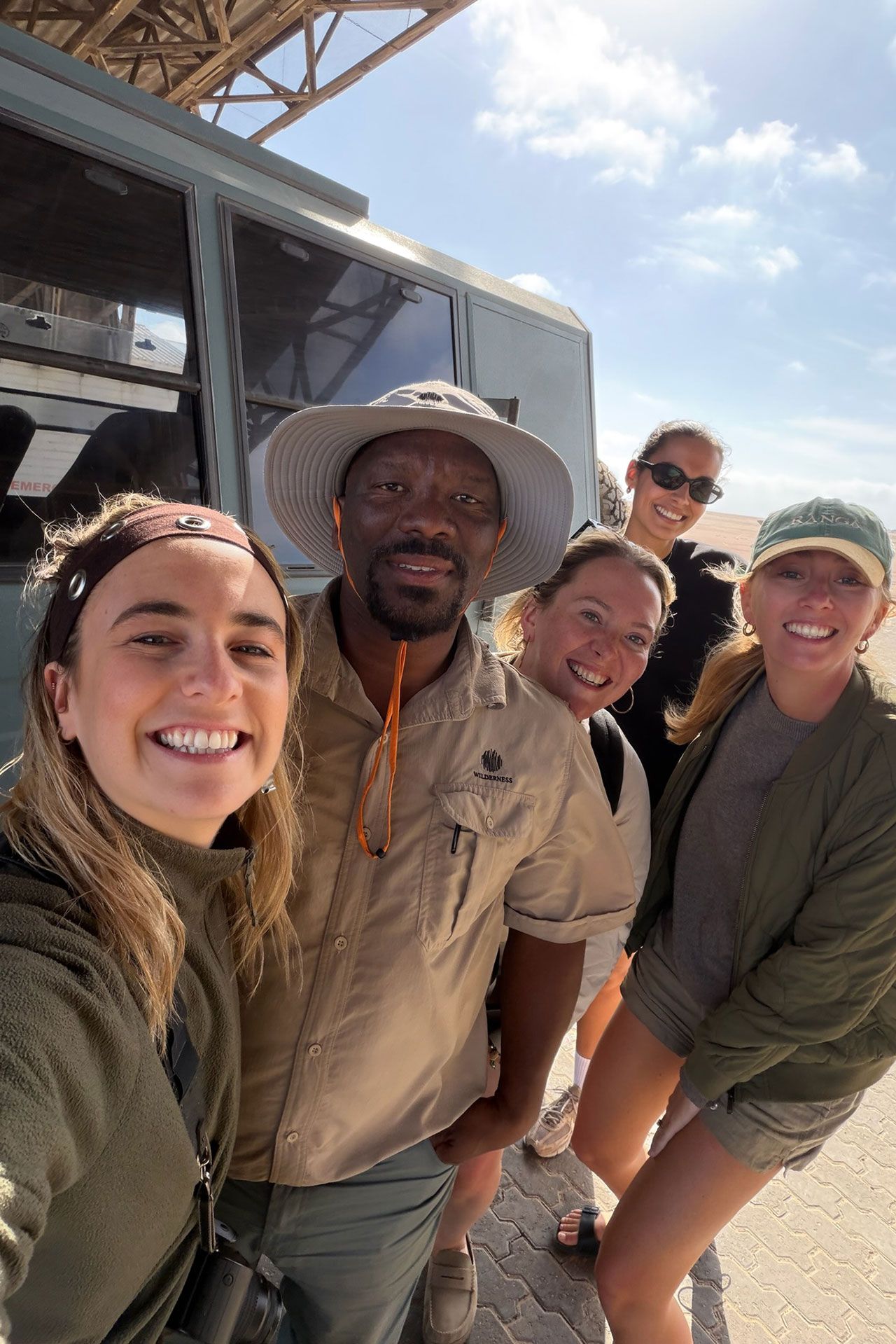
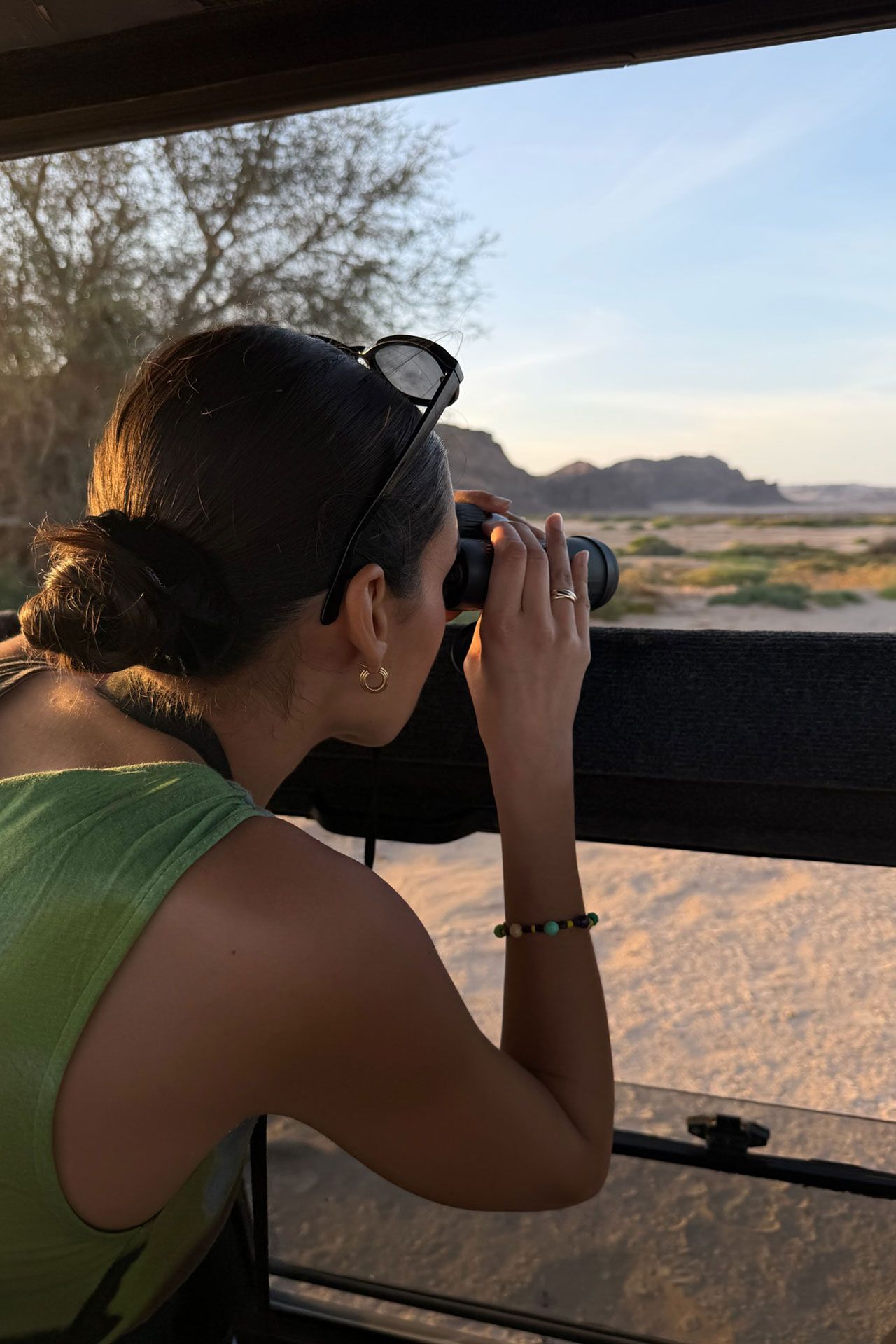

Here, projects are centred on conservation and research of desert lions, elephants, hyenas and giraffes, with us having the opportunity to learn more about the often misunderstood brown hyena through the work of the ongoing Brown Hyena Research Project. Animals living in Hoanib Skeleton Coast have to be in their prime to survive amid such a harsh environment, so only the most adaptable endure, being perfectly attuned to the extremes of the desert.
Yet, as we learnt on a trip to Skeleton Coast, you need only drive out of camp a few hours to see the landscapes completely change again. From the window of our 4×4, I watched in awe as the scenery transformed: rocky mountains and dry riverbeds giving way to sweeping floodplains, then rising into immense dunes, until, at last, we reached the stark coast. The Skeleton Coast, to be specific.
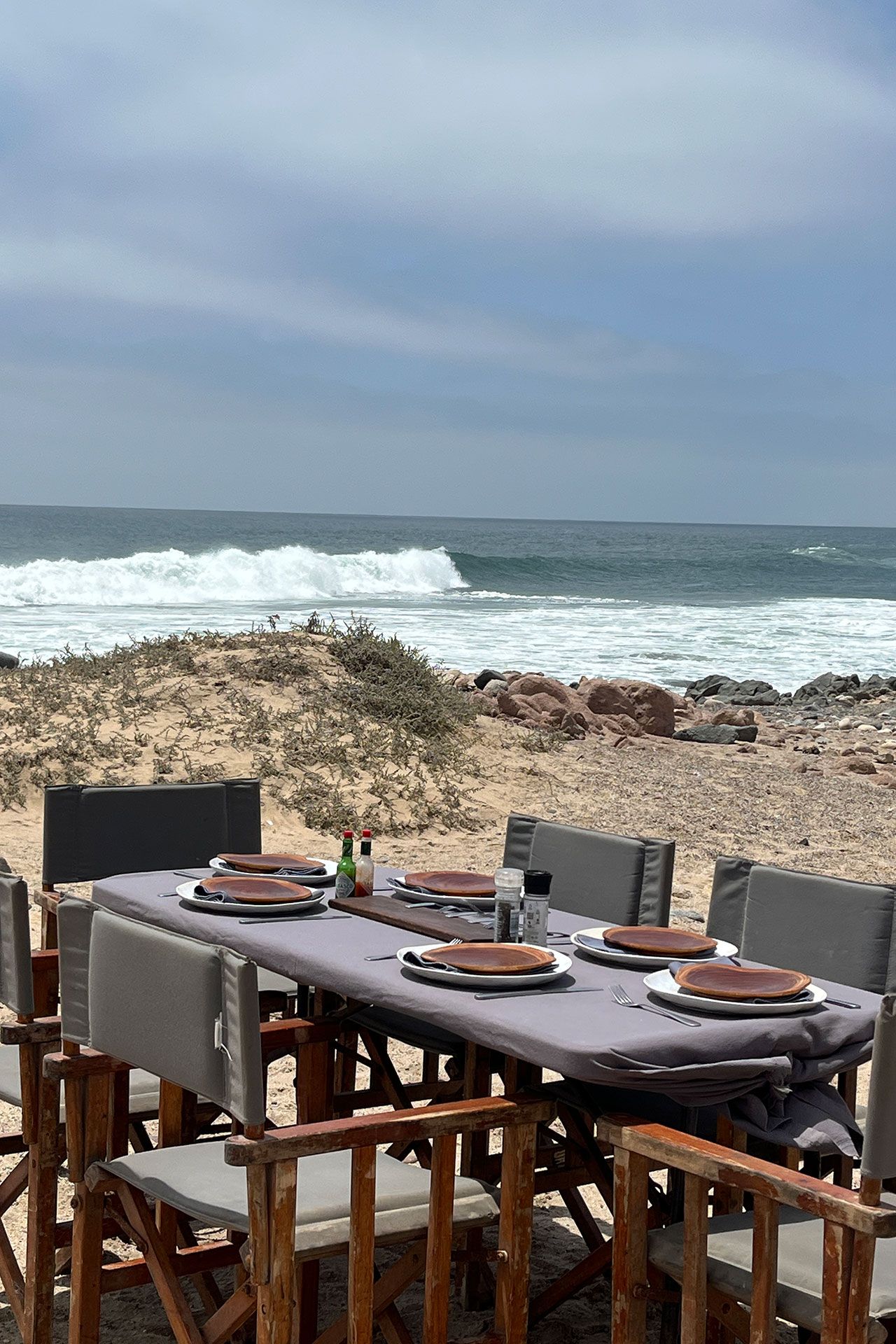
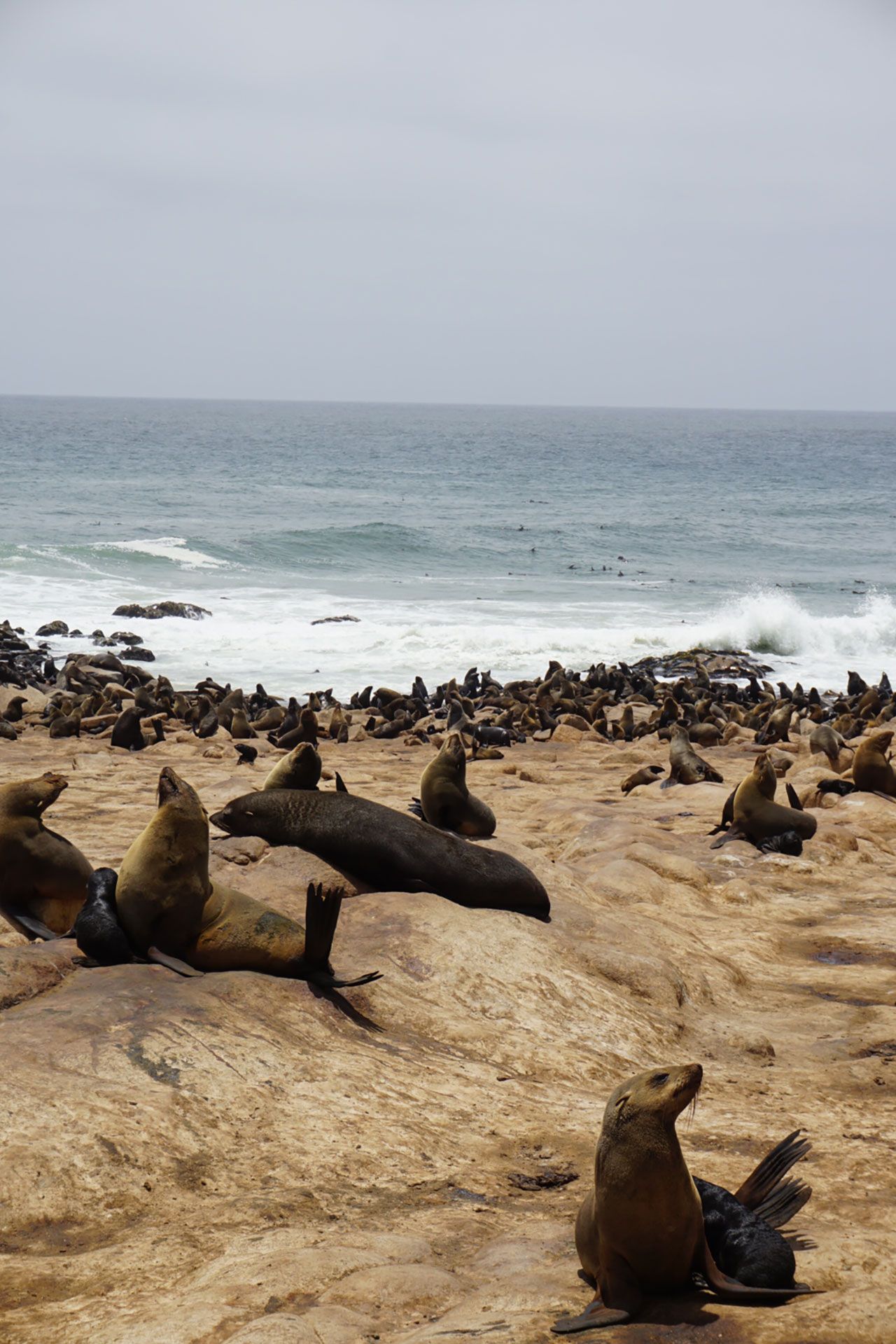
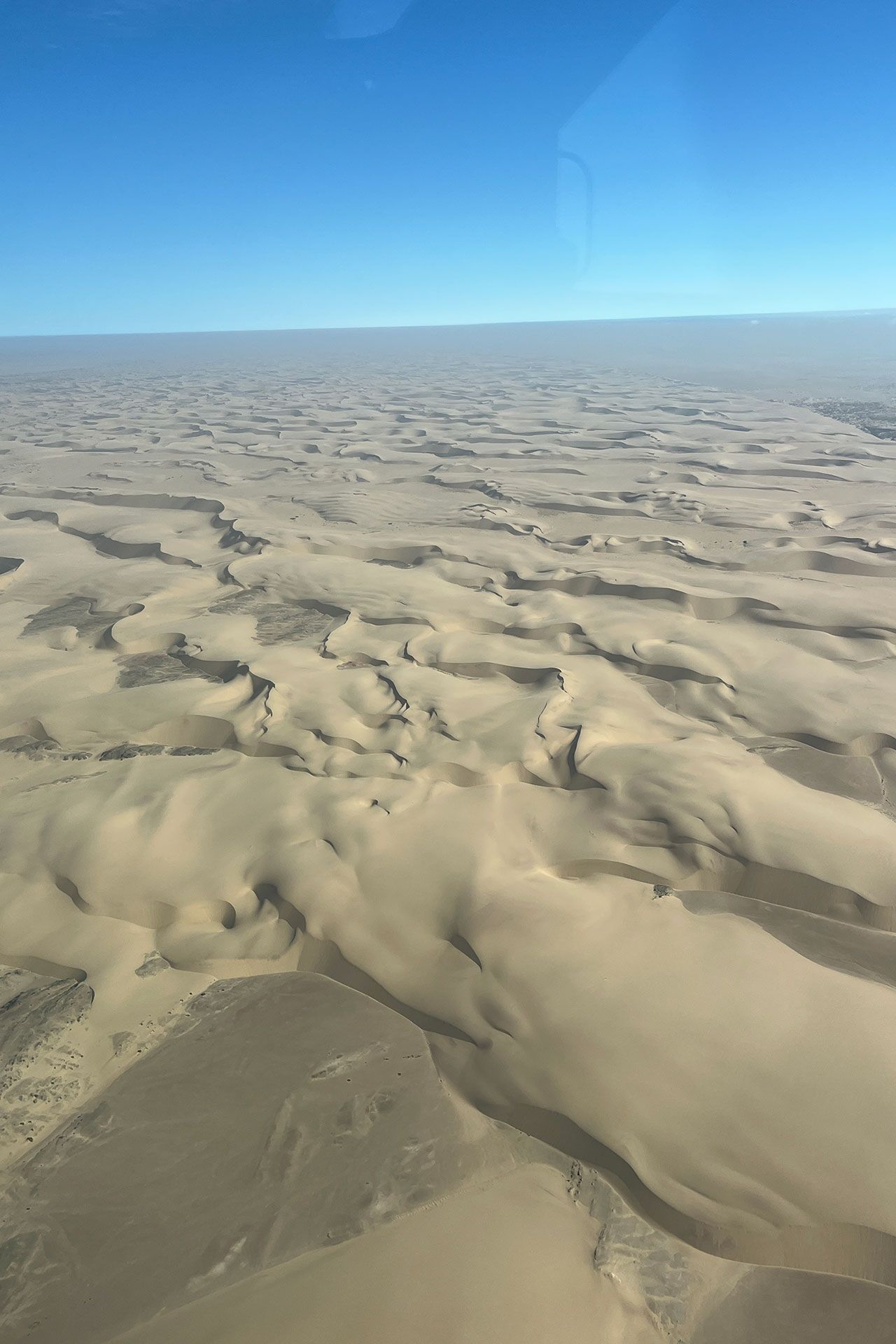
Having earned its name from the many whale bones and skeletal remains of shipwrecks that litter its shore, fog here rolls in like theatre smoke. With over 500 shipwrecks serving as rusted reminders of those who underestimated the sea, what you will find living here is a colony of more than 200,000 seals that you inevitably smell before you see. It’s safe to say that we were grateful not to have the same smell back at camp.
All in all, our time at Hoanib Skeleton Coast was an education in how remarkably wildlife has adapted to exist within these conditions and the importance of efforts to monitor and support these animals through conservancy. A reminder that wilderness is not empty, but instead very carefully inhabited by the creatures that have been shaped by such extremes.
Nightly rates start from £820 per person.
Serra Cafema
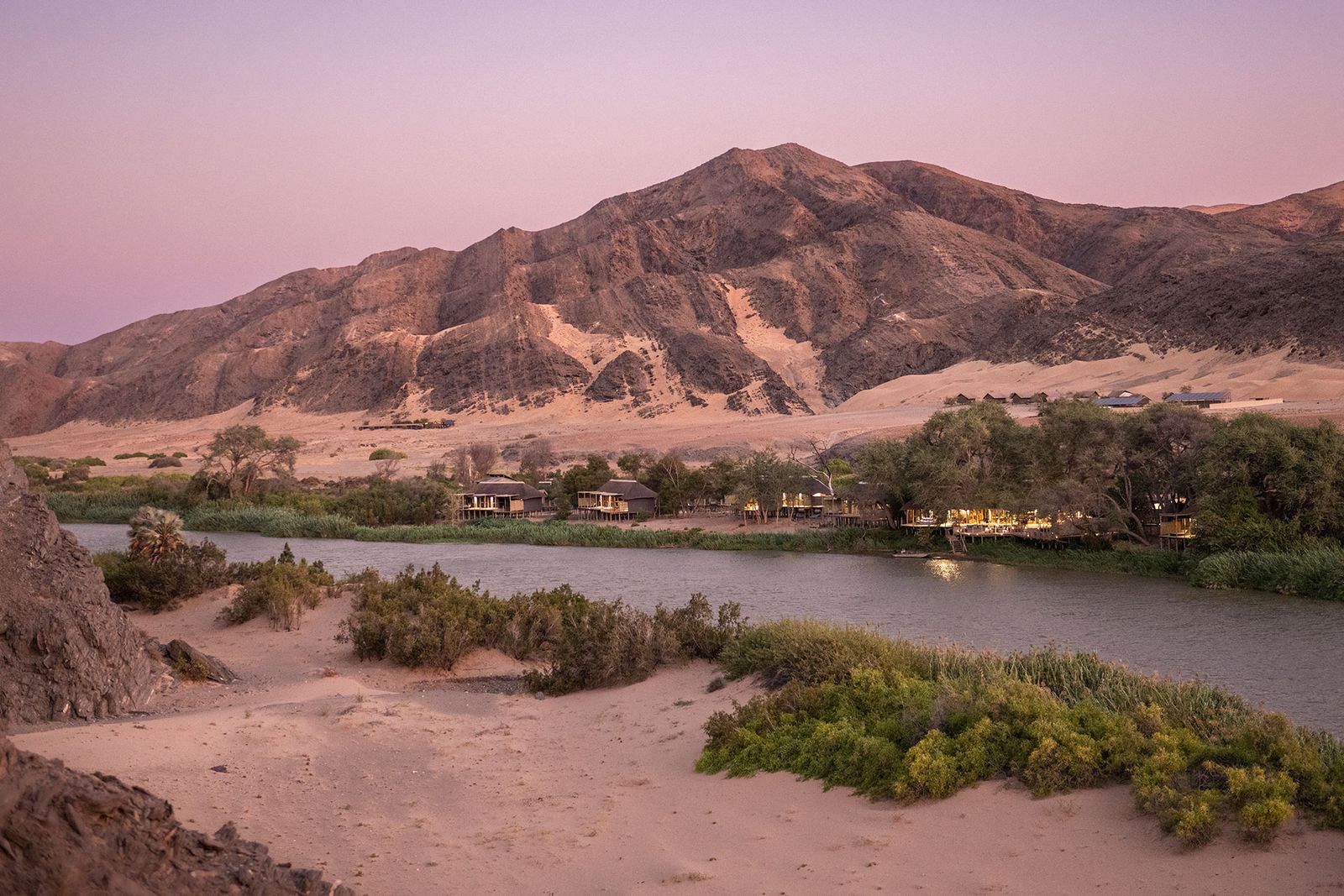
If I was caught off guard by the landscapes of our two previous camps, then truly nothing could have prepared me for the beauty we met at Serra Cafema. Driving from the nearby airstrip through Hartmann Valley, we found ourselves dropped into the most stunningly remote and arid landscape where desert meets the Angolan border. Fluttering ribbons of air are twisted by the heat, while the dunes themselves seem to almost breathe in the breeze. Then, almost improbably, the Kunene River reveals itself, a ribbon of green life cutting through the desert. Roads disappear overnight, lost to the sands, so you need to know your way around here very well, and thankfully our guide Clement very much did.



Follow