



Europe’s night trains were hailed as a pillar of the EU’s green-mobility future, but the promised renaissance has stalled — leaving a handful of cash-strapped startups trying to keep the dream alive.
The national rail giants best placed to invest see night services as money losers, while the newcomers hungry to run them can’t finance the expensive, highly specialized equipment.
“The demand is there,” said Chris Engelsman, co‑founder of startup operator European Sleeper. “People like night trains. They think they’re better for the environment or more efficient — that’s not the issue. The problem is the limitations and bureaucracy of the railway system.”
It’s a stalemate that has frozen the revival. “Those that could act don’t want to — and those that want to don’t have the means,” said railway expert Jon Worth. “Try booking a night train months ahead. You can’t. Demand is through the roof. But customer demand doesn’t drive railway behavior.”
What does drive it are balance sheets — and most night services lose money. By definition, sleeper trains can run only once per night per trainset, need extra staff on board, and require rolling stock that is highly specific and very expensive.
“A coach costs around €2 million, that’s pretty expensive,” said Thibault Constant, founder of French startup Nox Mobility. “Investors look at the history of night trains and say: ‘No way this can be profitable.’”
European Sleeper, a Belgian-Dutch company, currently runs with carriages “basically saved from the scrap heap,” Worth noted. “You can’t scale up night trains without building more night trains,” he added. “But no one is making those orders.”
Constant described the same chicken‑and‑egg problem. “There is no proof that night trains can be commercially successful right now, so investors don’t believe in the product. We have to show them that we can do better than existing operators — which is a challenge, but there is a way to do so.”
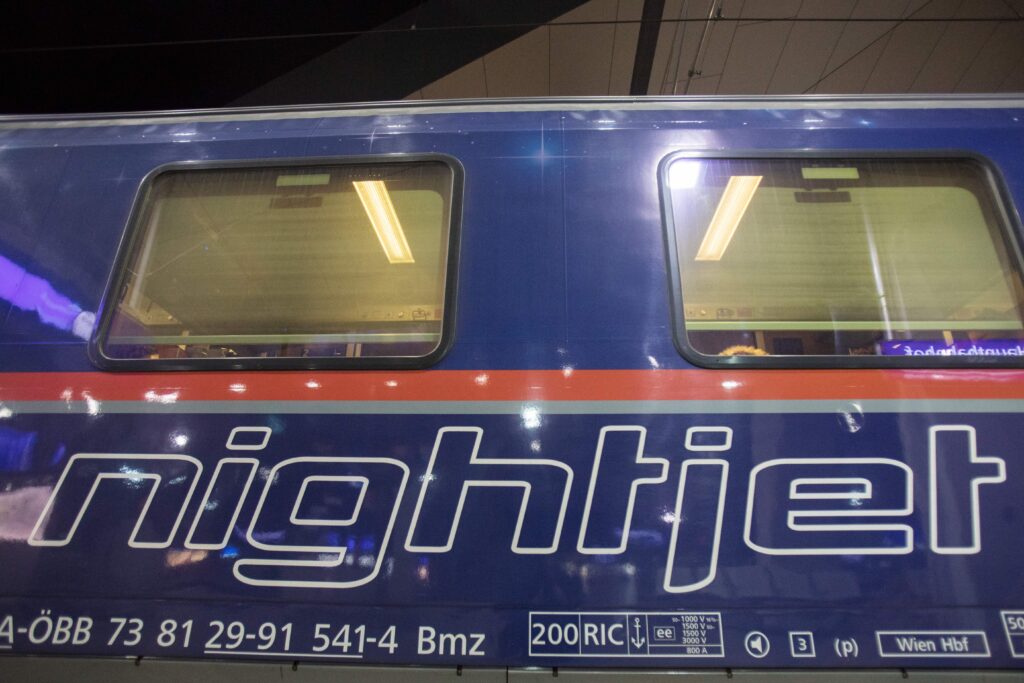
Even Austrian state railway operator ÖBB — Europe’s most committed night‑train operator — acknowledged the crunch. “Long delivery times for new vehicles, high personnel costs, and increased night construction sites are major challenges,” an ÖBB spokesperson said.
“Night trains are a good addition to daytime rail services … and there is sufficient demand for night trains, and there is a need for more night trains. [But] the costs of operation are limiting the service offering,” they added.
German railway operator Deutsche Bahn sounded the same alarm.
“Under current political conditions, operating night trains poses a major economic challenge,” said Marco Kampp, DB’s head of international long‑distance transport. “Passenger trains must no longer be disadvantaged compared to air travel and cars — the niche market of night trains is particularly affected by this.”
And even if someone finds the money for new trains, actually running them is another battle.
Engelsman described constant operational hurdles, including last‑minute messages from rail network managers that effectively say “sorry, your train can’t run for a month,” and a general reluctance from incumbents to help newcomers.
Cross‑border bureaucracy makes things worse.
“Timetabling is still national,” Engelsman said. When European Sleeper tried to plan its new Brussels–Milan service, it had to negotiate with each country separately. Belgium would first assign a border time that made the whole route commercially useless; then the process had to start again from scratch.
“You can’t optimize the whole stretch — you’re stuck adjusting country by country. It’s very inefficient,” he said. Over time, he added, relationships with individual staff in these organizations improve — “they like trains, they like our projects” — but the structures they work within remain slow and rigid. “It’s not the individuals. It’s the bureaucracy.”
According to Worth, the promised renaissance of night trains never materialized because it wasn’t grounded in rolling stock, financing or real coordination.
“There was lots of hope, but not much planning,” he said. Even the flagship Paris–Vienna route run with ÖBB fell apart once French government subsidies vanished.
“[French rail operator] SNCF didn’t want to run it. The moment the subsidy disappeared, they walked away,” he said.
Start-up time
Despite all this, a new wave of operators is still trying.
Startups such as European Sleeper are expanding cautiously. Nox Mobility is experimenting with leased coaches to lower capital costs and redesign how a sleeper service works — from ticketing and pricing to onboard offerings.
“We’re essentially rethinking the whole ecosystem,” Constant said.
For European Sleeper, Worth noted, the key question is whether it can squeeze a break‑even operation out of its patched‑together, aging trains long enough to build the financial footing needed to buy new ones.
For Nox, the equation is even starker: “How does Nox get the money?” Worth said. “That’s the most important question by quite some distance.”
On paper, there is a list of potential routes and projects that could form the backbone of a real revival — if the money and the trains materialize.
Worth pointed to plans in Central Europe as the most realistic starting point. “If they start by focusing in Central Europe, not France and Spain but Germany and its neighbors, then they have a real chance of success,” he said.
Beyond that, the picture is hazier.
A proposed overnight service by the Swiss Federal Railways from Basel to Malmö will not go ahead as planned after Swiss lawmakers scrapped the funding needed to support it. There are “odds and ends,” as Worth put it: some carriage renovations in Slovakia and Poland that may or may not turn into viable services.
Rail Baltica, the new north-south line through the Baltics, is supposed to host night trains to Tallinn when it opens around 2030, but, Worth noted, “no one knows where those trains are going to come from,” and he was skeptical it will happen as advertised.
Constant said “it will get easier” as more private players enter the market and infrastructure managers adapt. Worth said new projects “will happen” — but only in minimal form until someone funds large‑scale carriage production.
Thijmen van Reijsen, an urban mobility researcher at Radbout University, summed it up: “There’s demand. People want night trains. But for now, the problems are structural — rolling stock, funding, cooperation, infrastructure.”
Even ÖBB admitted to the limits: “Night trains are a niche market and will remain so.”
All of these dysfunctions can be explained, Worth concluded, “but the question is: who’s going to step up and fix it?”



Follow