



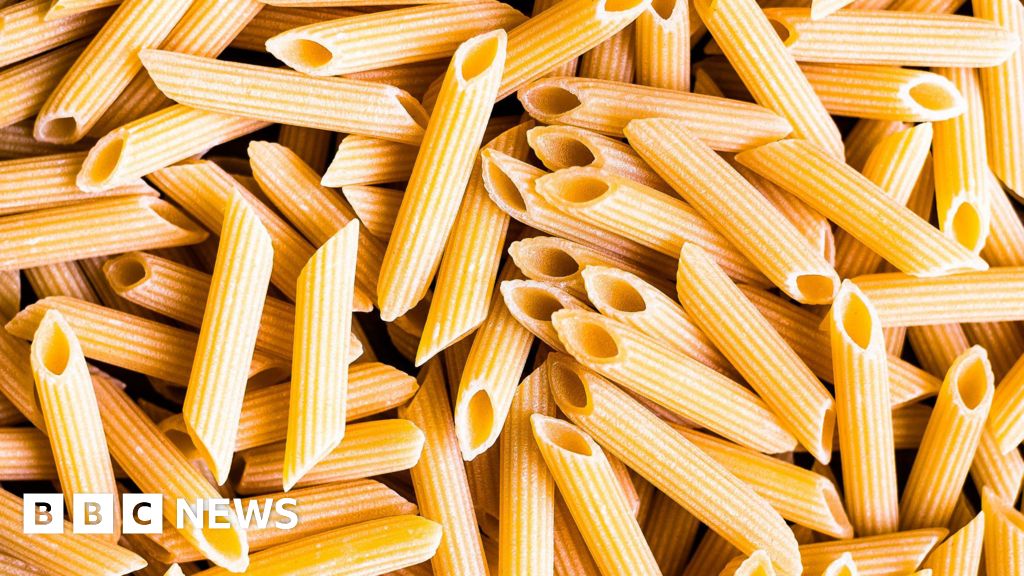
Italian pasta is set to be spared from high-level US tariffs that the Trump administration had threatened against 13 producers.
The move could have resulted in American importers being taxed at a rate greater than the value of the actual pasta itself, and prices rising sharply for US consumers.
But on Thursday, the Italian foreign ministry said the proposed rate had now been drastically cut back.
In a statement of its own, the US said the 13 firms had addressed many of its concerns. It previously accused the companies of selling their products at unfairly low prices and threatened tariffs of almost 92%.
Tariffs are a type of tax paid by a consumer who imports a product.
Since returning to the White House last year, US President Donald Trump has unleashed a wide-ranging programme of these taxes, though some have since been softened.
The president has sought to address trade practices that he sees as harmful to the US and boost American manufacturing.
But economists have consistently warned that such moves can ultimately drive up costs for consumers, worsening cost-of-living issues.
In the case of pasta, the US alleged that Italian-made goods were being sold at “less than normal value” in the US, which undercut local producers. This pricing policy is sometimes known as dumping.
The commerce department was planning to charge a tariff rate of 91.74% for American imports of pasta made by the 13 Italian producers.
Given that there is now an underlying 15% tariff on most products bought into the US from the European Union, the plan would have resulted in the rate of tax on pasta exceeding 100% of its value.
It sparked fears of consumers experiencing major price increases, although the produce made by the 13 companies represents only a small share of total Italian pasta imported into the US.
The plan would have also represented a political headache for Italian Prime Minister Giorgia Meloni, who enjoys a relatively close relationship with Trump among European leaders.
On Thursday, the Italian foreign ministry announced that the US had wound back its plan, saying this represented “an acknowledgement by the US authorities of the constructive co-operation shown by Italian companies”.
In the case of one brand, La Molisana, the tariff rate had been dropped as low as 2.26%, the Italian statement added. Others will face slightly higher rates, up to 13.98%.
In a statement of their own, which was given to the BBC’s US partner CBS News, a US commerce department spokesperson said: “[Our] post-preliminary analysis indicates that Italian pasta makers have addressed many of Commerce’s concerns raised in the preliminary determination.
“Commerce will continue to engage with interested parties to take into account all information before issuing the final determination.”
Other Trump tariffs that have recently been softened include a planned increase in the tax charged on imports of furniture items – which was postponed for 12 months shortly before it was due to take effect on New Year’s Day.
And in November, the president signed an order that allowed certain key food products – including coffee, bananas and beef – to escape his tariffs.



Follow