



Ivo Daalder, a former U.S. ambassador to NATO, is a senior fellow at Harvard University’s Belfer Center and host of the weekly podcast “World Review with Ivo Daalder.” He writes POLITICO’s From Across the Pond column
In justifying his military operation against Venezuela, U.S. President Donald Trump reached back in time over two centuries and grabbed hold of the Monroe Doctrine. But it’s another 19th-century interest that propelled his extraordinary gambit in the first place — oil.
According to the New York Times, what started as an effort to press the Venezuelan regime to cede power and end the flow of drugs and immigrants into the U.S., began shifting into a determination to seize the country’s oil last fall. And the president was the driving force behind this shift.
That’s hardly surprising though — Trump has been obsessed with oil for decades, even as most of the world is actively trying to leave it behind.
As far back as the 1980s, Trump was complaining about the U.S. protecting Japan, Saudi Arabia and others to secure the free flow of oil. “The world is laughing at America’s politicians as we protect ships we don’t own, carrying oil we don’t need, destined for allies who won’t help,” he wrote in a 1987 newspaper ad.
Having supported the Iraq War from the outset, he later complained that the U.S. hadn’t sufficiently benefited from it. “I would take the oil,” he told the Wall Street Journal in 2011. “I would not leave Iraq and let Iran take the oil.” That same year, he also dismissed humanitarian concerns in Libya, saying: “I am only interested in Libya if we take the oil.”
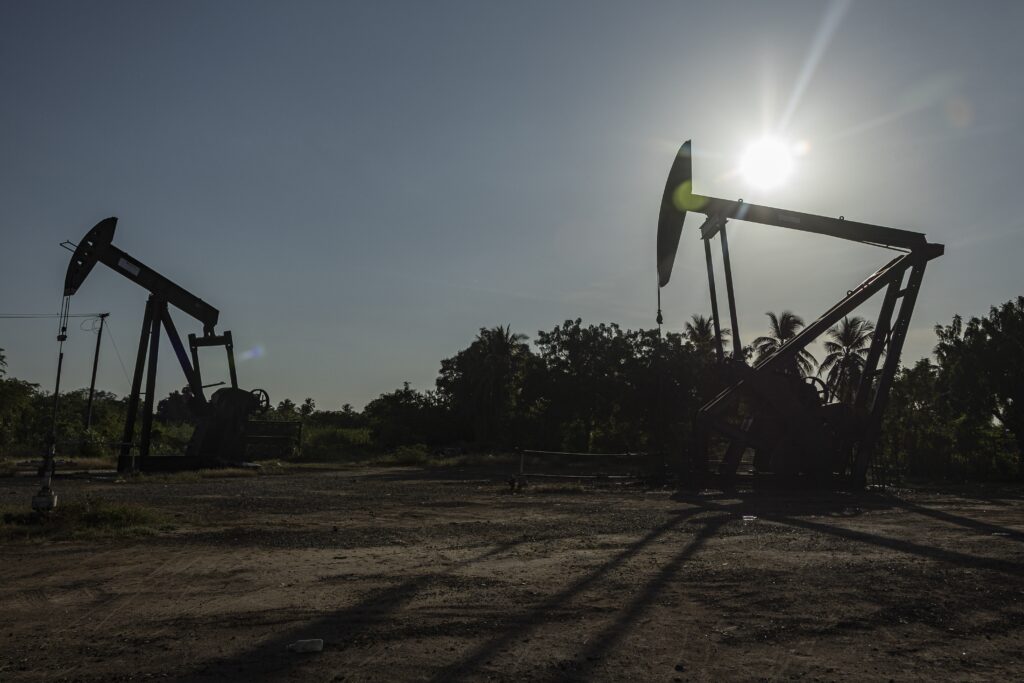
Unsurprisingly, “take the oil” later became the mantra for Trump’s first presidential campaign — and for his first term in office. Complaining that the U.S. got “nothing” for all the money it spent invading Iraq: “It used to be, ‘To the victor belong the spoils’ … I always said, ‘Take the oil,’” he griped during a Commander in Chief Forum in 2016.
As president, he also insisted on keeping U.S. forces in Syria for that very reason in 2019. “I like oil,” he said, “we’re keeping the oil.”
But while Iraq, Libya and even Syria were all conflicts initiated by Trump’s predecessors, Venezuela is quite another matter.
Weeks before seizing Venezuelan President Nicolás Maduro, Trump made clear what needed to happen: On Dec. 16, 2025, he announced an oil blockade of the country “until such time as they return to the United States of America all of the Oil, Land, and other Assets that they previously stole from us.”
Then, after capturing Maduro, Trump declared the U.S. would “run the country” in order to get its oil. “We’re in the oil business,” he stated. “We’re going to have our very large United States oil companies … go in, spend billions of dollars, fix the badly broken infrastructure, and start making money.”
“We’re going to be taking out a tremendous amount of wealth out of the ground,” Trump insisted. “It goes also to the United States of America in the form of reimbursement for the damages caused us by that country.”
On Wednesday, Energy Secretary Chris Wright announced that Venezuela would ship its oil to the U.S. “and then infinitely, going forward, we will sell the production that comes out of Venezuela into the marketplace,” effectively declaring the expropriation of Venezuela’s most important national resources.
All of this reeks of 19th-century imperialism. But the problem with Trump’s oil obsession goes deeper than his urge to steal it from others — by force if necessary. He is fixated on a depleting resource of steadily declining importance.
And yet, this doesn’t seem to matter.
Throughout his reelection campaign, Trump still emphasized the need to produce more oil. “Drill, baby, drill” became as central to his energy policy as “take the oil” was to his views on military intervention. He called on oil executives to raise $1 billion for his campaign, promising his administration would be “a great deal” for their industry. And he talked incessantly of the large reservoirs of “liquid gold” in the U.S., claiming: “We’re going to make a fortune.”
But these weren’t just campaign promises. Upon his return to office, Trump unleashed the full force of the U.S. government to boost oil production at home and exports abroad. He established a National Energy Dominance Council, opened protected lands in Alaska and the Arctic National Wildlife Refuge for oil and gas exploration, signed a mandate for immediate offshore oil and gas leases into law, and accelerated permitting reforms to speed up pipeline construction, refinery expansion and liquid natural gas exports.
At the same time, he’s been castigating efforts to cut greenhouse gas emissions as part of a climate change “hoax,” he withdrew the U.S. from the Paris Climate Agreement once again, and he took a series of steps to end the long-term transition from fossil fuels to renewable energy. He signed a law ending credits and subsidies to encourage residential solar and electric vehicle purchases, invoked national security to halt offshore wind production and terminated grants encouraging renewable energy production.
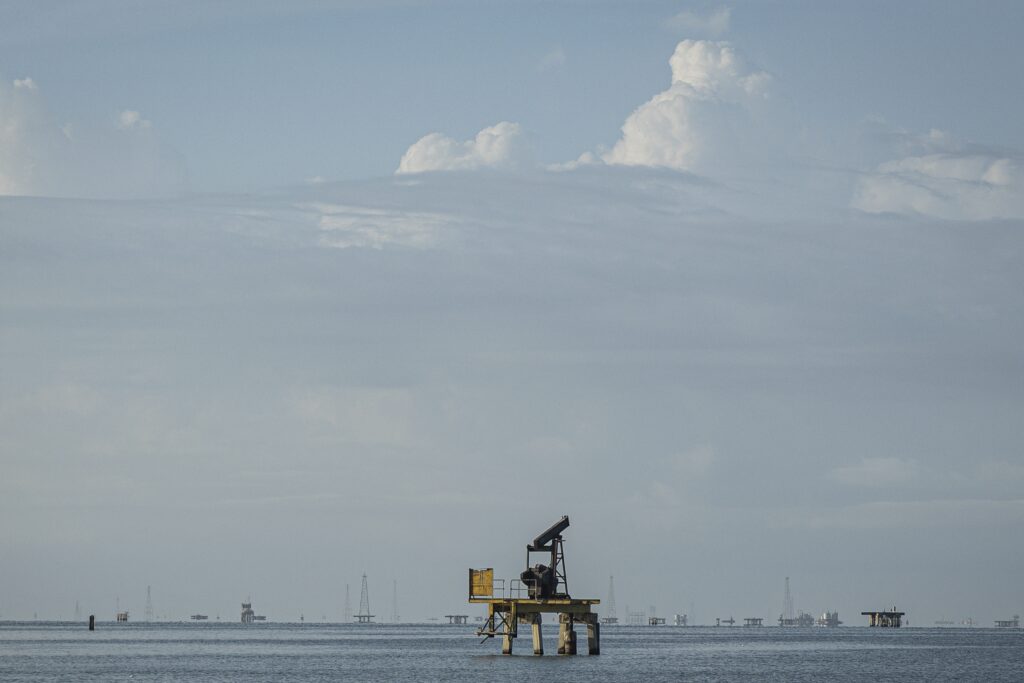
The problem with all these efforts is that the U.S. is now banking on fossil fuels, precisely as their global future is waning. Today, oil production is already outpacing consumption, and global demand is expected to peak later this decade. Over the last 12 months, the cost of oil has decreased by over 23 percent, pricing further exploration and production increasingly out of the market.
Meanwhile, renewable energy is becoming vastly more cost-effective. The future, increasingly, lies in renewables to drive our cars; heat, cool and light up our homes; power our data centers, advanced manufacturing factories and everything else that sustains our lives on Earth.
By harnessing the power of the sun, the force of wind and the heat of the Earth, China is building its future on inexhaustible resources. And while Beijing is leading the way, many others are following in its footsteps. All this, just as the U.S. goes back to relying on an exhaustive fossil fuel supply.
What Trump is betting on is becoming the world’s largest — and last — petrostate. China is betting on becoming its largest and lasting electrostate. Which side would you rather be on?



Follow