



European Union Defense Commissioner Andrius Kubilius has said the bloc should consider establishing a standing military force of 100,000 troops and overhaul the political processes governing defense.
Faced with Russian aggression and the U.S. shifting its focus away from Europe and threatening Greenland, Kubilius argued for a “big bang” approach to re-imagining Europe’s common defense.
“Would the United States be militarily stronger if they would have 50 armies on the States level instead of a single federal army,” he said at a Swedish security conference on Sunday. “Fifty state defence policies and defense budgets on the states level, instead of a single federal defense policy and budget?”
“If our answer is ‘no,’ [the] USA would not be stronger, then — what are we waiting for?”
Kubilius said Europe’s defense readiness depends on three pillars: more investment in production capacity; institutions that are prepared and organization; and the political will to deter and, if needed, fight.
Merely increasing funding for Europe’s existing defense setup won’t meet these requirements, he said, in part because of a lack of unity.
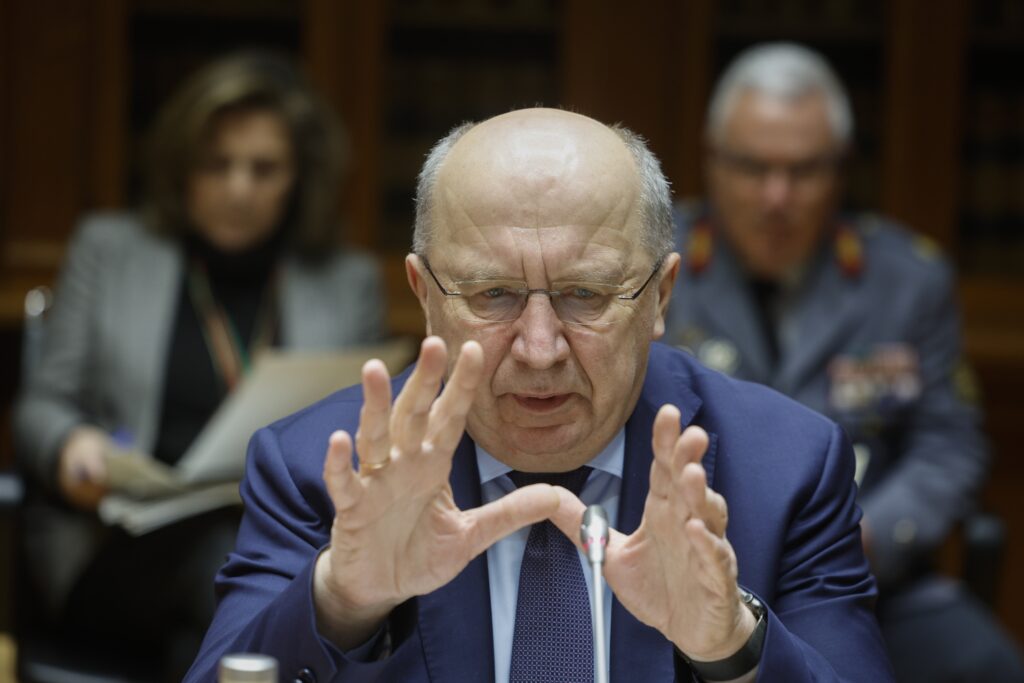
“We need to start to invest our money in such a way, that we would be able to fight as Europe, not just as collection of 27 national ‘bonsai armies’,” he said, borrowing a phrase from former EU High Representative Josep Borrell.
Europe could instead create — “as Jean-Claude Juncker, Emmanuel Macron, Angela Merkel already proposed 10 years ago” a powerful, standing “European military force” of 100,000 troops, he said.
To help solve the issue of political will, Kubilius wants to establish a European Security Council. The idea has been talked up by French President Macron and former German Chancellor Merkel.
“The European Security Council could be composed of key permanent members, along with several rotational members, including the member state with the Council presidency,” said Kubilius. “Plus the leadership of the EU: Commission and Council presidents.”
The proposed security council should also include the United Kingdom, Kubilius said.
“In total around 10-12 members, with the task to discuss the most important issues in defense, some of which I just mentioned before,” Kubilius said. “And not only discussing, but also swiftly preparing important decisions.”



Follow