



PARIS — A court appeal begins on Tuesday that will determine whether Marine Le Pen or her protégé Jordan Bardella will head into next year’s presidential election as favorite from the far-right National Rally party.
While Le Pen has been a decisive force in making the anti-immigration party the front-runner for the presidency in 2027, she is currently unable to succeed Emmanuel Macron herself thanks to a five-year election ban imposed over her conviction last year for embezzling European Parliament funds.
She is now appealing that decision in a case that is expected to last one month, although a verdict is not due until the summer.
Le Pen looks set to fight her appeal on technical legal objections and an argument that the ban is disproportionate, rather than going out all-guns blazing and insisting she is the victim of a political hit job.
If she does overcome the very steep hurdles required to win her case, she will still have to deal with the political reality that the French electorate are leaning more toward Bardella. The party’s supposed Plan B is starting to have the air of a Plan A.
A poll from Ipsos in December showed the 30-year-old overtaking Le Pen as the French politician with the highest share of positive opinions. And a survey from pollster Odoxa conducted in November showed Bardella would win both rounds of the presidential contest.
The National Rally continues to insist that Le Pen is their top choice, but getting her on the ballot will likely require her to win her fast-tracked appeal by setting aside her personal grievances and perhaps even showing a measure of uncustomary contrition to ensure this trial does not end the way the embezzlement case did.
Le Pen is not famous for being low-key and eating humble pie. Shortly after her conviction, she said her movement would follow the example of civil rights’ icon Martin Luther King and vowed: “We will never give in to this violation of democracy.”
That’s not the playbook she intends to deploy now. Her lawyers will pursue a less politicized strategy to win round the judges, according to three far-right politicians with direct knowledge of the case, who were granted anonymity to discuss it freely.
“We’ll be heading in with a certain amount of humility, and we’ll try not to be in the mindset that this is a political trial,” said one of trio, a French elected official who is one of the codefendants appealing their conviction.
Line by line
Le Pen and 24 other codefendants stood trial in late 2024 on charges they illicitly used funds from the European Parliament to pay party employees by having them hired as parliamentary assistants. But those assistants, the prosecution argued, rarely if ever worked on actual parliamentary business.
The National Rally’s apparent defense strategy back then was to paint the trial as politicized, potentially winning in the court of public opinion and living with the consequences of a guilty verdict.
The attorneys representing the defendants could did little to rebut several pieces of particularly damning evidence, including the fact that one assistant sent a message to Le Pen asking if he could be introduced to the MEP he had supposedly been working with for months.
Given how severely the defense miscalculated the first time around, lawyers for many of the 14 codefendants in court this week will pursue more traditional appeals, going through the preliminary ruling “line by line” to identify potential rebuttals or procedural hiccups, the trio with direct knowledge of the case explained.
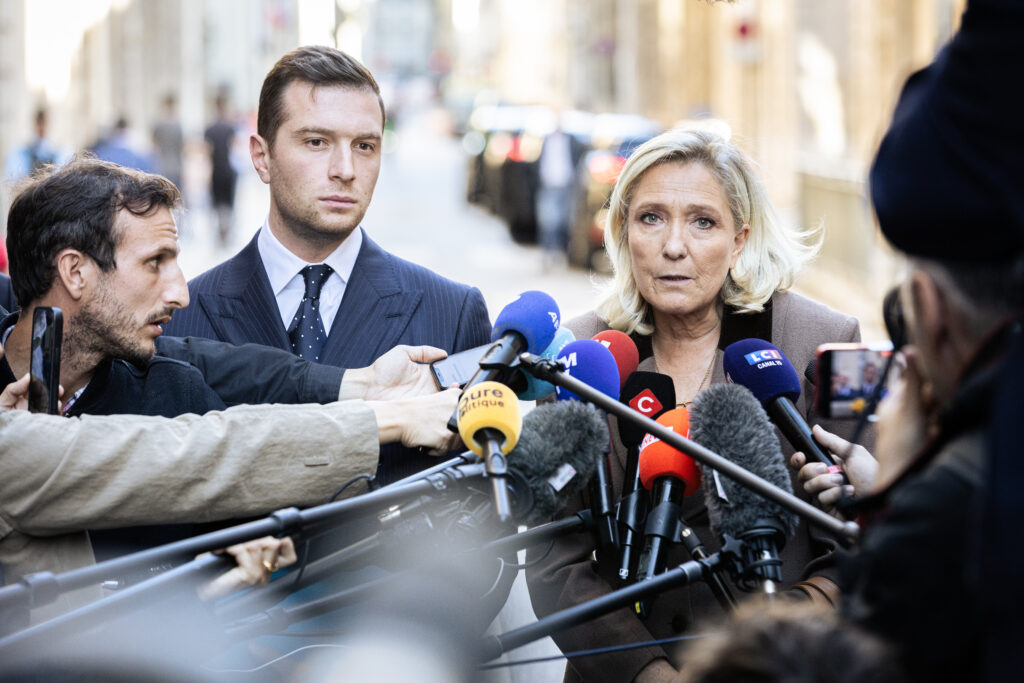
Defense lawyers also plan to tailor their individual arguments more precisely to each client to avoid feeding the sentiment that decisions taken at the highest levels of the National Rally leadership are imposed on the whole party. The prosecution during the initial trial successfully argued that National Rally bigwigs hand-picked assistants at party headquarters to serve the leadership rather than MEPs.
Le Pen’s lawyers will also argue that her punishment — barring a front-running presidential candidate from standing in a nationwide election — was disproportionate to the crime for which she was convicted.
The appeals’ court ruling will have seismic consequences for French politics and Europe ahead of one of the continent’s most important elections. The path toward the presidency will be nearly impossible for Le Pen if her election ban is upheld.
Le Pen has indicated in past interviews that she would throw in the towel if she received the same election ban, given that she wouldn’t have enough time to appeal again to a higher court.
Should Bardella replace her and win, the consequences for the French judicial system could be profound. One of the codefendants floated the possibility of a response along the lines of what U.S. President Donald Trump did to those who prosecuted him before his reelection.
“The lingering sense of injustice will remain and can eventually evolve into a quest for revenge,” the codefendant said.



Follow