



LONDON — Reza Pahlavi was in the United States as a student in 1979 when his father, the last shah of Iran, was toppled in a revolution. He has not set foot inside Iran since, though his monarchist supporters have never stopped believing that one day their “crown prince” will return.
As anti-regime demonstrations fill the streets of more than 100 towns and cities across the country of 90 million people, despite an internet blackout and an increasingly brutal crackdown, that day may just be nearing.
Pahlavi’s name is on the lips of many protesters, who chant that they want the “shah” back. Even his critics — and there are plenty who oppose a return of the monarchy — now concede that Pahlavi may prove to be the only figure with the profile required to oversee a transition.
The global implications of the end of the Islamic Republic and its replacement with a pro-Western democratic government would be profound, touching everything from the Gaza crisis to the wars in Ukraine and Yemen, to the oil market.
Over the course of three interviews in the past 12 months in London, Paris and online, Pahlavi told POLITICO how Iran’s Supreme Leader Ayatollah Ali Khamenei could be overthrown. He set out the steps needed to end half a century of religious dictatorship and outlined his own proposal to lead a transition to secular democracy.
Nothing is guaranteed, and even Pahlavi’s team cannot be sure that this current wave of protests will take down the regime, never mind bring him to power. But if it does, the following is an account of Pahlavi’s roadmap for revolution and his blueprint for a democratic future.
Popular uprising
Pahlavi argues that change needs to be driven from inside Iran, and in his interview with POLITICO last February he made it clear he wanted foreign powers to focus on supporting Iranians to move against their rulers rather than intervening militarily from the outside.
“People are already on the streets with no help. The economic situation is to a point where our currency devaluation, salaries can’t be paid, people can’t even afford a kilo of potatoes, never mind meat,” he said. “We need more and more sustained protests.”
Over the past two weeks, the spiraling cost of living and economic mismanagement have indeed helped fuel the protest wave. The biggest rallies in years have filled the streets, despite attempts by the authorities to intimidate opponents through violence and by cutting off communications.
Pahlavi has sought to encourage foreign financial support for workers who will disrupt the state by going on strike. He also called for more Starlink internet terminals to be shipped into Iran, in defiance of a ban, to make it harder for the regime to stop dissidents from communicating and coordinating their opposition. Amid the latest internet shutdowns, Starlink has provided the opposition movements with a vital lifeline.
As the protests gathered pace last week, Pahlavi stepped up his own stream of social media posts and videos, which gain many millions of views, encouraging people onto the streets. He started by calling for demonstrations to begin at 8 p.m. local time, then urged protesters to start earlier and occupy city centers for longer. His supporters say these appeals are helping steer the protest movement.
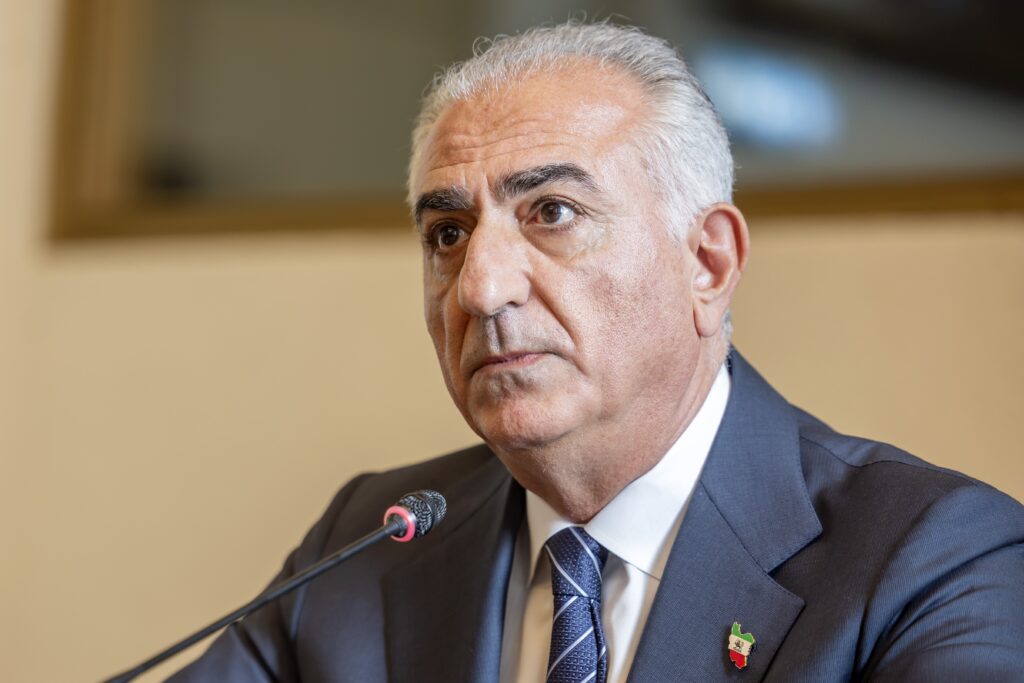
The security forces have brutally crushed many of these gatherings. The Norway-based Iranian Human Rights group puts the number of dead at 648, while estimating that more than 10,000 people have been arrested.
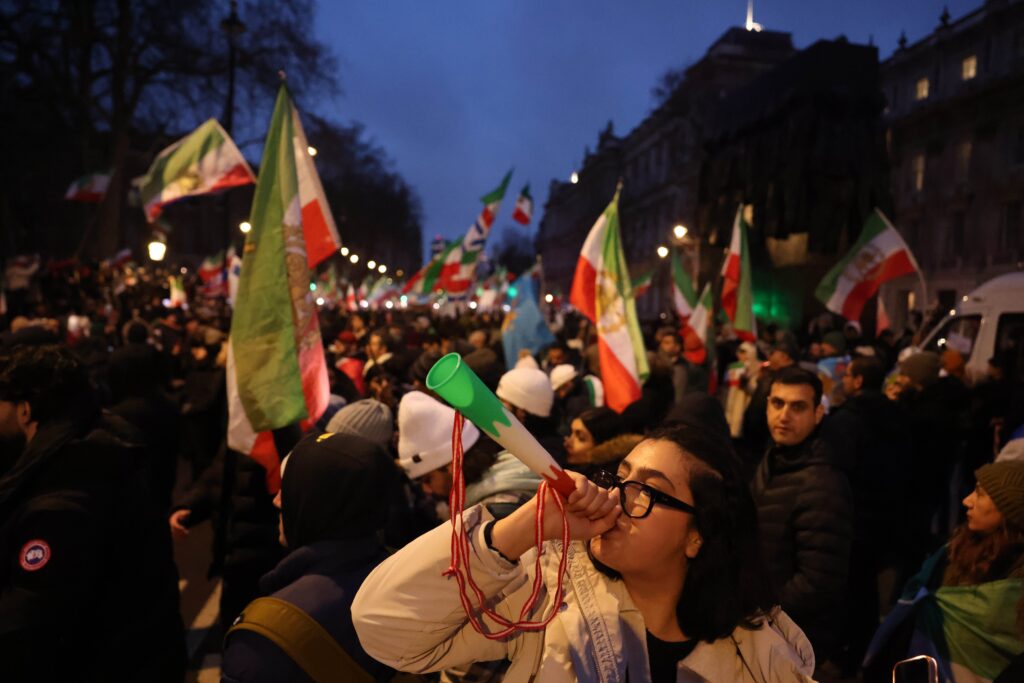
It’s almost impossible to know how widely Pahlavi’s message is permeating nationwide, but footage inside Iran suggests the exiled prince’s words are gaining some traction with demonstrators, with increasing images of the pre-revolutionary Lion and Sun flag appearing at protests, and crowds chanting “javid shah” — the eternal shah.
Defectors
Understandably, given his family history, Pahlavi has made a study of revolutions and draws on the collapse of the Soviet Union to understand how the Islamic Republic can be overthrown. In Romania and Czechoslovakia, he said, what was required to end Communism was ultimately “maximum defections” among people inside the ruling elites, military and security services who did not want to “go down with the sinking ship.”
“I don’t think there will ever be a successful civil disobedience movement without the tacit collaboration or non-intervention of the military,” he said during an interview last February.
There are multiple layers to Iran’s machinery of repression, including the hated Basij militia, but the most powerful and feared part of its security apparatus is the Islamic Revolutionary Guard Corps. Pahlavi argued that top IRGC commanders who are “lining their pockets” — and would remain loyal to Khamenei — did not represent the bulk of the organization’s operatives, many of whom “can’t pay rent and have to take a second job at the end of their shift.”
“They’re ultimately at some point contemplating their children are in the streets protesting … and resisting the regime. And it’s their children they’re called on to shoot. How long is that tenable?”
Pahlavi’s offer to those defecting is that they will be granted an amnesty once the regime has fallen. He argues that most of the people currently working in the government and military will need to remain in their roles to provide stability once Khamenei has been thrown out, in order to avoid hollowing out the administration and creating a vacuum — as happened after the 2003 U.S.-led invasion of Iraq.
Only the hardline officials at the top of the regime in Tehran should expect to face punishment.
In June, Pahlavi announced he and his team were setting up a secure portal for defectors to register their support for overthrowing the regime, offering an amnesty to those who sign up and help support a popular uprising. By July, he told POLITICO, 50,000 apparent regime defectors had used the system.
His team are now wary of making claims regarding the total number of defectors, beyond saying “tens of thousands” have registered. These have to be verified, and any regime trolls or spies rooted out. But Pahlavi’s allies say a large number of new defectors made contact via the portal as the protests gathered pace in recent days.
Regime change
In his conversations with POLITICO last year, Pahlavi insisted he didn’t want the United States or Israel to get involved directly and drive out the supreme leader and his lieutenants. He always said the regime would be destroyed by a combination of fracturing from within and pressure from popular unrest.
He’s also been critical of the reluctance of European governments to challenge the regime and of their preference to continue diplomatic efforts, which he has described as appeasement. European powers, especially France, Germany and the U.K., have historically had a significant role in managing the West’s relations with Iran, notably in designing the 2015 nuclear deal that sought to limit Tehran’s uranium enrichment program.
But Pahlavi’s allies want more support and vocal condemnation from Europe.
U.S. President Donald Trump pulled out of the nuclear deal in his first term and wasted little time on diplomacy in his second. He ordered American military strikes on Iran’s nuclear facilities last year, as part of Israel’s 12-day war, action that many analysts and Pahlavi’s team agree leaves the clerical elite and its vast security apparatus weaker than ever.
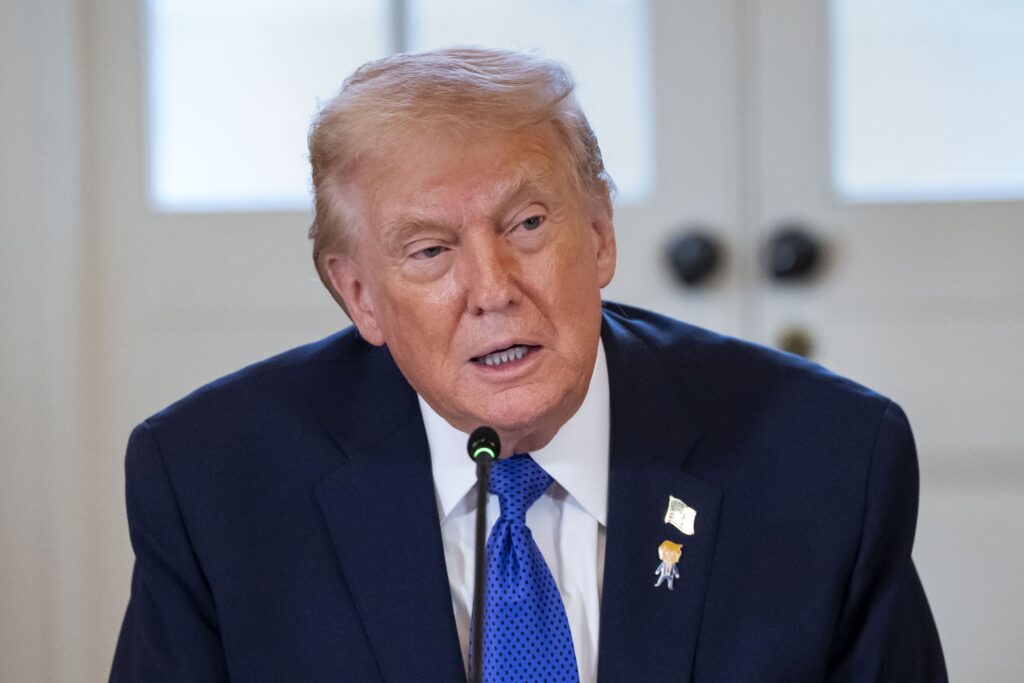
Pahlavi remains in close contact with members of the Trump administration, as well as other governments including in Germany, France and the U.K.
He has met U.S. Secretary of State Marco Rubio several times and said he regards him as “the most astute and understanding” holder of that office when it comes to Iran since the 1979 revolution.
In recent days Trump has escalated his threats to intervene, including potentially through more military action if Iran’s rulers continue their crackdown and kill large numbers of protesters.
On the weekend Pahlavi urged Trump to follow through. “Mr President,” he posted on X Sunday. “Your words of solidarity have given Iranians the strength to fight for freedom,” he said. “Help them liberate themselves and Make Iran Great Again!”
The caretaker king
In June Pahlavi announced he was ready to replace Khamenei’s administration to lead the transition from authoritarianism to democracy.
“Once the regime collapses, we have to have a transitional government as quickly as possible,” he told POLITICO last year. He proposed that a constitutional conference should be held among Iranian representatives to devise a new settlement, to be ratified by the people in a referendum.
The day after that referendum is held, he told POLITICO in February, “that’s the end of my mission in life.”
Asked if he wanted to see a monarchy restored, he said in June: “Democratic options should be on the table. I’m not going to be the one to decide that. My role however is to make sure that no voice is left behind. That all opinions should have the chance to argue their case — it doesn’t matter if they are republicans or monarchists, it doesn’t matter if they’re on the left of center or the right.”
One option he hasn’t apparently excluded might be to restore a permanent monarchy, with a democratically elected government serving in his name.
Pahlavi says he has three clear principles for establishing a new democracy: protecting Iran’s territorial integrity; a secular democratic system that separates religion from the government; and “every principle of human rights incorporated into our laws.”
He confirmed to POLITICO that this would include equality and protection against discrimination for all citizens, regardless of their sexual or religious orientation.
Come-back capitalism
Over the past year, Pahlavi has been touring Western capitals meeting politicians as well as senior business figures and investors from the world of banking and finance. Iran is a major OPEC oil producer and has the second biggest reserves of natural gas in the world, “which could supply Europe for a long time to come,” he said.
“Iran is the most untapped reserve for foreign investment,” Pahlavi said in February. “If Silicon Valley was to commit for a $100 billion investment, you could imagine what sort of impact that could have. The sky is the limit.”
What he wants to bring about, he says, is a “democratic culture” — even more than any specific laws that stipulate forms of democratic government. He pointed to Iran’s past under the Pahlavi monarchy, saying his grandfather remains a respected figure as a modernizer.
“If it becomes an issue of the family, my grandfather today is the most revered political figure in the architect of modern Iran,” he said in February. “Every chant of the streets of ‘god bless his soul.’ These are the actual slogans people chant on the street as they enter or exit a soccer stadium. Why? Because the intent was patriotic, helping Iran come out of the dark ages. There was no aspect of secular modern institutions from a postal system to a modern army to education which was in the hands of the clerics.”
Pahlavi’s father, the shah, brought in an era of industrialization and economic improvement alongside greater freedom for women, he said. “This is where the Gen Z of Iran is,” he said. “Regardless of whether I play a direct role or not, Iranians are coming out of the tunnel.”
Conversely, many Iranians still associate his father’s regime with out-of-touch elites and the notorious Savak secret police, whose brutality helped fuel the 1979 revolution.
Not so fast
Nobody can be sure what happens next in Iran. It may still come down to Trump and perhaps Israel.
Plenty of experts don’t believe the regime is finished, though it is clearly weakened. Even if the protests do result in change, many say it seems more likely that the regime will use a mixture of fear tactics and adaptation to protect itself rather than collapse or be toppled completely.
While reports suggest young people have led the protests and appear to have grown in confidence, recent days have seen a more ferocious regime response, with accounts of hospitals being overwhelmed with shooting victims. The demonstrations could still be snuffed out by a regime with a capacity for violence.
The Iranian opposition remains hugely fragmented, with many leading activists in prison. The substantial diaspora has struggled to find a unity of voice, though Pahlavi tried last year to bring more people on board with his own movement.
Sanam Vakil, an Iran specialist at the Chatham House think tank in London, said Iran should do better than reviving a “failed” monarchy. She added she was unsure how wide Pahlavi’s support really was inside the country. Independent, reliable polling is hard to find and memories of the darker side of the shah’s era run deep.
But the exiled prince’s advantage now may be that there is no better option to oversee the collapse of the clerics and map out what comes next.
“Pahlavi has name recognition and there is no other clear individual to turn to,” Vakil said. “People are willing to listen to his comments calling on them to go out in the streets.”



Follow