



Josep Borrell is the former high representative of the European Union for Foreign Affairs and Security Policy and former vice-president of the European Commission.
In too many corners of the world — including our own — democracy is losing oxygen.
Disinformation is poisoning debate, authoritarian leaders are staging “elections” without real choice, and citizens are losing faith that their vote counts. Even as recently as the Jan. 3 U.S. military intervention in Venezuela, we have seen opposition leaders who are internationally recognized as having the democratic support of their people be sidelined.
None of this is new. Having devoted much of his work to critiquing the absolute concentration of power in dictatorial figures, the long-exiled Paraguayan writer Augusto Roa Bastos found that when democracy loses ground, gradually and inexorably a singular and unquestionable end takes its place: power. And it shapes the leader as a supreme being, one who needs no higher democratic processes to curb their will.
This is the true peril of the backsliding we’re witnessing in the world today.
A few decades ago, the tide of democracy seemed unstoppable, bringing freedom and prosperity to an ever-greater number of countries. And as that democratic wave spread, so too did the practice of sending impartial international observers to elections as a way of supporting democratic development.
In both boosting voter confidence and assuring the international community of democratic progress, election observation has been one of the EU’s quiet success stories for decades. However, as international development budgets shrink, some are questioning whether this practice still matters.
I believe this is a grave mistake.
Today, attacks on the integrity of electoral processes, the subtle — or brazen — manipulation of votes and narratives, and the absolute answers given to complex problems are allowing Roa Basto’s concept of power to infiltrate our democratic societies. And as the foundations of pluralism continue to erode, autocrats and autocratic practices are rising unchecked.
By contrast, ensuring competitive, transparent and fair elections is the antidote to authoritarianism. To that end, the bloc has so far deployed missions to observe more than 200 elections in 75 countries. And determining EU cooperation and support for those countries based on the conclusions of these missions has, in turn, incentivized them to strengthen democratic practices.
The impact is tangible. Our 2023 mission in Guatemala, for example, which was undertaken alongside the Organization of American States and other observer groups, supported the credibility of the country’s presidential election and helped scupper malicious attempts to undermine the result.
And yet, many now argue that in a world of hybrid regimes, cyber threats and political polarization, international observers can do little to restore confidence in flawed processes — and that other areas, such as defense, should take priority.
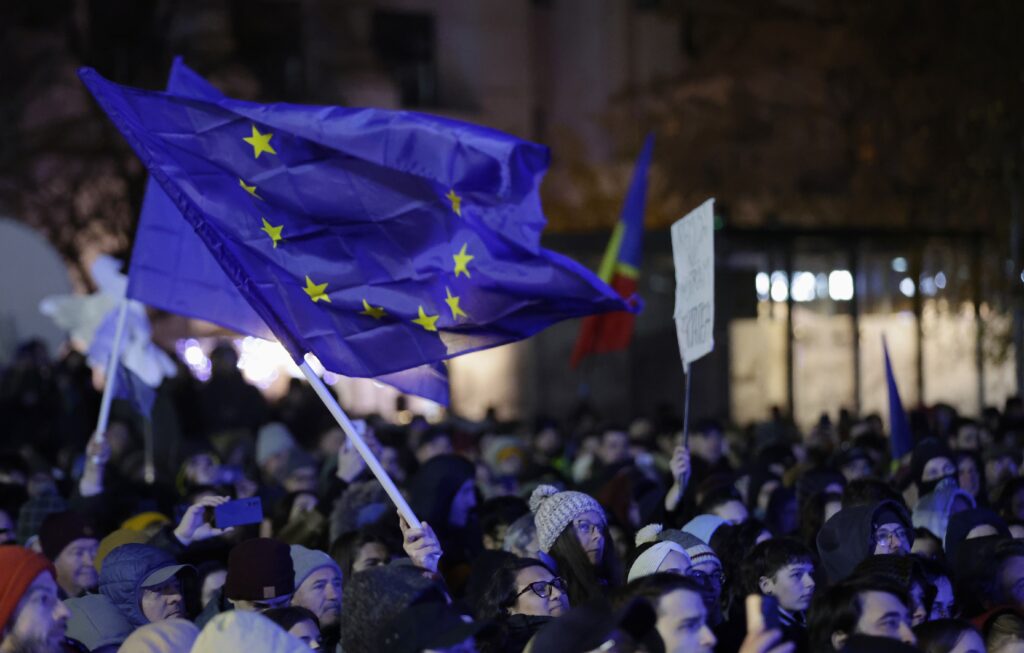
I don’t agree. Now, more than ever, is the time to stick up for democracy — the most fundamental of EU values. As many of the independent citizen observer groups we view as partners lose crucial funding, it is vital we continue to send missions. In fact, cutting back support would be a false economy, amounting to silence precisely when truth and transparency are being drowned out.
I myself observed elections as chair of the European Parliament’s Development Committee. I saw firsthand how EU observation has developed well beyond spotting overt ballot stuffing to detecting the subtleties of unfair candidate exclusions, tampering with the tabulation of results behind closed doors and, more recently, the impact of online manipulation and disinformation.
In my capacity as high representative I also decided to send observation missions to controversial countries, including Venezuela. Despite opposition from some, our presence there during the 2021 local elections was greatly appreciated by the opposition. Our findings sparked national and international discussions over electoral conditions, democratic standards and necessary changes. And when the time comes for new elections once more — as it surely must — the presence of impartial international observers will be critical to restoring the confidence of Venezuelans in the electoral process.
At the same time, election observation is being actively threatened by powers like Russia, which promote narratives opposed to electoral observations carried out by the organizations that endorse the Declaration of Principles on International Election Observation (DoP) — a landmark document that set the global standard for impartial monitoring.
A few years ago, for instance, a Russian parliamentary commission sharply criticized our observation efforts, pushing for the creation of alternative monitoring bodies that, quite evidently, fuel disinformation and legitimize authoritarian regimes — something that has also happened in Azerbaijan and Belarus.
When a credible international observation mission publishes a measured and facts-based assessment, it becomes a reference point for citizens and institutions alike. It provides an anchor for dialogue, a benchmark against which all actors can measure their conduct. Above all, it signals to citizens that the international community is watching — not to interfere but to support their right to a meaningful choice.
Of course, observation must evolve as well. We now monitor not only ballot boxes but also algorithms, online narratives and the influence of artificial intelligence. We are strengthening post-electoral follow-up and developing new tools to verify data and detect manipulation, exploring the ways in which AI can be a force for good.
In line with this, last month I lent my support to the DoP’s endorsers — including the EU, the United Nations, the African Union, the Organization of American States and dozens of international organizations and NGOs — as they met at the U.N. in Geneva to mark the declaration’s 20th anniversary, and to reaffirm their commitment to strengthen election observation in the face of new threats and critical funding challenges. Just days later we learned of the detention of Dr. Sarah Bireete, a leading non-partisan citizen observer, ahead of the Jan. 15 elections in Uganda.
These recent events are a wake-up call to renew this purpose. Election observation is only worthwhile if we’re willing to defend the principle of democracy itself. As someone born into a dictatorship, I know all too well that democratic freedoms cannot be taken for granted.
In a world of contested truths and ever-greater power plays, democracy needs both witnesses and champions. The EU, I hope, will continue to be among them.



Follow