


Wednesday, 14 January, 2026
London, UK
Wednesday, January 14, 2026 4:52 AM
broken clouds 2.0°C
Condition: Broken clouds
Humidity: 92%
Wind Speed: 3.2 km/h

US approves sale of Nvidia’s advanced H200 chips to China

https://ichef.bbci.co.uk/news/1024/branded_news/3a62/live/f45e8fa0-f0da-11f0-a29c-c32ead86fb16.jpg

The US government has given chip giant Nvidia the green light to sell its advanced artificial intelligence (AI) processors in China, the Department of Commerce said on Tuesday.

The H200, Nvidia’s second-most-advanced semiconductor, had been restricted by Washington over concerns that it would give China’s technology industry and military an edge over the US.

The Commerce Department said the chips can be shipped to China granted that there is sufficient supply of the processors in the US.

President Donald Trump said last month that he would allow the chip sales to “approved customers” in China and collect a 25% fee.

The BBC has contacted Nvidia for comment.

The Commerce Department’s Bureau of Industry and Security said its revised export policy applies to Nvidia’s H200 chips, as well as less advanced processors.

The H200 chip is a generation behind Nvidia’s Blackwell processor, which is considered to be the world’s most advanced AI semiconductor and remains blocked from sale in China.

Nvidia has been caught in a geopolitical tug-of-war between the US and China – two sides of a global AI race.

Trump reversed the chip-selling restriction last July, but demanded that Nvidia pay a cut of its earnings from China to the US government.

Beijing then reportedly ordered its tech companies to boycott Nvidia’s China-bound chips and prioritise semiconductors made domestically. That move was designed to bolster China’s tech industry, though experts have consistently said that the country’s chips still lag behind the US.

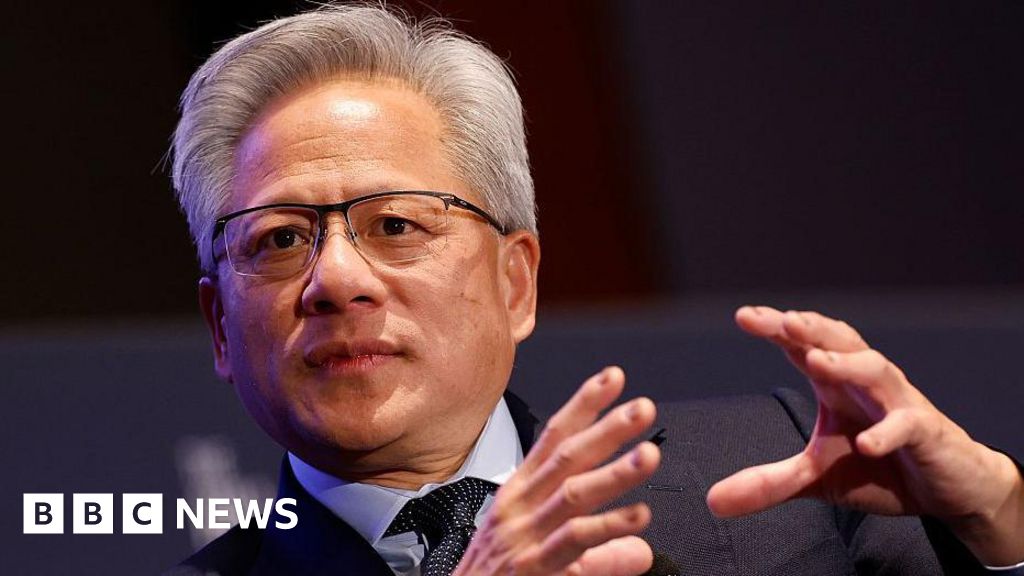
Throughout 2025, Nvidia CEO Jensen Huang continually lobbied Washington to allow the sale of the firm’s high-powered chips to China, arguing that global market excess is essential for America’s competitiveness.

Some officials in the US, however, have expressed concerns that the chips would benefit Beijing’s military and hurt America’s progress in AI development.


LP Staff Writers

Writers at Lord’s Press come from a range of professional backgrounds, including history, diplomacy, heraldry, and public administration. Many publish anonymously or under initials—a practice that reflects the publication’s long-standing emphasis on discretion and editorial objectivity. While they bring expertise in European nobility, protocol, and archival research, their role is not to opine, but to document. Their focus remains on accuracy, historical integrity, and the preservation of events and individuals whose significance might otherwise go unrecorded.

Categories

Follow

    Newsletter

    Subscribe to receive your complimentary login credentials and unlock full access to all features and stories from Lord’s Press.

    As a journal of record, Lord’s Press remains freely accessible—thanks to the enduring support of our distinguished partners and patrons. Subscribing ensures uninterrupted access to our archives, special reports, and exclusive notices.

    LP is free thanks to our Sponsors

    Privacy Overview

    Privacy & Cookie Notice

    This website uses cookies to enhance your browsing experience and to help us understand how our content is accessed and used. Cookies are small text files stored in your browser that allow us to recognise your device upon return, retain your preferences, and gather anonymised usage statistics to improve site performance.

    Under EU General Data Protection Regulation (GDPR), we process this data based on your consent. You will be prompted to accept or customise your cookie preferences when you first visit our site.

    You may adjust or withdraw your consent at any time via the cookie settings link in the website footer. For more information on how we handle your data, please refer to our full Privacy Policy
