



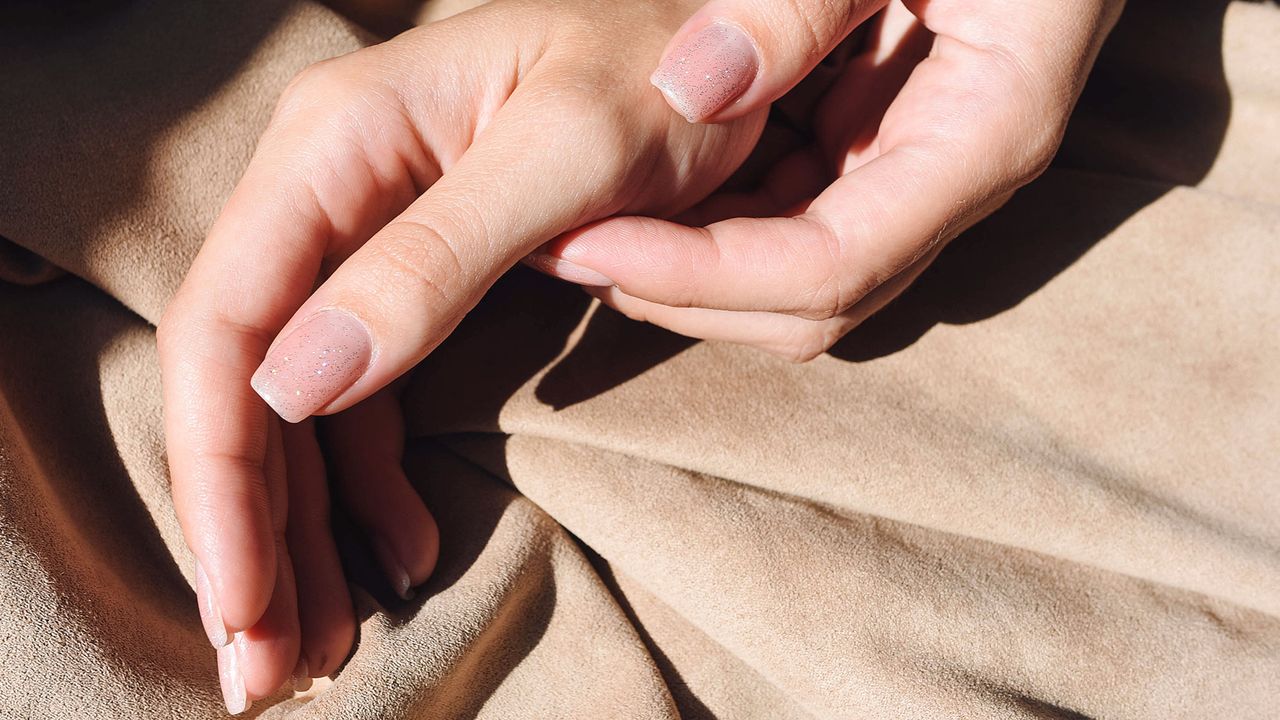
If you’re wondering how to strengthen your nails, chances are you’re suffering with weak, brittle tips that need a little TLC. But you’re not alone: it’s estimated that around 1 in 5 of us experience weak nails, with women more likely to suffer.
The medical term for peeling, flaky nails is ‘onychoschizia’ – often caused by trauma to the nail plate, such as chemical exposure, lack of moisture or even nutritional deficiencies. Others may experience thinning, bendy nails due to over-filing or peeling off gel manicures (guilty!) – but either way, your nails are an extension of your skin and need looking after just as carefully.
In this article:
“Just like we deep-condition and treat dry, over-processed hair, it is crucial to take care of the nail and cuticle,” says Dr. Dana Stern, a US-based dermatologist who specialises in nail health.
If you’re suffering with weak, bending or flaking tips, read on to find out everything you need to know about how to strengthen nails and restore them to their former glory…
Meet the experts:
- Dr. Aiza Jamil, consultant dermatologist at SK:N Clinics
- Dr. Dana Stern, dermatologist and founder of nail renewal system Dr. Dana
- Tinu Bello, session nail technician, educator and brand ambassador for Mylee
What are the signs and symptoms of weak nails?
“Weak nails often show up as nails that peel, split or flake at the edges, rather than growing smoothly,” says Dr. Jamil. “People may notice their nails bend very easily, break before they reach any length, or develop ridges and uneven surfaces. In some cases, nails can feel thin, soft or tear rather than snap, which is a classic sign of structural weakness.”
According to Tinu, it’s also worth looking at how your manicures are faring. “If your nails never seem to ‘hold on’ to polish or gel, that’s often a clue they need some TLC too,” she says, adding: “You might also notice nails struggling to grow past the fingertip or looking a bit dull and uneven rather than smooth and glossy.”
What are the main causes of weak nails?
According to Dr. Stern, there are two categories of nail damage. “The first category are the factors that are difficult to control like genetics, ageing and certain medical conditions,” she explains, and so some of this damage is simply unavoidable. The second, and more common category, consists of environmental factors that are easier to control – this might include gel manicures, but also using your nails as tools to open things, exposing them to damage like DIY and chemicals, submerging them in water for long periods of time (like when you do the washing up), or improper filing.
Dr. Jamil adds: “Frequent exposure to water and chemicals – such as hand sanitiser, detergents and cleaning products – is a major factor, as this strips the natural oils from the nail plate. Overuse of gel manicures, acrylics or aggressive nail filing can also thin the nail. Internally, nutritional deficiencies, hormonal changes, stress and certain medical conditions like thyroid disorders or iron deficiency can all contribute. Ageing also plays a role, as nail growth and keratin quality naturally decline over time.”
How to strengthen nails
Protect your nails and keep them short
“The most effective approach is consistency and protection,” says Dr. Jamil. “Keeping nails short while they recover reduces breakage. Wearing gloves for washing up or cleaning is incredibly important too, as excess moisture weakens the nail structure.”
“Nails are extremely absorptive of water, even more so than skin,” adds Dr. Stern. “When the nail absorbs water, it puts tremendous strain on the nail cells, or onychocytes [the cells that form the nail plate], which can lead to peeling, breakage, and weakening.”
Moisturise the hands and cuticles
“The key is protection + hydration + gentle care,” says Tinu, adding: “Oil your nails daily – this is non-negotiable. A nourishing oil like Mylee’s Nail & Cuticle Oil keeps the nail flexible so it bends instead of breaks.”



Follow