



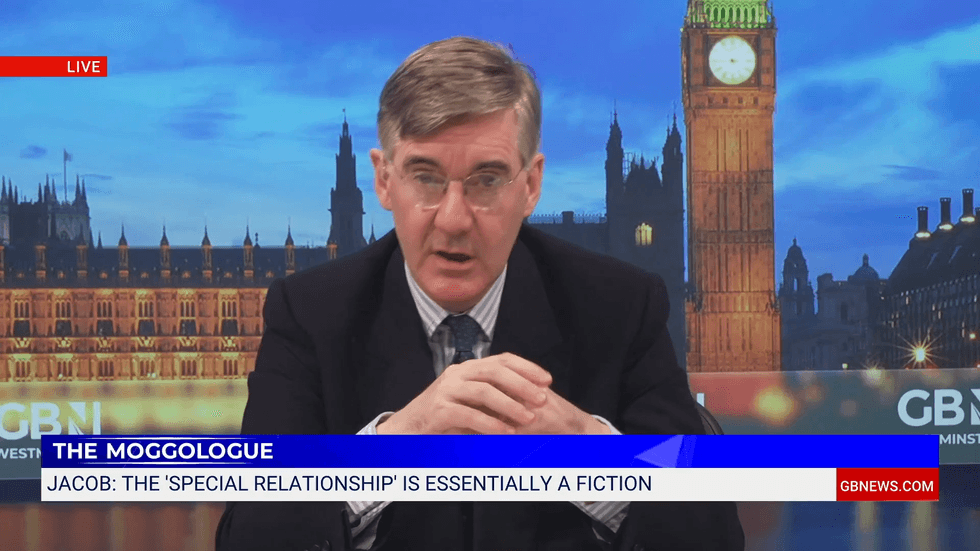
Henry John Temple, Lord Palmerston, one of my great heroes, famously said: “We have no eternal allies and we have no perpetual enemies. Our interests are eternal and perpetual, and those interests it is our duty to follow.”
On foreign policy, it’s crucial to remember that we don’t have people around the world who are always our friends and who are always on our side.
Over a thousand years of history, sometimes we’ve been at war with France. Sometimes we’ve been sympathetic to France. Sometimes we’ve been at war with Germany.
And sometimes, as in victory against Bonaparte at the Battle of Waterloo, the Germans have been on our side.
Across these great spans of history, we have had alliances and enemies, but our interests should always, invariably and unfailingly, be those of the United Kingdom, of Great Britain and Northern Ireland.
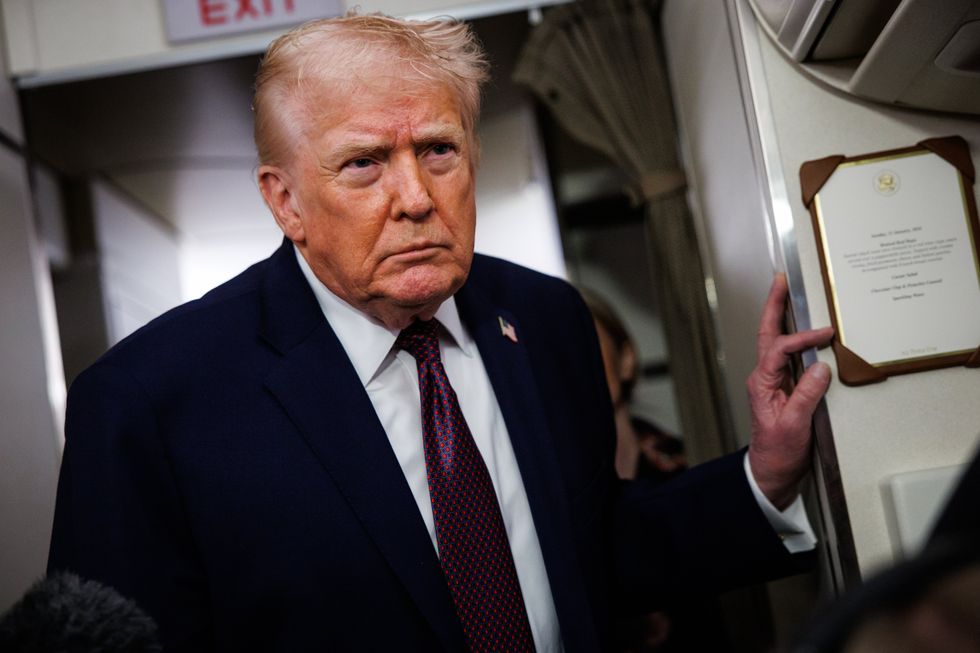
Over the weekend, President Trump, the President of the United States, triggered the largest crisis in UK–US relations since Suez in 1956, as he announced his intention to impose a 10 per cent tariff on all goods imported into the United States from Britain and seven other European countries unless they let him take control of Greenland.
The levies would rise to 25 per cent on June 1 if an agreement were not reached.
The Prime Minister responded in an emergency press conference this morning: “Alliances endure because they are built on respect and partnership, not pressure.
“That is why I said the use of tariffs against allies is completely wrong. It is not the right way to resolve differences within an alliance.”
I think it is actually wrong that alliances depend upon self-interest and pressure determining who we choose as an ally.
Donald Trump’s attitude towards Greenland is hostile to the interests of His Majesty’s Government and indeed of His Majesty’s subjects.
It’s not something that we can simply roll over and say, ‘Go in and take it.’
LATEST DEVELOPMENTS
- ‘I don’t get why some organisations are still dragging their heels on protecting female only spaces’
- ‘Are our leaders willing to face up to the decline of Western civilisation?’ Alex Armstrong asks
- ‘The mass migration experiment has failed – being able to get a takeaway 24/7 isn’t worth it’
I believe in nation states. I’m a Westphalian. But that means nation states have borders, and borders need to have a degree of integrity and security.
Other nation states have a strong interest in defending them, even when they’re small.
The one thing you cannot do is invade another country or take its territory, because it then becomes open season.
That applies just as dramatically as it does to Russia in Ukraine, or China in relation to Taiwan, or Iraq when it invaded Kuwait.
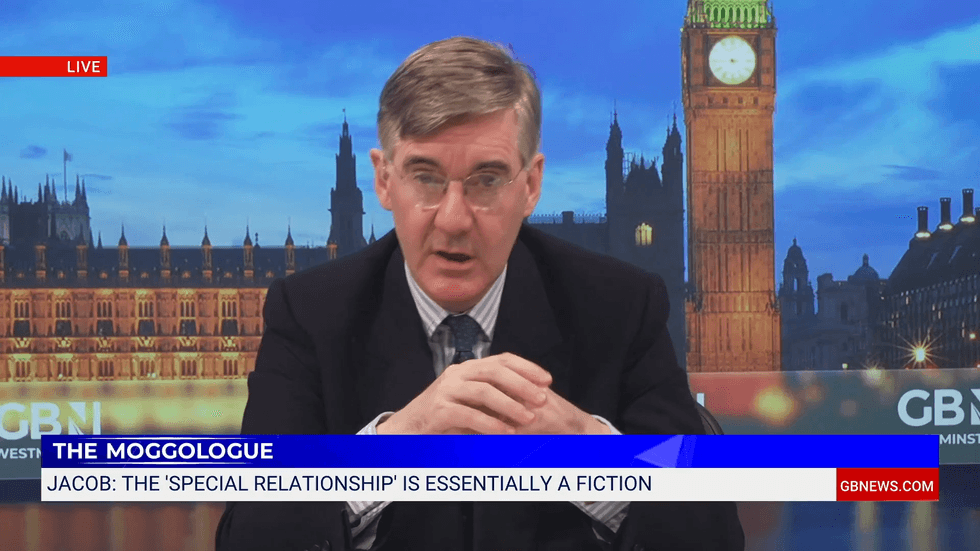
So what can we do? Well, we have to recognise one really crucial fact, and that is that the special relationship is essentially a fiction.
It’s a fiction that plays to the home crowd of the United Kingdom, but it’s pretty meaningless. America operates in America’s interests.
Now, fortunately, our interests and those of the United States often coincide, as they did in the second half of the Second World War and throughout the Cold War.
When that happens, it makes sense sometimes to do things that you wouldn’t otherwise choose to do because they benefit your ally in the bigger picture. That’s perfectly rational.
But there will come points when we must realise that there are other countries in the world with whom we can do business, and with whom we should have special relationships.
We should look at strengthening our alliance with India. It is proving in this century to be a great and powerful country, and that will continue. It’s becoming increasingly important.
We should also look at our alliance with Japan. Even the powerful United States cannot afford to alienate all its allies at once.
If we have deep alliances with countries across the globe, we protect our interests, and we may encourage the United States to be a little less aggressive.
America may want Greenland. It may want money and resources from Greenland, along with rare earth metals.
But taking it from Denmark is against our national interest, and we have to be as Palmerston said devoted to our national interest.
Our Standards:
The GB News Editorial Charter



Follow