



Hungarian Prime Minister Viktor Orbán is exposing a dangerous weak link in EU law that allows populist governments to shield their allies from jail, Poland’s Justice Minister Waldemar Żurek warned in an interview with POLITICO.
Żurek’s concerns focus on the Hungarian government’s decision last month to grant asylum to Zbigniew Ziobro, a justice minister in Warsaw’s former nationalist Law and Justice (PiS) administration.
Budapest’s foreign ministry argued that criminal investigations against Ziobro in Poland — into alleged misuse of public funds and deployment of Pegasus spyware against political opponents — amount to political persecution.
Żurek, from the liberal, pro-EU government of Donald Tusk, retorted this use of political asylum now poses a massive challenge to the EU’s ability to enforce rule of law. If Hungary’s approach goes unanswered, he warned, others will bypass the courts across the 27-country bloc to protect their political allies.
“This is a dangerous precedent for the entire European Union,” Żurek said. “If the EU accepts this, everyone will start citing it … justice will become a political tool.”
“An asylum decision is a political decision — not a ruling by an independent court,” he added. “That is what is most worrying, because it circumvents the rules of the European arrest warrant.”
Ziobro fled to Hungary after losing parliamentary immunity in November.
A Polish court is expected to decide in February whether to order Ziobro’s arrest. Under normal EU practice, such a ruling would trigger swift extradition. But in Orbán’s Hungary, there is a high risk it will hit a dead end.
A loophole already in use
This is not Poland’s first run-in with this loophole. Ziobro’s case follows that of his former deputy, Marcin Romanowski, who was granted asylum by Hungary in 2024 and remains there despite a valid arrest warrant. EU institutions have so far failed to take any step to force Budapest to hand him over.
The case exposes a structural flaw in the EU’s justice system, which depends on mutual trust between member states to enforce each other’s court decisions. That reliance means European arrest warrants work only if governments choose to enforce them. And when one refuses, the EU has no clear, effective way to make it comply.
At the end of December, Budapest hard-wired that loophole into law by barring courts from applying European arrest warrants once asylum has been granted.
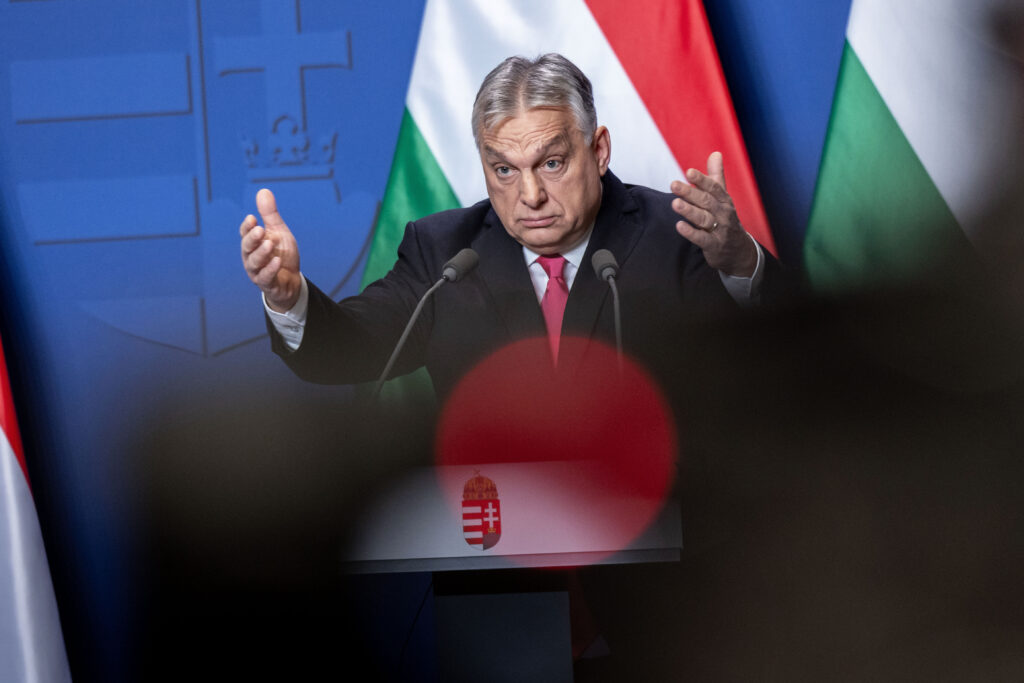
Hungarian officials have defended the decision as necessary to protect Polish politicians from what they describe as political persecution. Foreign Minister Péter Szijjártó said Hungary had granted asylum to Polish citizens because “democracy and the rule of law are in crisis” in Poland.
Ziobro himself embraced that suggestion. In a statement published from Budapest, he said he had accepted asylum because he was resisting “political banditry” and a “creeping dictatorship” in Poland under Prime Minister Tusk. He thanked Orbán for what he called Hungary’s “courageous leadership” and said he would remain abroad until “genuine guarantees of the rule of law” are restored.
Żurek said it matters who is exploiting the loophole. Orbán, he said, is Russian President Vladimir Putin’s “closest ally inside the European Union” and a leader prepared to show how far EU law can be pushed without consequence.
He said the European Commission should take Hungary to the Court of Justice of the EU, the bloc’s highest court. Only a binding ruling, he added, could stop governments from using asylum as a shield against criminal accountability.
The Commission has yet to act. Spokesperson Markus Lammert said last week that EU law presumes all member countries are safe from political persecution, meaning EU citizens should not need asylum elsewhere in the bloc. Poland, he added, does not meet the threshold for an exception to that rule.
The danger of waiting it out
The timing is sensitive as Hungary heads toward an April election. Opposition leader Péter Magyar, a former Orbán ally turned critic, has campaigned on a pledge to ease tensions with Brussels.
But Żurek said Poland’s own experience shows why betting on political change would be a mistake for EU institutions.
Years of rule-of-law clashes under PiS left damage that has proved hard to undo even after Tusk returned to power in 2023.
Despite the change in government, Poland remains locked in an institutional conflict with President Karol Nawrocki, a nationalist ally of PiS whose veto powers have blocked key reforms.
Earlier this month, Nawrocki vetoed legislation implementing the EU’s Digital Services Act, attacking the law using rhetoric echoing U.S. President Donald Trump’s criticism of the tech regulation as censorship.
“If EU structures react too slowly, this disease can become fatal for democracy,” Żurek said.
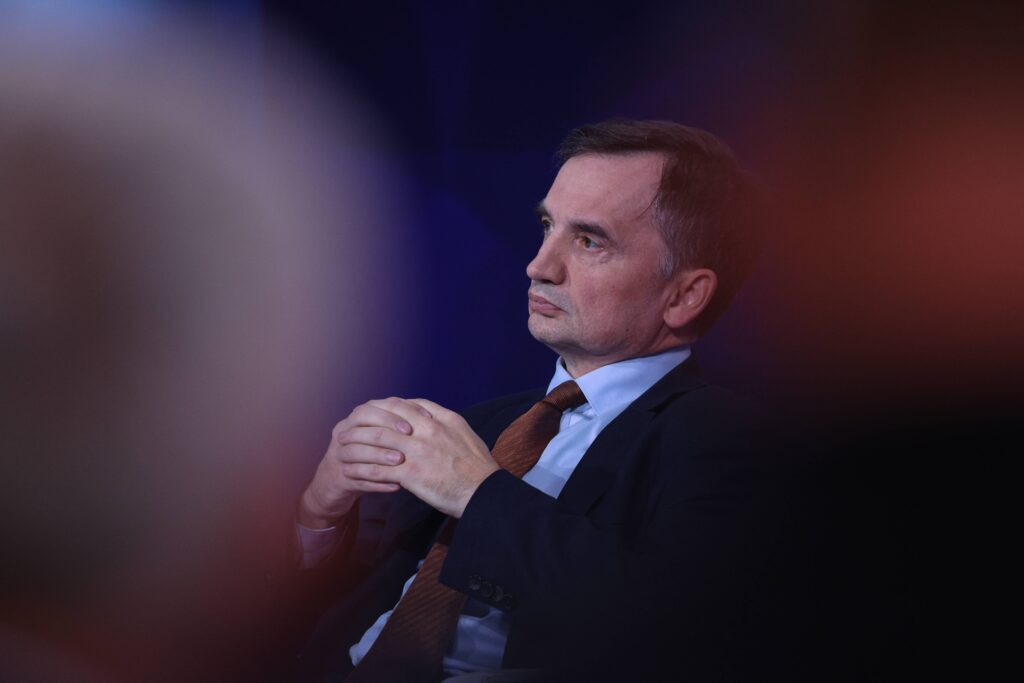
From France’s Marine Le Pen and Austria’s Herbert Kickl to the Netherlands’ Geert Wilders, hardline European politicians have long portrayed legal accountability as political persecution.
Today this framing also lifts heavily from Trump’s playbook, Żurek said, recasting courts, prosecutors and regulators as partisan enemies to make defying judicial decisions politically acceptable.
“These politicians present themselves as conservatives,” he said. “In reality, they are populists and nationalists — and that is extremely dangerous for Europe.”
The consequences are already visible inside Poland’s justice system.
“I hear prosecutors say in private: ‘I can bring charges today — and become a target of revenge in a few years,’” Żurek said. “Even final convictions can be wiped out by presidential pardons. That sense of futility is deeply destructive. People are simply afraid.”



Follow