



Elisabeth Braw is a senior fellow at the Atlantic Council, the author of the award-winning book “Goodbye Globalization” and a regular columnist for POLITICO.
You may have heard that some unsavory ships have been navigating our waters, smuggling drugs and other goods, damaging underwater infrastructure and sometimes just lurking, perhaps conducting surveillance.
Many of these ships turn up in Irish waters, which are home to multiple undersea cables. But while Ireland has a tiny navy to deal with these unwanted visitors, it does have another formidable resource that helps keep its waters safe: its fishermen. And for the sake of national security, let’s hope this shrinking tribe manages to renew its ranks.
In January 2022, Ireland was facing a terrible dilemma: The Russian Navy had just announced it was going to hold an exercise in Irish waters. Conducting wargames in the exclusive economic zones of other countries is legal, but guests ordinarily ask for permission — and Russia definitely wasn’t a welcome visitor. Like the rest of Europe, Ireland was gripped with fear that Russia was about to invade Ukraine and perhaps other countries. Dublin politely asked the Russian Navy to refrain from holding its exercises, but to no avail. The wargames were going to take place.
But then the Irish government received assistance from an unexpected source. The country’s fishermen declared they wouldn’t allow the exercise to happen: “This is the livelihoods of fishermen and fishing families all around the coastline here,” announced Patrick Murphy, chief executive of the Irish South and West Fish Producers Organisation, on RTE radio. “It’s our waters. Can you imagine if the Russians were applying to go onto the mainland of Ireland to go launching rockets, how far would they get with that?”
The fishermen, Murphy explained, would take turns fishing around the clock. The maneuver made it impossible for the Russians to perform their exercises, and Moscow ended up cancelling the wargames.
The creativity of these gutsy fishermen made global news, but away from the headlines, they and their colleagues in other countries have long been aiding national security. In the early hours of Oct. 28, 1981, two Swedish fishermen on their daily round off the coast of Karlskrona noticed something unusual. They decided to alert the authorities, and the navy dispatched a vessel. What the fishermen had spotted turned out to be the U137 — a Soviet nuclear submarine that had run aground.
The incident demonstrated several things: First, fishermen know their countries’ waters like almost no one else and notice when something is out of the ordinary. Second, the navy — or the coast guard — can’t be everywhere all the time. And third, fishermen can perform a vital service to national security by alerting authorities when something doesn’t look right. The grounded U137 wasn’t a one-off. In fact, fishermen keep a vigilant eye on their surroundings on behalf of their compatriots all the time.
Ireland’s large number of undersea cables is the result of the country’s strategic location at the westernmost end of the north Atlantic and its need for top-notch connectivity to service its high-tech economy. Indeed, the republic has marketed its connectivity — and low corporate taxes — so successfully that a host of U.S. tech firms and other corporate giants have set up European hubs there.
But its waters cover a vast 880,00 square kilometers. That’s a challenge for the Irish Naval Service, which has a small fleet of eight patrol vessels, and such a shortage of sailors that it can’t even crew those few vessels. Despite placing a few orders for maritime equipment recently, it’s in no position to detect all the suspicious activity taking place in Ireland’s waters.
That’s where the fishermen come in.
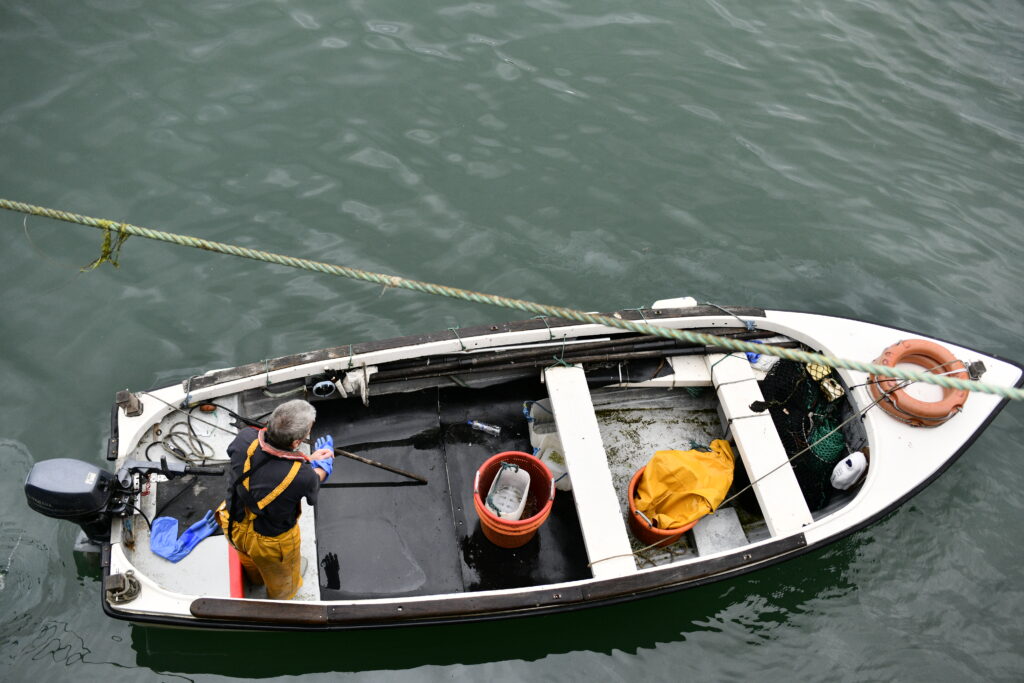
Because they spend so much time at sea — some 200 days in the average year — they are adept at spotting drug boats or, say, potential saboteurs. When the authorities detect something unusual, perhaps via radar, they often ask fishermen what they’ve seen. “People ring us up and say: ‘Did you notice ABC?’,” Murphy told me. “Then we send them pictures. A lot of fellas send in pictures and tracking. WhatsApp is very good for this.”
This monitoring, Murphy said, isn’t just a phenomenal alert system. “It’s a deterrent.”
We’ll never know how many unwelcome visitors that vigilance has deterred. But in keeping their eyes open, fishermen perform an indispensable service to Irish security — and it costs the government nothing. As unwanted visitors keep turning up in our waters, such contributions to national security are becoming increasingly essential all around Europe.
There’s just one problem: The fishing profession is losing manpower.
In Ireland, the fishing fleet has shrunk from some 400 vessels to just over 100 in the past two decades due to economics, foreign competition, fishing quotas and maritime regulations. From a security perspective, this continued decline of Irish — and European — fishermen is dangerous. They’re the best soldiers we never knew we had.



Follow