



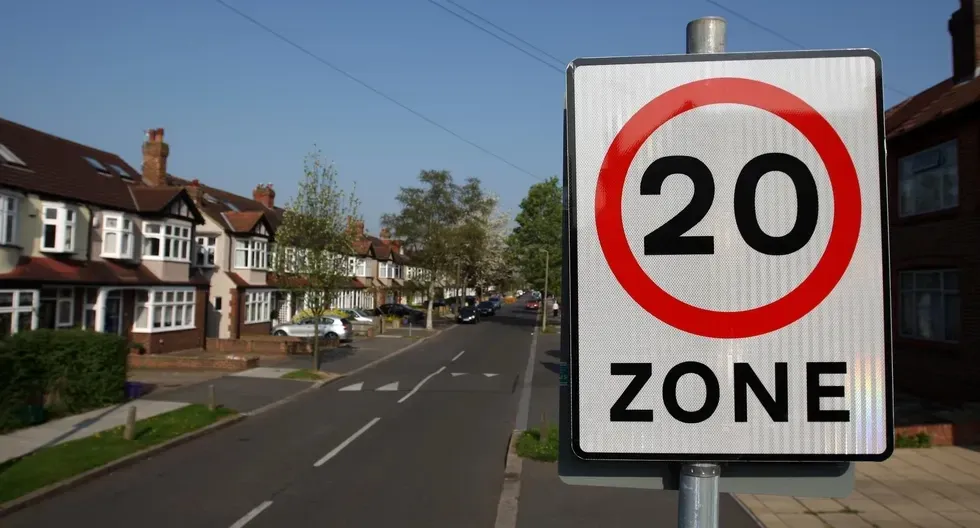
A Liberal Democrat-led council has been accused of disregarding the views of local residents after pressing ahead with 20mph speed restrictions despite clear opposition in its own public consultation.
Wokingham Borough Council surveyed its 177,500 residents last year about reducing speed limits from 30mph in two areas near Reading as part of plans for a new walking and cycling route.
The results showed significant resistance to the proposals, with nearly 70 per cent of respondents in Woodley rejecting the lower limit and 60 per cent opposed in Earley.
Despite this, the council confirmed last week that the scheme would proceed regardless, with roadworks scheduled to commence next week.
In a newsletter, the authority acknowledged “strong objections” but maintained that Department for Transport guidance recommending 20mph limits on mixed-use routes for road safety purposes took precedence.
A council representative responding to critical comments on the authority’s official Facebook page defended the decision.
The spokesman said: “A consultation on a Traffic Regulation Order is something that all councils are legally required to do, and they’re legally required to show they’ve read and considered every response, but they aren’t a referendum.”
The official added that the threshold for reversing any proposal at this stage was “typically fairly high.”
He further explained that government guidelines recommend 20mph speed limits as best practice for active travel schemes of this nature, which “weighs strongly in its favour.”
The response came after numerous residents complained on social media that their views had been dismissed by the authority.
Keith Baker, a 74-year-old former leader of the council who opposes the scheme, described the authority’s handling of the consultation as extraordinary.
“Time and time again, councils run consultations with the belief they are going to ignore them anyway but they never state that publicly. But this is unique,” he said.
LATEST DEVELOPMENTS
- National speed limit changes to see HGVs move faster and more 20mph zones launched under new plans
- Motorists to be slapped with £100 fines this week as ‘completely bonkers’ 20mph speed limits come into effect
- Motorists to see hundreds of roads become 20mph this month in blow to thousands
Mr Baker questioned the fundamental purpose of seeking public input when the outcome appears predetermined.
He said: “Why do a consultation if they know what they are going to do anyway? That’s why consultation responses are in such low numbers because residents think, what’s the point?
“This is the clearest example I have ever seen of a consultation being simply a tick-box exercise.”
He also raised concerns about the conduct of the officer who engaged with residents online, asking: “Who leads the council: is it officers or the elected councillors?”

Stephen Conway, the council leader, rejected accusations that residents had been ignored.
“We did not ignore residents. Consultation feedback informed the decision, but consultations are not votes and do not determine outcome by majority rule,” he said.
Mr Conway argued the authority was obliged to weigh safety evidence, national guidance and the requirements of all road users alongside public opinion.
He noted that fewer than half of consultation responses specifically addressed the speed limit proposals, with many offering general observations rather than detailed objections to the scheme.
He added: “Strong evidence shows that lower speeds improve road safety and wider engagement shows clear support for safer roads.
“Taken together, these factors informed the decision to introduce 20mph limits as a necessary part of the new walking and cycling route from Woodley to Reading.”
Research by The Times has found that approximately a third of British roads now have 20mph limits, covering some 39,000 miles of the network.
Our Standards:
The GB News Editorial Charter



Follow