



PARIS — European populist champions are turning away from a U.S. president they once openly admired.
As Donald Trump escalates his attacks on the continent, his scorched-earth approach to transatlantic relations is becoming a political liability — even for leaders who previously benefited from their association with him.
For the right-wing and far-right movements in Europe, Donald Trump’s “Make America Great Again” movement offered validation from the other side of the Atlantic for similar populist movements back home — until its leader started threatening the invasion of a European territory.
While on Wednesday Trump backtracked on his administration’s threats, saying he will not take Greenland by force and would suspend his tariff threats, powerful right-wing figures in the continent’s capitals and core EU institutions have already shifted their narrative to adapt to the transatlantic hostility, mimicking the centrist leaders they loathe and dialing up the rhetoric against American imperialism.
“I think we should be honest,” said Nicola Procaccini, the leader of the right-wing European Conservatives and Reformists group in the European Parliament, who is also Italian Prime Minister Giorgia Meloni’s right-hand man in the chamber. “When Trump is wrong, we should say he’s wrong, when he’s right, we should say he is right.”
Jordan Bardella, president of France’s far-right National Rally, and Nigel Farage, the populist leader of Reform UK, condemned Trump’s escalating threats over Greenland and his use of tariffs as coercive leverage against the very countries they hope to govern. Both are wary of appearing too close to a figure increasingly viewed by public opinion, including their voters, as a hostile force.
Trump’s aggressive push on Greenland “goes way beyond a diplomatic disagreement,” Bardella said in the European Parliament on Tuesday, describing the U.S. president’s tariff threats as “blackmail” and accusing him of attempting the “vassalization” of Europe.
In the same address he called on the EU to activate its so-called trade bazooka, also known as the anti-coercion instrument, aligning with the position of his rival, President Emmanuel Macron. That puts Bardella at odds with a leader to whom he has long felt an affinity: Meloni, whose government is still advocating a let’s-keep-calm-and-negotiate approach.
Even the far-right Alternative for Germany, which once openly embraced support from the Trump administration, is scrambling to recalibrate.
Wannabes vs. incumbents
Populist leaders in office are proceeding cautiously, well aware of the risk of alienating a powerful but unpredictable ally.
Italy’s Meloni, whose status as a Trump whisperer has raised her international profile, has so far refrained from directly criticizing the U.S. president’s offensive on Europe’s sovereignty.
As Trump announced he would slap punitive tariffs on NATO allies that have opposed his move on Greenland, he noticeably spared Italy, which has criticized European troop deployments to the Arctic territory.

Similarly, speaking from Davos, Poland’s President Karol Nawrocki, a Trump stalwart, said the U.S. remained his country’s “very important ally.” But even he balked at one of the U.S. president’s recent initiatives, with one of his aides expressing concerns about the inclusion of Russian President Vladimir Putin in the U.S.-led “Board of Peace.”
In the European Parliament, Hungarian Prime Minister Viktor Orbán’s troops continue to seek close ties with Trump and are downplaying the annexation threats, arguing that Greenland is an issue solely between Denmark and the United States.
“With President Donald Trump comes peace,” Orbán said three days ago on X.
By contrast, far-right figures who still are aiming for higher office have adjusted their rhetoric.
In France, the National Rally has always been cautious in its approach to Trump, trying to maintain a healthy distance. But Bardella himself had flattering words for the U.S. president as recently as last month, when he said in a BBC interview that Trump was an example of the “wind of freedom, of national pride blowing all over Western democracies.”
In the same interview, Bardella gave a hat tip to Trump’s successes at home and “welcomed with a certain goodwill” the moral support offered to nationalist European parties in Trump’s National Security Strategy, a bombshell policy paper widely received as another nail in the coffin of the traditional world order.
End of a bromance
In the U.K., Farage can claim to be a longtime friend of Trump, having campaigned for him during his 2016 presidential run and later being welcomed to Trump Tower as his personal guest.
But this week the populist leader opened up clear blue water between himself and the U.S. president by saying Trump’s Greenland threats represent the “biggest fracture” in the transatlantic relationship since the Suez crisis of 1956.
The Reform leader, who is scenting real power ahead of the next general election, is well known for being attuned to public opinion — which remains pretty hostile toward the U.S. president.
Trump was unpopular in Europe even before the Greenland offensive, including among the supporters of right-wing populist parties he sees as allies, according to a POLITICO Poll in partnership with Public First conducted in November.
Farage supporters were the exception, but even so, only 50 percent of Reform-aligned respondents had favorable views of Trump.
Public distance vs. private embrace
France’s Marine Le Pen has long warned her troops against embracing Trump too loudly.
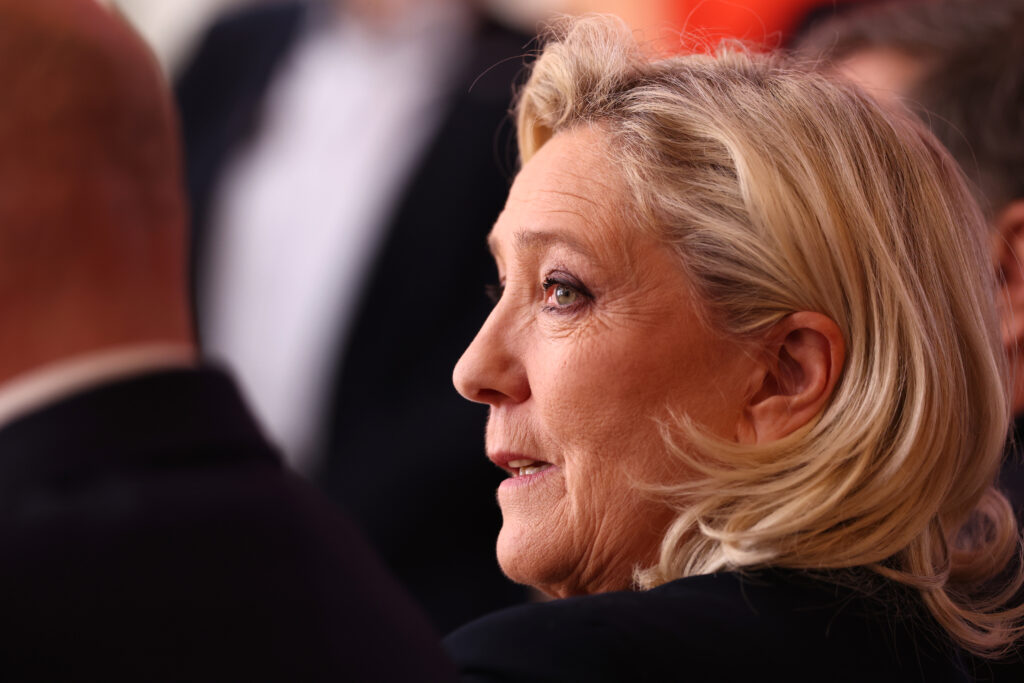
While the American president is ideologically close to her National Rally on some subjects, first among them migration, Trump’s interference in domestic politics has ruffled the far-right veteran’s feathers.
After U.S. Vice President JD Vance’s fiery speech at the Munich Security Conference last year, where he criticized longstanding policies by centrist parties against collaboration with the far right, she warned her troops against cheering the apparent win for their camp.
Still, the party’s leading figures have also looked at Trump for inspiration and sought to emulate some of his movement’s successes.
Last September, her former partner and National Rally Vice President Louis Aliot, who traveled to the U.S. for Trump’s inauguration, gave a passionate speech on democracy and freedom of speech at the party’s back-to-school meeting in Bordeaux, paying tribute to slain U.S. conservative influencer Charlie Kirk — a name virtually no one in France’s heartland had heard of before his assassination. He elicited roars from the crowd.
Now, far-right politicians may legitimately fear that invoking Trump will earn them boos instead of claps.
Esther Webber contributed reporting from London. Ketrin Jochecová contributed reporting from Brussels.



Follow