



BRUSSELS — Europe is incapable of defending itself without America, NATO chief Mark Rutte said on Monday, speaking just days after Donald Trump’s repeated threats to seize Greenland pushed the alliance to the brink of collapse.
“If anyone thinks here … that the European Union or Europe as a whole can defend itself without the U.S., keep on dreaming,” he told lawmakers on the European Parliament’s defense and foreign affairs committees. “You can’t.”
A “European pillar [of NATO] is a bit of an empty word,” Rutte said, arguing a European army would create “a lot of duplication” with the alliance. Moreover, Russian President Vladimir “Putin will love it,” he added.
Rutte went on to insist that the EU allow Ukraine to spend part of the bloc’s upcoming €90 billion loan to Kyiv on weapons from the United States, despite a push by some member countries like France to spend the money on the bloc’s own military suppliers.
The comments form part of a broader pattern in which Rutte has insisted that Europe has to keep channels open to the United States, and that the U.S. president remains loyal to the alliance. Washington still has a “total commitment” to the alliance’s collective defense, he said. “The U.S. needs NATO.”
He also credited Trump for getting all NATO countries to boost their defense spending to at least 2 percent of GDP as of last year.
“Do you really think that Spain and Italy and Belgium and Canada would have decided to move from 1.5 to 2 percent … without Trump. No way,” Rutte said.
Without the U.S., defending Europe would cost a fortune, he added.
“For Europe, if you really want to go it alone … forget that you can ever get there with 5 percent,” Rutte said, referencing a pledge by NATO allies to ramp up their defense spending to 5 percent of GDP by 2035. “It will be 10 percent,” he argued, and cost “billions and billions of euros” to replace America’s nuclear deterrent.
The secretary-general’s reassurances that Trump is committed to NATO follow weeks of threats from the U.S. president suggesting he could take Greenland by force, and that he would levy fresh tariffs against European countries for deploying limited troops to the self-ruling Danish territory.
Last week, Trump finally ruled out using force and U-turned on the tariffs after setting out a deal he said would give the U.S. more control over the giant Arctic island — although both Denmark and Greenland insist they will not compromise on sovereignty.
Rutte, whom Trump credited with helping broker the alleged agreement, admitted he had “no mandate to negotiate” on behalf of Denmark. He also dismissed the idea that the talks on Greenland were linked to ensuring U.S. security guarantees for Ukraine.
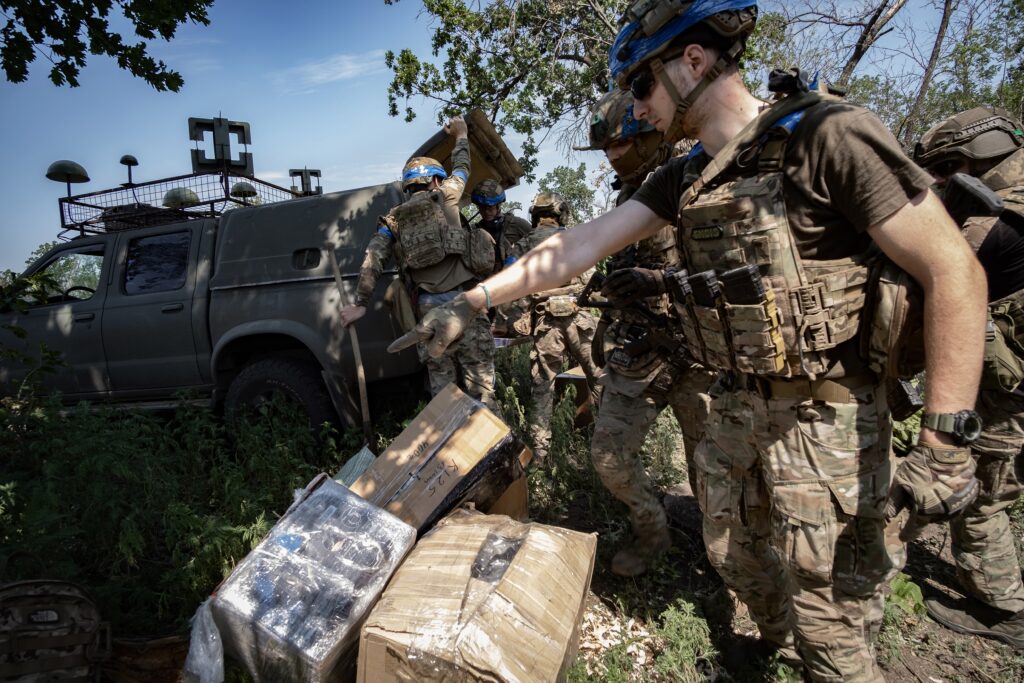
The EU should also not exclude U.S. weapons firms from the €90 billion loan for Ukraine, the former long-serving Dutch prime minister said.
The “loan package … will make a massive difference to Ukraine’s security” Rutte told lawmakers. “But here I would really strongly urge you to ensure flexibility in how these funds can be spent and not to be overly restrictive with ‘buy EU’ caveats.”
Under its proposal published this month, the European Commission said two-thirds of that cash would go toward Ukrainian military expenditures, with EU arms-makers prioritized as suppliers.
As a result, Kyiv can only tap the loan to buy non-European weapons if it has an “urgent need for a product and where no alternative [exists],” and if it has obtained approval from the EU executive and the bloc’s capitals.
That came after France, backed by Greece and Cyprus, lobbied to bar non-EU countries like the U.S. from winning contracts financed with that money — a move opposed by countries like Germany and the Netherlands.
Rutte warned that restricting Kyiv’s ability to make spending decisions would hamper its military efforts.
“Europe is now building its defense industry … but it cannot at the moment provide … nearly enough of what Ukraine needs to defend itself today,” he said. “So as you take this loan forward, please I encourage you to keep Ukraine’s needs first in focus.”
The Parliament last week agreed to fast-track the loan, designed to last until 2027, while EU capitals are in talks to broker a compromise on the legal proposal.
Gregorio Sorgi contributed reporting.



Follow