



LISBON — To stop the explosive growth of the ultranationalist Chega party, Portugal’s leading conservatives are doing the previously unthinkable: endorsing the center-left candidate for president.
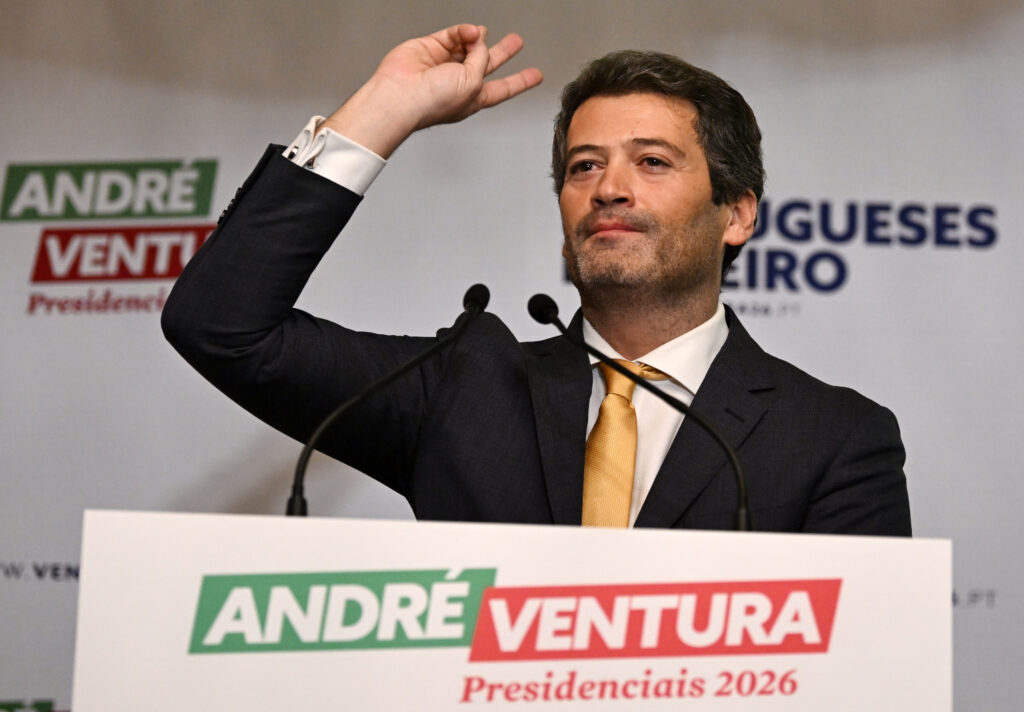
Last week, Portugal’s prominent center-right politicians are publicly backing António José Seguro — a former secretary general of the Socialist Party — in the runoff presidential election on Feb. 8. The conservative endorsement is a collective rejection of the opposing candidate, far-right Chega leader André Ventura, who was the runner-up in the first round of voting in January.
Although current polls indicate Ventura has no real possibility of winning the second round, the conservatives publicly backing Seguro say they’re doing so to underscore the center-right’s commitment to democratic values.
Those who have spoken out include former President and Prime Minister Aníbal Cavaco Silva, former Deputy Prime Minister Paulo Portas, as well as former European Commissioner for Research and current Lisbon Mayor Carlos Moedas. Thousands of electors have also signed an open letter of support for Seguro, which was issued by a group of self-declared “non-socialist” public figures.
Ventura secured nearly a quarter of the ballots in the first round of voting, and his performance highlights Chega’s remarkable ascent. By campaigning against minority groups such as the Roma community, increased immigration and denouncing government corruption, the ultranationalist group has gone from having just one lawmaker in parliament to being the country’s leading opposition party in just six years.
“We have to draw a red line between liberal and illiberal forces,” said political consultant Henrique Burnay, a signatory of the open letter backing Seguro. “And my center-right democratic and liberal values have no connection with the positions the radical right defends.”
This is a clear choice between “a candidate for whom I may not feel enthusiasm, and one who is bent on polarizing the public, unilaterally deciding who are good or bad citizens, and who earnestly worries me,” he said.
Luís Marques Mendes, who ran an unsuccessful presidential campaign on behalf of the governing center-right Social Democratic Party, said he would also commit his vote to Seguro because “he is the only candidate who comes close to the values I have always defended: defense of democracy, guaranteeing space for moderation, respect for the purpose of representing all Portuguese people.”
Prime minister under pressure
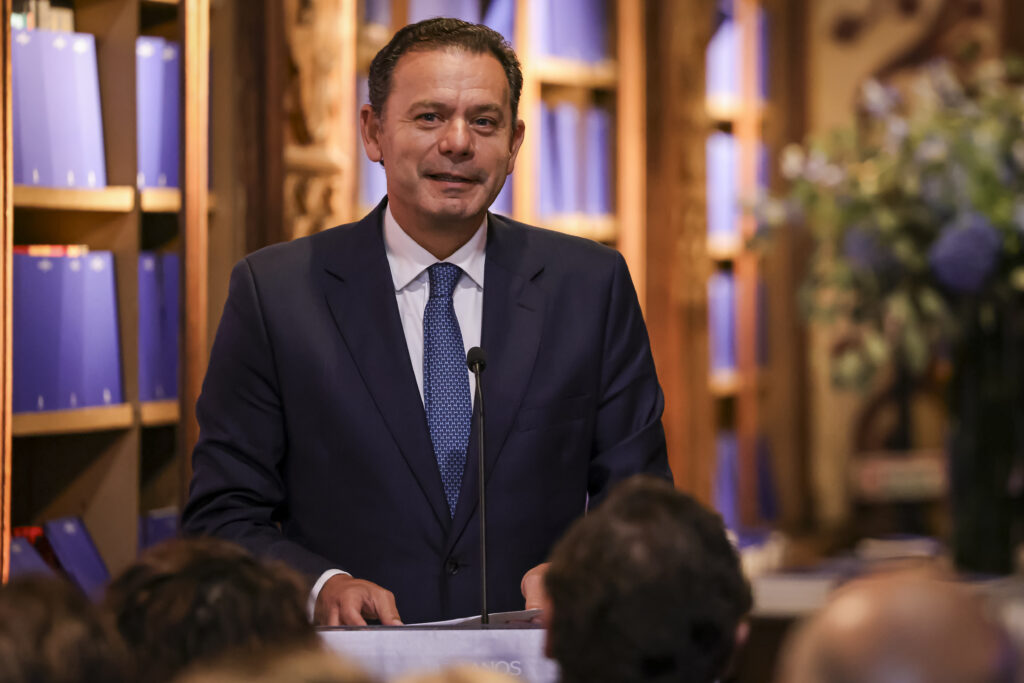
The avalanche of conservative support for Seguro is a source of discomfort for Prime Minister Luís Montenegro, who is declining to endorse either candidate in the presidential runoff.
During a session of the Portuguese parliament, lawmakers lambasted the center-right leader for failing to choose between “a democrat” and someone who wants to “end the democratic regime.” The country’s political analysts interpret the prime minister’s refusal to back Seguro as a tactical decision aimed at not alienating the most conservative wing of his party, which would consider any support for a former socialist leader unacceptable.
João Cotrim de Figueiredo, one of the most prominent figures in the economically liberal Liberal Initiative party, was similarly criticized for not explicitly backing the center-left candidate. Last week, however, he tacitly admitted he would vote for Seguro by declaring he’d neither cast a ballot for Ventura nor abstain from voting — a pragmatic approach, as his party’s voter base is made up of right-leaning young men who could defect to Chega.
According to António Costa Pinto, a political scientist at the University of Lisbon’s Institute of Social Sciences, the center-right’s decision to mobilize against Ventura makes sense because of the power accorded to the president, who can veto laws, appoint members of key state and judicial bodies, and dissolve parliament.
“In the unlikely scenario that Ventura secured the presidency, there is little doubt that he would use it to do everything to give his party control of the government … and pose a serious threat to the institutional functioning of Portuguese democracy,” he said.
But, Costa Pinto explained, the conservatives’ decision to publicly back Seguro could end up paradoxically benefiting Ventura, as he will likely use their endorsements to reaffirm his claim that the country’s center-right and center-left parties are virtually identical mainstream entities.
“This allows Ventura to reinforce his image as an anti-establishment leader who represents the people and fights the elites,” he said.
“As long as he obtains between 35 and 40 percent of the vote when the runoff is held — which is to say, more than the 32 percent Prime Minister Luís Montenegro secured in last year’s parliamentary elections — he’ll also be able to claim he’s the true leader of the Portuguese right.”



Follow