



BRUSSELS ― European governments and corporations are racing to reduce their exposure to U.S. technology, military hardware and energy resources as transatlantic relations sour.
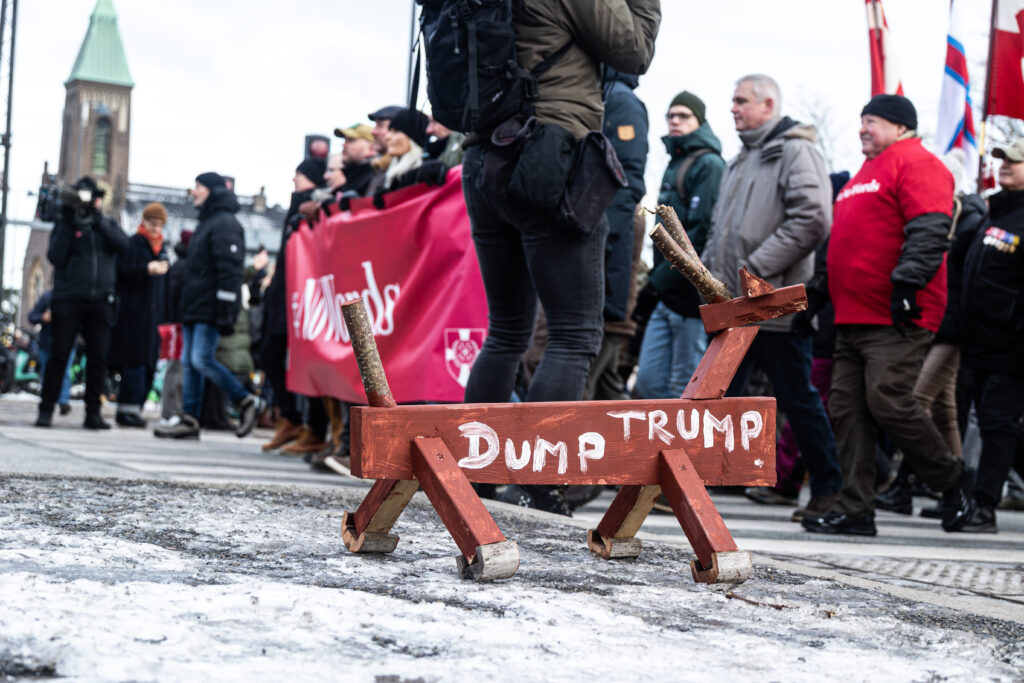
For decades, the EU relied on NATO guarantees to ensure security in the bloc, and on American technology to power its business. Donald Trump’s threats to take over Greenland, and aggressive comments about Europe by members of his administration, have given fresh impetus to European leaders’ call for “independence.”
“If we want to be taken seriously again, we will have to learn the language of power politics,” German Chancellor Friedrich Merz said last week.
From orders banning civil servants from using U.S.-based videoconferencing tools to trade deals with countries like India to a push to diversify Europe’s energy suppliers, efforts to minimize European dependence on the U.S. are gathering pace. EU leaders warn that transatlantic relations are unlikely to return to the pre-Trump status quo.
EU officials stress that such measures amount to “de-risking” Europe’s relationship with the U.S., rather than “decoupling” — a term that implies a clean break in economic and strategic ties. Until recently, both expressions were mainly applied to European efforts to reduce dependence on China. Now, they are coming up in relation to the U.S., Europe’s main trade partner and security benefactor.
The decoupling drive is in its infancy. The U.S. remains by far the largest trading partner for Europe, and it will take years for the bloc to wean itself off American tech and military support, according to Jean-Luc Demarty, who was in charge of the European Commission’s trade department under the body’s former president, Jean-Claude Juncker.
“In terms of trade, they [the U.S.] represent a significant share of our exports,” said Demarty. “So it’s a lot, but it’s not a matter of life and death.”
The push to diversify away from the U.S. has seen Brussels strike trade deals with the Mercosur bloc of Latin American countries, India and Indonesia in recent months. The Commission also revamped its deal with Mexico, and revived stalled negotiations with Australia.
Defending Europe: From NATO to the EU
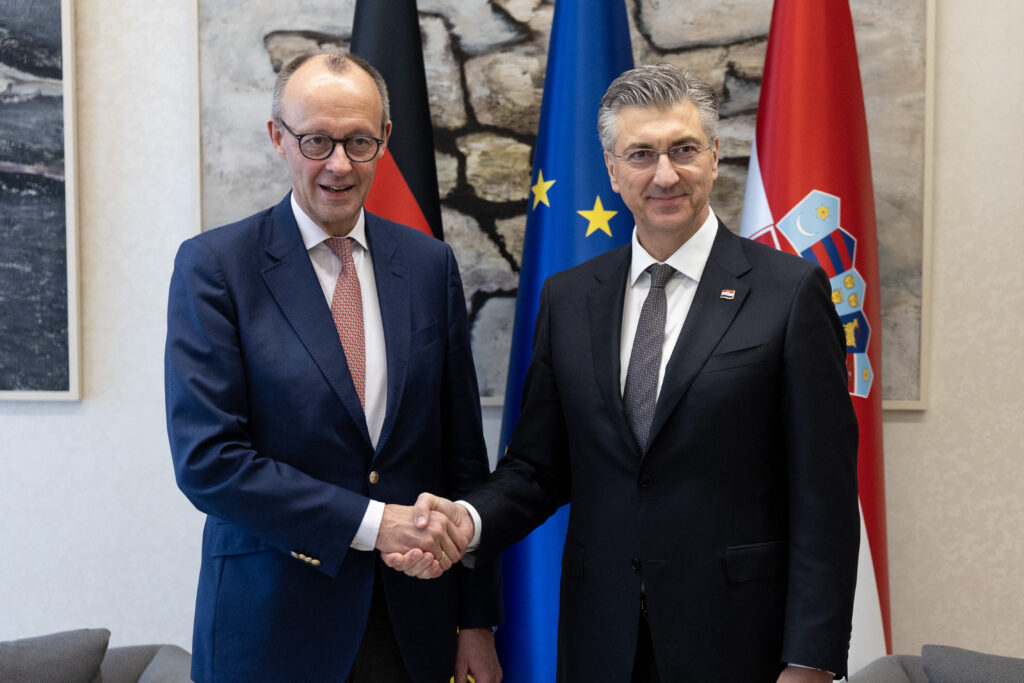
Since the continent emerged from the ashes of World War II, Europe has relied for its security on NATO — which the U.S. contributes the bulk of funding to. At a weekend retreat in Zagreb, Croatia, conservative European leaders including Merz said it was time for the bloc to beef up its homegrown mutual-defense clause, which binds EU countries to an agreement to defend any EU country that comes under attack.
While it has existed since 2009, the EU’s Article 42.7 mutual defense clause was rarely seen as necessary because NATO’s Article 5 served a similar purpose.
But Europe’s governments have started to doubt whether the U.S. really would come to Europe’s rescue.
In Zagreb, the leaders embraced the EU’s new role as a security actor, tasking two leaders, as yet unnamed, with rapidly cooking up plans to turn the EU clause from words to an ironclad security guarantee.
“For decades, some countries said ‘We have NATO, why should we have parallel structures?’” said a senior EU diplomat who was granted anonymity to talk about confidential summit preparations. After Trump’s Greenland saber-rattling, “we are faced with the necessity, we have to set up military command structures within the EU.”
In comments to EU lawmakers last week, NATO Secretary-General Mark Rutte said that anyone who believes Europe can defend itself without the U.S. should “keep on dreaming.”
Europe remains heavily reliant on U.S. military capabilities, most notably in its support for Ukraine’s fight against Russia. But some Europeans are now openly talking about the price of reducing exposure to the U.S. — and saying it’s manageable.
Technology: Teams out, Visio in
The mood shift is clearest when it comes to technology, where European reliance on platforms such as X, Meta and Google has long troubled EU voters, as evidenced by broad support for the bloc’s tech legislation.
French President Emmanuel Macron’s government is planning to ban officials from using U.S.-based videoconferencing tools. Other countries like Germany are contemplating similar moves.
“It’s very clear that Europe is having our independence moment,” EU tech czar Henna Virkkunen told a POLITICO conference last week. “During the last year, everybody has really realized how important it is that we are not dependent on one country or one company when it comes to some very critical technologies.”
France is moving to ban public officials from using American platforms including Google Meet, Zoom and Teams, a government spokesperson told POLITICO. Officials will soon make the switch to Visio, a videoconferencing tool that runs on infrastructure provided by French firm Outscale.
In the European Parliament, lawmakers are urging its president, Roberta Metsola, to ditch U.S. software and hardware, as well as a U.S.-based travel booking tool.
In Germany, politicians want a potential German or European substitute for software made by U.S. data analysis firm Palantir. “Such dependencies on key technologies are naturally a major problem,” Sebastian Fiedler, an SPD lawmaker and expert on policing, told POLITICO.
Even in the Netherlands, among Europe’s more pro-American countries, there are growing calls from lawmakers and voters to ring-fence sensitive technologies from U.S. influence. Dutch lawmakers are reviewing a petition signed by 140,000 people calling on the state to block the acquisition of a state identity verification tool by a U.S. company.
At the World Economic Forum in Davos, Switzerland, in late January, German entrepreneur Anna Zeiter announced the launch of a Europe-based social media platform called W that could rival Elon Musk’s X, which has faced fines for breaching the EU’s content moderation rules. W plans to host its data on “European servers owned by European companies” and limits its investors to Europeans, Zeiter told Euronews.
So far, Brussels has yet to codify any such moves into law. But upcoming legislation on cloud and AI services are expected to send signals about the need to Europeanize the bloc’s tech offerings.
Energy: Time to diversify
On energy, the same trend is apparent.
The United States provides more than a quarter of the EU’s gas, a share set to rise further as a full ban on Russian imports takes effect.
But EU officials warn about the risk of increasing Europe’s dependency on the U.S. in yet another area. Trump’s claims on Greenland were a “clear wake-up call” for the EU, showing that energy can no longer be seen in isolation from geopolitical trends, EU Energy Commissioner Dan Jørgensen said last Wednesday.
The Greenland crisis reinforced concerns that the bloc risks “replacing one dependency with another,” said Jørgensen, adding that as a result, Brussels is stepping up efforts to diversify, deepening talks with alternative suppliers including Canada, Qatar and North African countries such as Algeria.
Finance: Moving to European payments
Payment systems are also drawing scrutiny, with lawmakers warning about over-reliance on U.S. payment systems such as Mastercard and Visa.
The digital euro, a digital version of cash that the European Central Bank is preparing to issue in 2029, aims to cut these dependencies and provide a pan-European sovereign means of payment. “With the digital euro, Europeans would remain in control of their money, their choices and their future,” ECB President Christine Lagarde said last year.
In Germany, some politicians are sounding the alarm about 1,236 tons of gold reserves that Germany keeps in the Federal Reserve Bank of New York.
“In a time of growing global uncertainty and under President Trump’s unpredictable U.S. policy, it’s no longer acceptable” to have that much in gold reserves in the U.S., Marie-Agnes Strack-Zimmermann, the German politician from the liberal Free Democratic Party, who chairs the Parliament’s defense committee, told Der Spiegel.
Several European countries are pushing the EU to privilege European manufacturers when it comes to spending EU public money via “Buy European” clauses.
Until a few years ago, countries like Poland, the Netherlands or the Baltic states would never have agreed on such “Buy European” clauses. But even those countries are now backing calls to prioritize purchases from EU-based companies.
Military investment: Boosting own capacity
A €150 billion EU program to help countries boost their defense investments, finalized in May of last year, states that no more than 35 percent of the components in a given purchase, by cost, should originate from outside the EU and partner states like Norway and Ukraine. The U.S. is not considered a partner country under the scheme.
For now, European countries rely heavily on the U.S. for military enablers including surveillance and reconnaissance, intelligence, strategic lift, missile defense and space-based assets. But the powerful conservative umbrella group, the European People Party, says these are precisely the areas where Europe needs to ramp up its own capacities.
When EU leaders from the EPP agreed on their 2026 roadmap in Zagreb, they stated that the “Buy European” principle should apply to an upcoming Commission proposal on joint procurement.
The title of the EPP’s 2026 roadmap? “Time for independence.”
Camille Gijs, Jacopo Barigazzi, Mathieu Pollet, Giovanna Faggionato, Eliza Gkritsi, Elena Giordano, Ben Munster and Sam Clark contributed reporting from Brussels. James Angelos contributed reporting from Berlin.



Follow