



Portuguese voters head back to the polls for the runoff round of the country’s presidential election on Sunday despite an ongoing state of emergency amid devastating storms.
More than 7,000 people have been evacuated in Spain and Portugal since early February and at least two people died after torrential rain and flooding hit the Iberian Peninsula. Portugal has declared a state of emergency in 69 of its 308 municipalities, and thousands of residents remain without power.
Far-right leader André Ventura, the runner-up candidate heading into the deciding round, has spent the past week calling for the election to be postponed until order can be restored. “It is neither unfair nor disproportionate to say that a large part of the country is in a state of calamity, we are reaching brutal levels of need, and we are not capable of holding elections in this environment,” he said.
As of Saturday, 19 especially hard-hit municipalities — home to 31,862 voters — have been given permission to delay the vote by one week. But outgoing President Marcelo Rebelo de Sousa on Friday insisted that postponing the elections nationwide would violate electoral law. Portugal’s national electoral authority has also said the vote will go ahead as planned.
“A state of emergency, weather alerts or overall unfavorable situations are not in themselves a sufficient reason to postpone voting in a town or region,” the authority clarified in a statement.
Moderate left-wing candidate António José Seguro, who won the first round of the election on Jan. 18, this week admitted that low turnout could benefit Ventura, whose Chega party supporters have proven reliable voters in the last few elections. “People keep telling me I’ve already won this race, and that’s not the case,” he said on Friday, adding that his opponent had “many incentives to push for the electoral demobilization of the Portuguese people.”
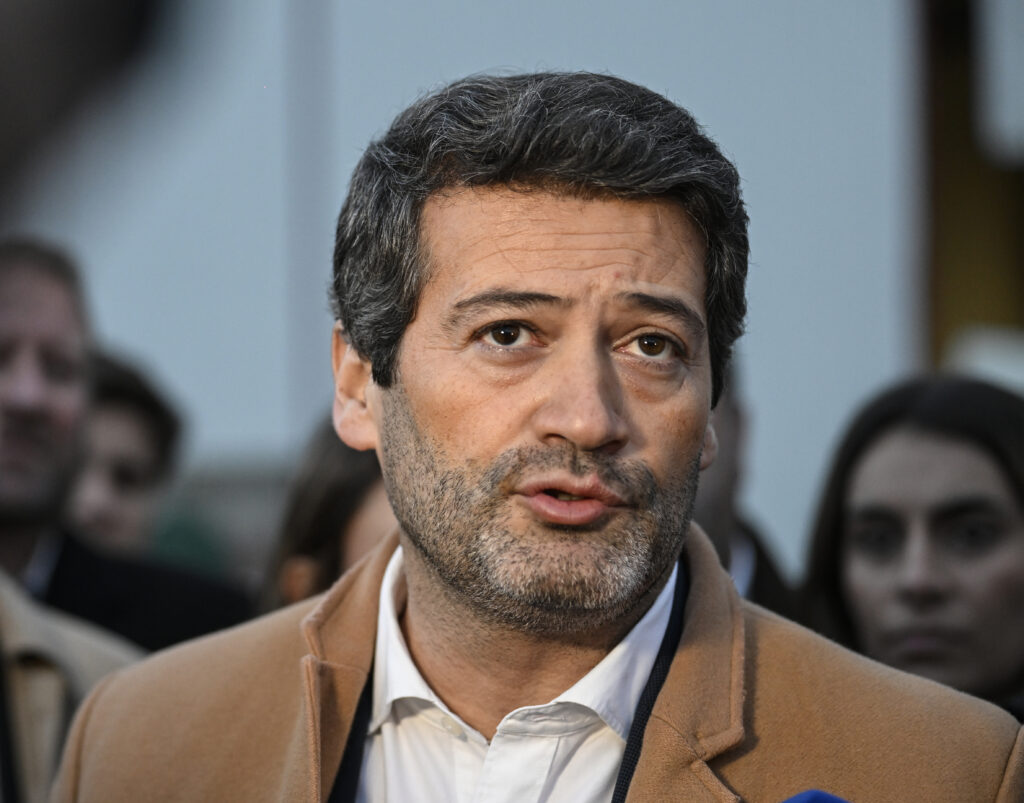
Seguro secured 31 percent in last month’s vote in a field of 11 candidate; Ventura came second with 23.5 percent. The relatively close result has produced the first runoff in a presidential election in Portugal in four decades, and has raised the stakes for a final vote in which turnout looks to be crucial.
In order to “avoid waking up to a nightmare,” Seguro called “on the Portuguese people who are able to vote to do so on Sunday,” adding that he “believes in the common sense of the Portuguese who know that the country has to continue.”
Far-right pushback
Seguro has cast Sunday’s election as a milestone in the establishment’s ongoing push to keep the far right from power. His message was taken up by some members of the conservative Liberal Initiative party, who reached across the political spectrum to support Seguro after their candidate, João Cotrim de Figueiredo, took third place on 16 percent in the first-round ballot.
A selection of center-right luminaries including former President and Prime Minister Aníbal Cavaco Silva, former Deputy Prime Minister Paulo Portas and former European Commissioner for Research and current Lisbon Mayor Carlos Moedas have all thrown their support behind Seguro.
Portas praised him as “an honest and educated person” while Moedas told local media Seguro has “the capacity not to divide,” even though his support for the center-left frontrunner comes “without enthusiasm.”
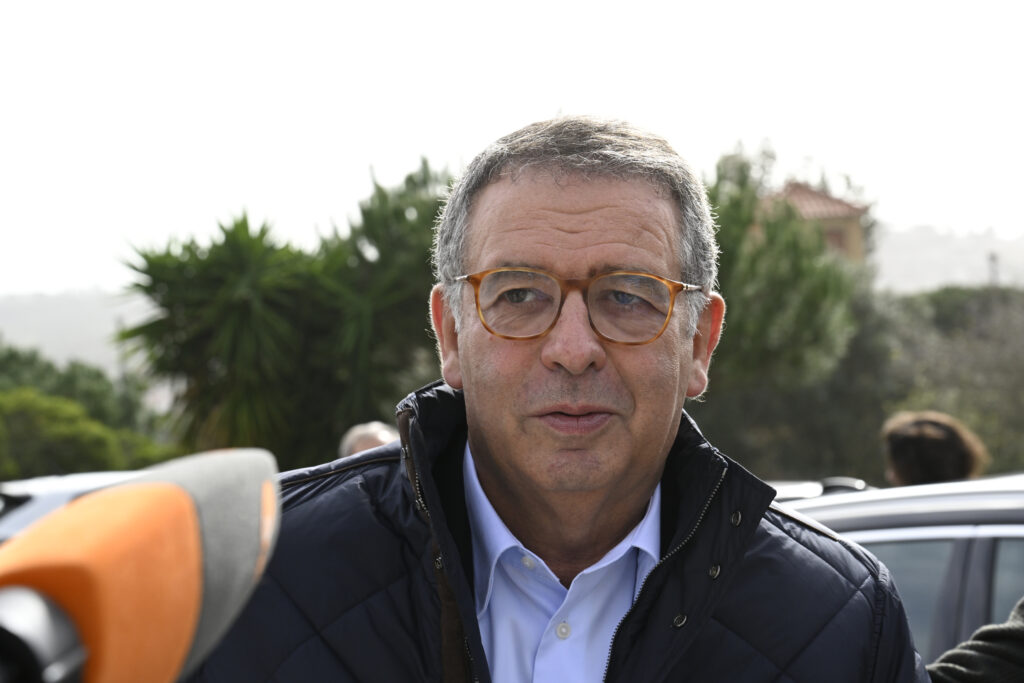
Thousands of voters also signed an open letter of support for Seguro launched by a group of self-declared “non-socialist” public figures.
An opinion poll by Católica University, published Feb. 3, saw Seguro winning in a landslide with 67 percent support compared to 33 percent for Ventura. If that forecast is borne out, Seguro’s victory would the biggest presidential result since the 1974 Carnation Revolution, when Portugal overthrew its authoritarian regime.
But it’s not all flowers this time around: Ventura’s projected 33 percent would also be Chega’s best-ever result in a national election in Portugal, signaling his growing ability to mobilize right-wing voters.
A significant part of Chega’s success is attributed to public backlash against Portugal’s migration policies. Over the past five years the country has experienced a massive surge in immigration, with foreign-born residents doubling to over 1 million, or roughly 10 percent of the population. Ventura on Friday posted on X that Portugal doesn’t need “more immigrants from India or Bangladesh; what we need is to pay our own more and get those who don’t want to work into jobs.”
While center-right Prime Minister Luís Montenegro, who leads a minority government, has declined to enter into a coalition with Chega, he has also been careful to avoid direct clashes with Ventura in an apparent attempt not to alienate his own party’s most right-wing voters. Ahead of Sunday’s vote the prime minister declined to endorse any candidate — a stance that earned him harsh criticism in the Portuguese parliament and beyond.
Montenegro’s governing Social Democratic Party could see its position as Portugal’s premier right-wing force eclipsed on Sunday if Ventura secures a significant share of the vote.
“If [Ventura] obtains between 35 and 40 percent of the vote when the runoff is held — which is to say, more than the 32 percent Montenegro secured in last year’s parliamentary elections — he’ll also be able to claim he’s the true leader of the Portuguese right,” said António Costa Pinto, a political scientist at the University of Lisbon’s Institute of Social Sciences.
While Ventura has hinted his presidential run was actually meant to gauge support for his eventual candidacy for prime minister, he said this week that as head of state he would “do everything to be the voice of this discontent.”
“The country is unhappy with the direction things have been taking, and I will not be the president [who] sweeps things under the rug and leaves them as they are.”



Follow