



BRUSSELS — The EU is gearing up for a monster week during which leaders will grapple with some of the toughest questions facing the continent.
Their mission: Figure out how to make Europe a strong global player in an increasingly ruthless world. That means making the EU more economically competitive, reducing dependency on the U.S., and helping Ukraine resist Russia’s grinding, four-year invasion.
The coming days will show whether “Europe can turn around and become truly united, fully mature and independent,” former Italian Prime Minister Enrico Letta told POLITICO. Just as the signing of the Maastricht Treaty in 1992 “made Europe what it has become over the past 35 years,” Letta said, “now we must do the same thing again.”
The leaders will take their crisis diplomacy on the road, from a conference room in Brussels to a castle in the Belgian countryside, and finally to Munich for the world’s biggest international security conference. Plus, MEPs will meet in Strasbourg to discuss unfreezing the EU’s trade deal with the U.S. and approving its long-term budget from 2028 to 2034, while ambassadors from every member country will hold talks in Brussels on Tuesday.
Here’s how the week is set to go down.
Wednesday: EU’s defense chiefs meet
There’s just one item on the agenda when the EU’s defense ministers gather in Brussels for a Foreign Affairs Council: support for Ukraine.
Ukrainian Defense Minister Mykhailo Fedorov, who was appointed last month after serving as the minister of digital transformation, is set to attend and brief the bloc’s defense chiefs on his country’s “most burning” needs as it approaches the four-year mark of Russia’s full-scale invasion, a European official with knowledge of the meeting told POLITICO. The official was granted anonymity to discuss the sensitive talks.
Fedorov is likely to request additional air defense missile systems, including Patriots and NASAMS, which have long been at the top of Kyiv’s wish list. The meeting will also discuss “cooperation in defense innovation,” which is code for drones and other new military technology.
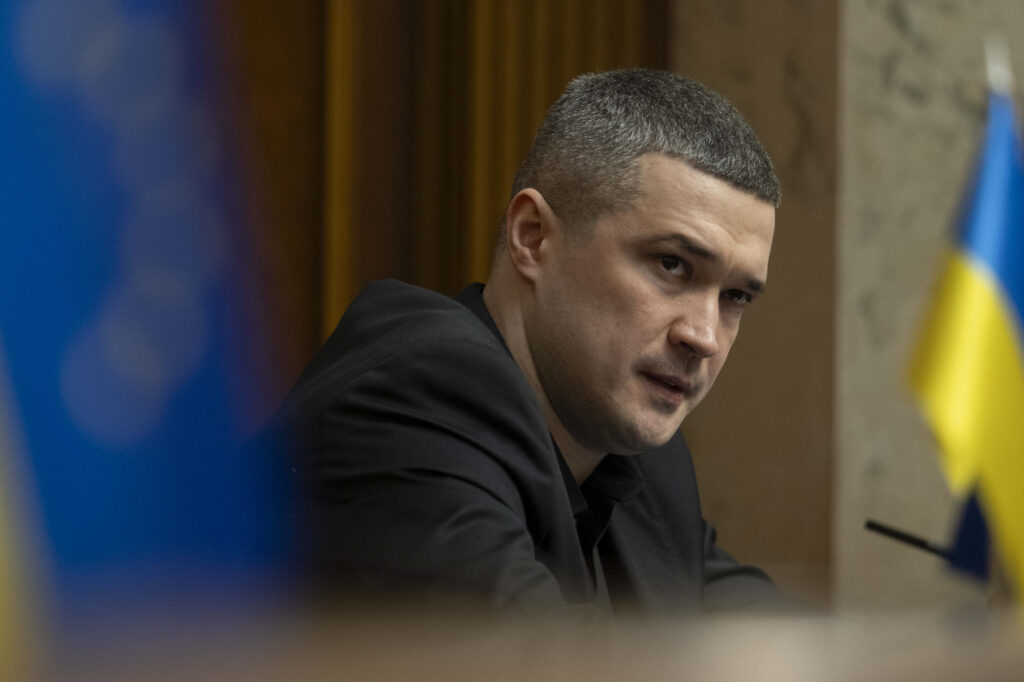
Wednesday’s meeting should see “Europe urgently thinking about a real Plan B for its own security” as the U.S. increasingly withdraws from the transatlantic alliance, said Fabrice Pothier, CEO of Rasmussen Global, a consultancy. “Europe must be able to stand on its own feet in the event that we are left to stand alone,” he told POLITICO.
The meeting will be followed by an informal dinner and an evening press conference from EU top diplomat Kaja Kallas.
Thursday: European leaders hold economic summit
The Ukraine crisis will be on the back burner when leaders of the EU’s 27 member countries descend on the tiny Belgian village of Rijkhoven to address the bloc’s economic woes.
Locked away in the 16th century Alden Biesen Castle, they will discuss how to make the EU richer; from simplifying legislation to strengthening the single market and reducing dependency on critical raw materials from other parts of the globe.
European Parliament President Roberta Metsola will make a cameo at the all-day summit, briefing leaders on the process of approving the EU-U.S. trade deal (a vote by all MEPs on removing tariffs on U.S. industrial goods and lobster is now likely in March).
Former European Central Bank President Mario Draghi and ex-Italian PM Letta will also address the leaders and “share their visions about European competitiveness,” according to the invitation letter sent to leaders by European Council President António Costa. Both Draghi and Letta have written reports on how to make Europe more competitive.
Although neither the U.S. nor China was mentioned by name, Costa’s invitation underscored that the EU now finds itself in “a world of increased — and not always fair — economic competition and trade imbalances.”
As European Commission President Ursula von der Leyen warned at the World Economic Forum in Davos last month: “The point is that the world has changed permanently. And we need to change with it.”
Thursday’s talks will see the EU attempt to chart a course through that changing world.
Friday to Sunday: Munich Security Conference
It’s back to defense for the annual Munich conference, at which a host of big names — including von der Leyen, German Chancellor Friedrich Merz, NATO Secretary-General Mark Rutte, U.S. Secretary of State Marco Rubio, and Ukrainian President Volodymyr Zelenskyy — will be in attendance.
Officially, the topics addressed this year will be European security and defense, and the future of the transatlantic relationship. Unofficially, the question on everyone’s lips will be whether the EU has any hope of standing on its own two feet without Washington’s help.
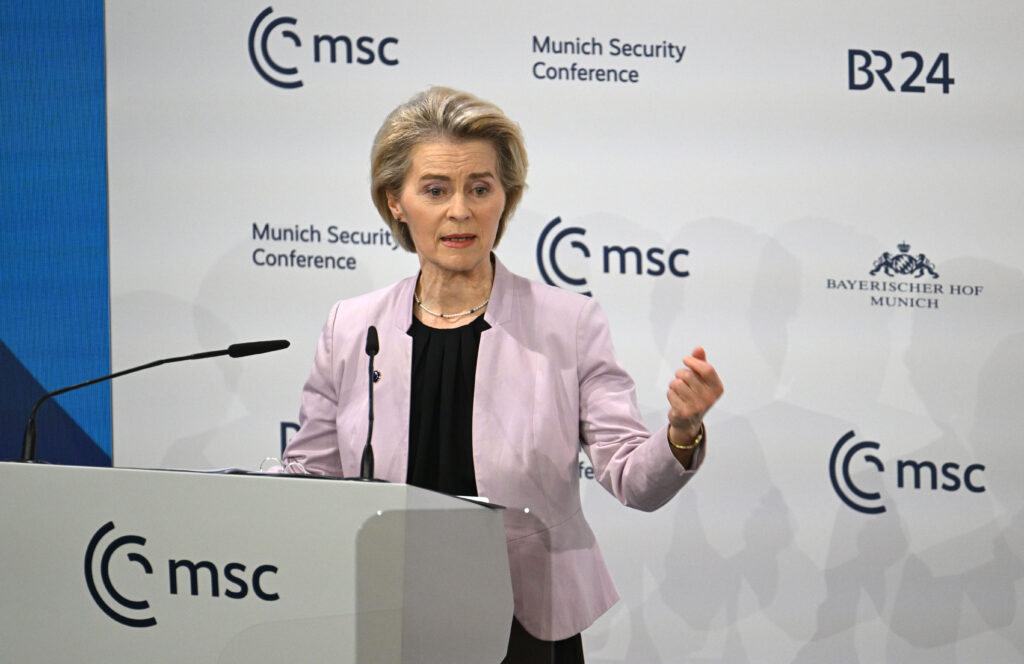
Rutte doesn’t think so, telling EU lawmakers last month to “keep on dreaming” if they believe Europe can do so without the U.S.
“You can’t,” he said bluntly.
Rasmussen CEO Pothier said Europe’s “intelligence agencies are telling us repeatedly that Russia could be prepared to attack a European ally while [U.S. President Donald] Trump is still in office,” and stressed that Europe must be ready “to operate independently and conduct complex military operations.”
By the end of the week, there may not be answers to such major questions but EU leaders will hope to at least set the direction of travel.
Gerardo Fortuna and Veronika Melkozerova contributed to this report.



Follow