



BRUSSELS — When the going gets tough, EU leaders pull up the drawbridge and lock themselves away behind fortified walls.
From Russia’s invasion of Ukraine to Brexit to 9/11, major moments that require the EU to get its act together tend to get the same response: Head to a castle!
This week is no exception. As debate about the EU’s future in an uncertain world intensifies, leaders will on Thursday gather at Alden Biesen in Flanders — a charming backdrop for some very serious conversations.
Located near Bilzen in Belgium’s Limburg province, Alden Biesen is one of the largest castles to be found between the Loire and the Rhine rivers. It even has a moat to keep out intruders (and presumably Donald Trump).
If you listen to Enrico Letta, one of two former Italian prime ministers invited to the gathering, the task assigned to those at the retreat is ambitious: saving Europe. This retreat will show whether “Europe can turn around and become truly united, fully mature and independent,” the former Italian PM told POLITICO. Just as the signing of the Maastricht Treaty in 1992 “made Europe what it has become over the past 35 years,” Letta said, “now we must do the same thing again.”
Leaders in search of inspiration to rekindle EU competitiveness can draw on reports by Letta and the other invited Italian ex-PM, Mario Draghi — or they can simply admire the vaulted high ceilings, ancient tapestries and grand halls.
“The cloistered galleries of Europe’s châteaux and Schlösser have long been favoured gathering places for the EU’s political elite,” said Luuk van Middelaar, historian and director of the Brussels Institute for Geopolitics, because “they offer the seclusion deemed necessary to truly get down to business, far from the scrutiny and hubbub of the metropolis.”
“In the days when the European Council was still a travelling circus, castle summitry also offered a crucial opportunity for the host to show off. Castles provide what EU decision-making so often lacks: spectacle and splendor,” said van Middelaar.
Since October 2003, all formal European Council meetings have taken place in Brussels. Before then, the meetings were often held in the country holding the rotating presidency of the Council of the EU.
When he took over as European Council president, António Costa said there would be informal “retreats” — meetings designed to let leaders brainstorm without the pressure of reaching conclusions. The idea was simple: get out of Brussels and think, his team told POLITICO.
The first such getaway, focused on defense, was organized in a hurry. With little time to scout dramatic fortresses, the Council played it safe and met at the Palais d’Egmont in Brussels, home to the Belgian Foreign Ministry. A perfectly respectable venue — but not a castle.
Council officials later reviewed locations across Belgium before landing on Alden Biesen, which met all the requirements: security for 27 leaders, room for the press, and the right blend of practicality and stone walls.
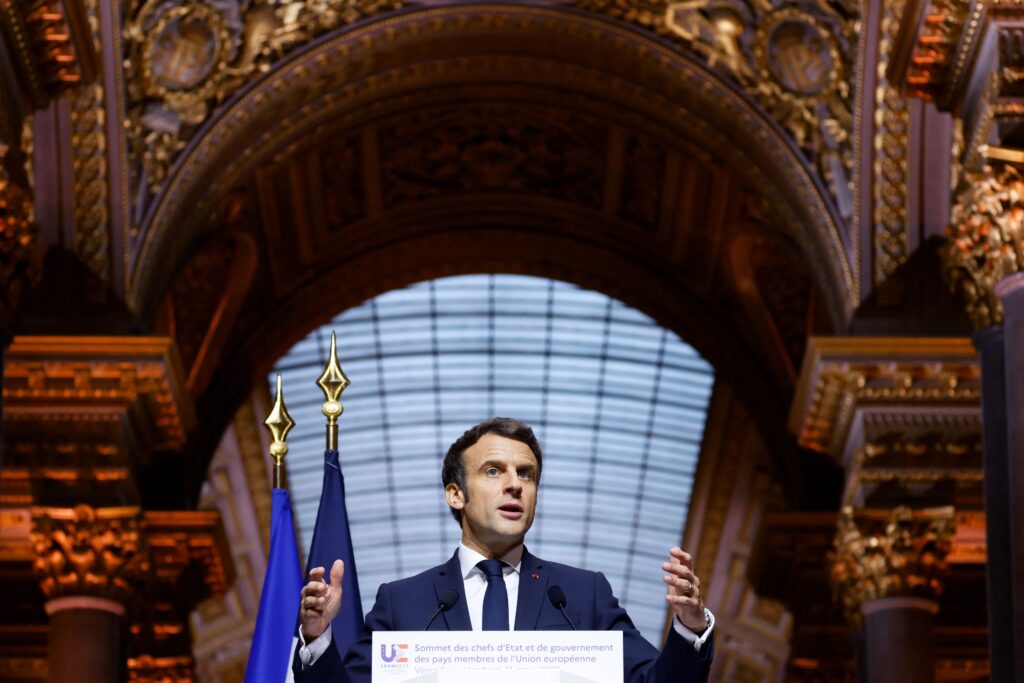
This week isn’t the first time the EU has taken this approach.
In March 2022, just days after Russia launched its full-scale invasion of Ukraine, EU leaders met at the Palace of Versailles, hosted by French President Emmanuel Macron.
That informal summit produced the “Versailles Declaration,” committing member states to bolster defense spending and reduce energy dependence on Russia.
In September 2016, for their first gathering after the U.K. voted to leave the European Union, leaders headed to the dramatic hilltop castle of Bratislava overlooking the Danube.
In the aftermath of the 9/11 attacks, the European Council met in December 2001 at Château de Laeken, the official residence of the Belgian royal family. The secluded location offered the security required for sensitive discussions on terrorism.
Going back further still, in December 1991 the European Council summit that paved the way for the Maastricht Treaty took place at the Provinciehuis Limburg — not a castle. However, a side event took leaders to the nearby Château Neercanne, where, during a lunch hosted by Queen Beatrix, they symbolically signed their names on a cave wall.
On rare occasions, turrets give way to cloisters. The Treaty of Lisbon was signed on Dec. 13, 2007 at the 16th century Jerónimos Monastery, a UNESCO World Heritage site.
“Castles emerged in Europe largely in the wake of the collapse of Charlemagne’s empire. They were a reaction to the uncertainty of a power vacuum and the fear of what it might mean for those who held any power,” said medieval historian Matt Lewis.
“The appeal of holding significant international occasions with castles and palaces remains strong today,” Lewis added. “Modern politicians are, at least in part, using the very same playbook as their medieval forebears. At the same time, this retreat speaks to a level of fragility, a moment upon which so much might depend, that is firmed up by the centuries-old defences of a castle.”
Considering how Trump famously loves hosting guests at his own resort, Mar-a-Lago, one can only speculate whether, had Thierry Breton ever become European Commission president, meetings might have taken place at Château de Gargilesse — which Breton purchased in 2023.



Follow