



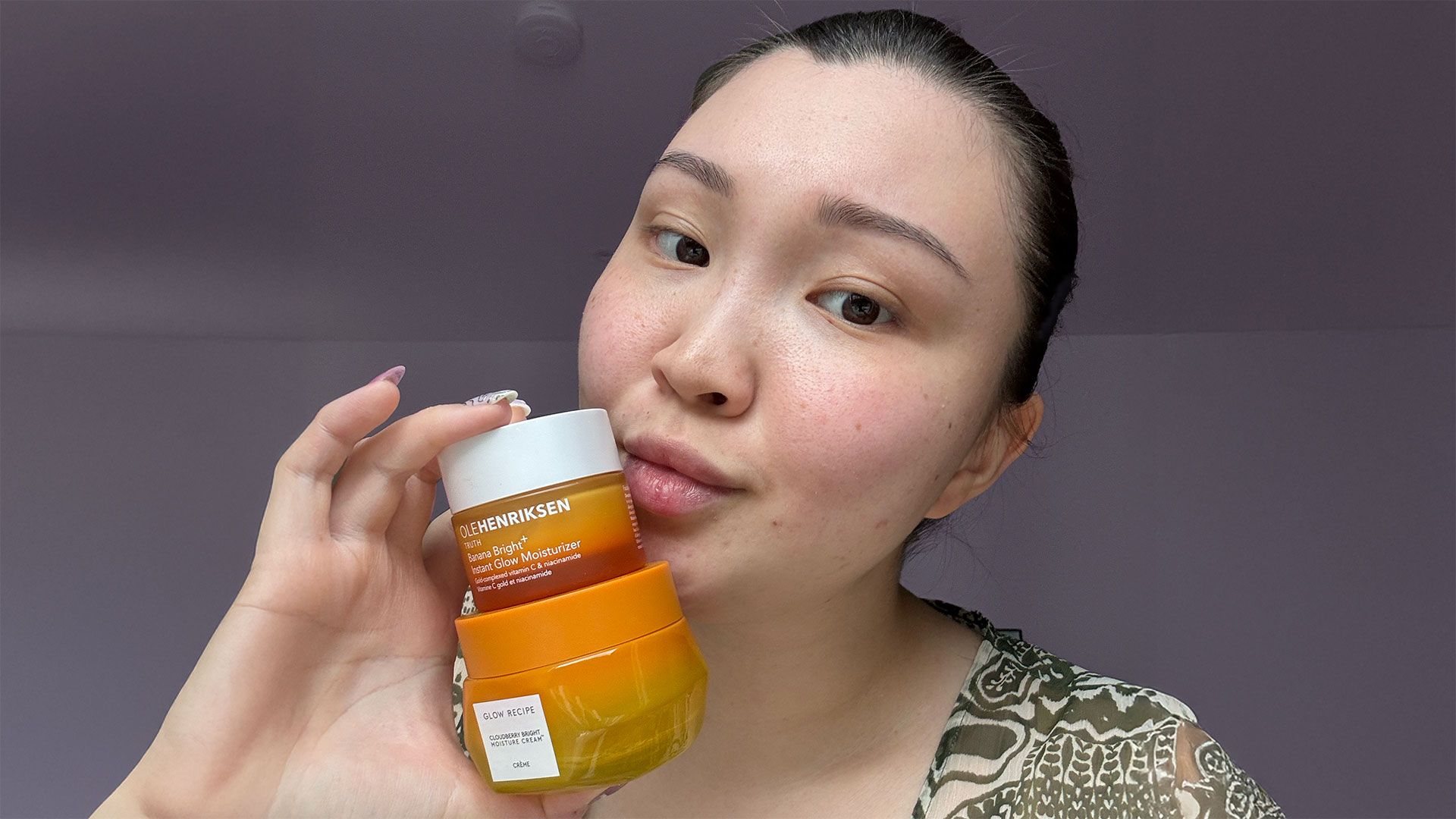
There aren’t many formulas in my skincare cupboard that I cherish quite as much as my vitamin C moisturisers. I’ve interviewed enough dermatologists to know that vitamin C and hydration are the two of the most important components of your skincare regimen (aside from your daily dose of SPF, ofc).
“Vitamin C has a myriad of benefits for the skin – it’s a powerful antioxidant which helps neutralise skin-damaging free radicals produced as a result of exposure to UVR and pollution,” says Dr. Alexis Granite, board-certified consultant dermatologist and founder of Joonbyrd. “It also helps promote the production of collagen and elastin,” she adds — reiterating that while it’s an ingredient for all age groups, it may be particularly helpful for those with mature skin.
While you may already be diligent with your dedicated vitamin C serum, the best moisturisers with vitamin C offer another great way to incorporate this clever ingredient into your routine for an added boost of antioxidants. Such formulas can be extremely versatile too – be it a brightening eye cream to banish dark circles, a vitamin-C-infused moisturiser with SPF or a non-comedogenic cream for those with acne-prone skin.
Ahead, we’ve got the lowdown on everything you need to know about vitamin C moisturisers, according to the best dermatologists in the biz. Plus, we’ve also pulled together a definitive edit of all the best formulas out there — all tried and tested by yours truly.
Meet the experts:
All your vitamin C moisturiser questions, answered
Does vitamin C help with hyperpigmentation and dark spots?
Shown to impede the production of melanin — the pigment that gives colour to the skin — vitamin C can also really help fade dark spots, and leave your skin looking considerably brighter and smoother. “Essentially, it’s a potent ingredient for pigmentation,” Dr Granite adds.
When should I use a vitamin C moisturiser?
“Think lightest to thickest when it comes to layering your skincare products,” Dr Nasir explains. So, in the mornings, begin by applying your usual morning cleanser and — if desired — a toner. Then follow up with your serum, followed by your vitamin C moisturiser, and finally your SPF.
Although they can definitely be applied at night, vitamin C moisturisers are typically designed for daytime use — as this is when you’re more likely to benefit from the antioxidant ingredient’s ability to protect against sun damage, and fend off free radicals. Vitamin C also shouldn’t be mixed with retinol, AHAs, and BHAs if you want to avoid sensitivity, irritation, and even peeling.
What should I look for when choosing a moisturiser with vitamin C?
“L-ascorbic acid is the most stable form of vitamin C, so look for L-ascorbic acid in concentrations varying between 10-20%. Start with a lower concentration initially and gradually build up a tolerance to avoid potential irritation,” says Dr Granite.
“Vitamin C is very sensitive to exposure to light and air, so is best packaged in dark bottles to maintain stability. Vitamin C also pairs well with other antioxidants such as vitamin E and niacinamide.”
Some moisturisers with vitamin C also include other high-grade skincare ingredients such as squalane, ferulic acid, aloe vera, hyaluronic aci, and others.
Who should avoid using a moisturiser with vitamin C?
While the topical application of vitamin C is recommended for most adults, people with sensitive skin are more at risk of common side effects like irritation and redness. To avoid this, be sure to start out with a lower concentration, and only use it only twice a week — before slowly building yourself up to daily application.
How I tested the best vitamin C moisturisers:
Over the years, we’ve tested our fair share of moisturisers with vitamin C – be it from science-backed brands like Medik8 or TikTok-loved names like Glow Recipe. When deciding which formulas deserved to make this edit, we looked at various criteria to assess whether it can: A) actually deliver lasting hydration; B) help deliver a boost of radiance and and C) fade hyperpigmentation and dark spots.
Why should you trust us? As a beauty journalist, I have half a decades’ of of product testing experience – having written for esteemed publications like GLAMOUR, Marie Claire, Cosmopolitan, Vogue, Who What Wear and GQ. When reviewing each beauty product, I always take careful note of other equally important factors like sustainability and value for money – especially when compared to other similar formulas I’ve tried before. When it comes to skincare in particular, I always aim to test a product for a minimum period of three weeks before making my my final judgement.
Inspired to re-stock your skincare collection? Read up on our guides on retinol creams, as well as eye creams and toners. Concerned about blemishes? Check out our guide on how to get rid of acne.



Follow