


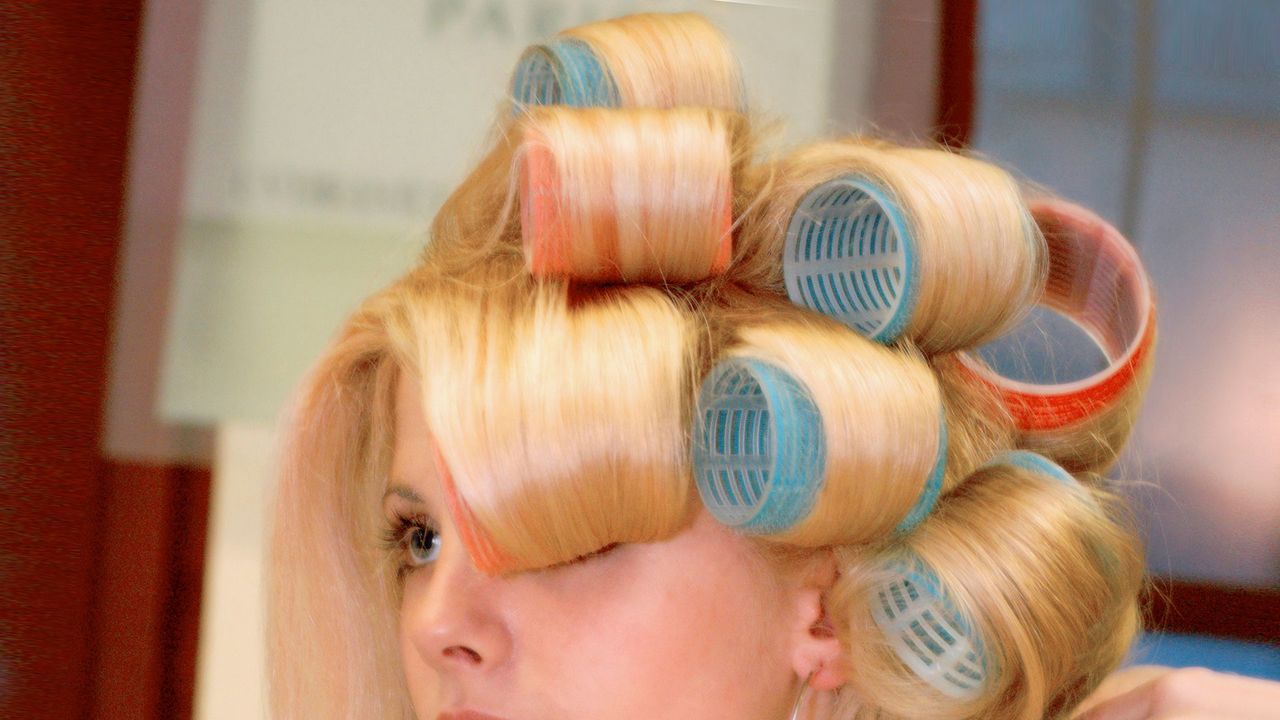
Hair rollers might feel like a throwback to days gone by, and grandmothers in dressing gowns with their curls piled high, but actually they’re more relevant than ever. Yes, good old hair rollers are having a moment, and if you don’t believe us, look to TikTok, where #hairrollers has been tagged in over 48K posts. From Raye‘s modern take on Old Hollywood curls, to Sabrina Carpenter‘s voluminous styles, there’s plenty of inspiration on show on the red carpet, and even festival-goers at 2025’s Glastonbury Festival were dedicated to the cause, arriving with their hair in rollers ahead of the weekend. Meanwhile, Sam McKnight has launched The Big Set, complete with retro gold dryer hood and velcro rollers for the full ’50s experience.
Whether you’re deep-diving into TikTok tutorials or looking for expert-backed advice on how to create your own salon-style blowout, we’ve got you covered. Below, we break down everything you need to know to perfect the bounciest of curls – no stylist required.
What type of hair rollers work best?
There are two main types of hair rollers: Velcro and heated. “Velcro rollers are the most budget-friendly option, perfect for adding volume and bounce, while heated rollers help lock in style for longer-lasting results,” explains Tyler Moore, expert stylist at Live True London. “There are also foam rods, which create a tighter wave, though they aren’t technically rollers. Ultimately, the choice comes down to personal preference.”
Can you use rollers if you have fine hair?
Yes you can, and actually they can be great for creating volume, especially if you place them at the roots. You might find your hair feels quite slippery, which is where spending some time on prep work and investing in a great styling spray pays dividends.
Do rollers work on short hair?
“Yes, but your hair just needs to be long enough to get a bend in it to create volume or to get a full rotation of the roller,” says A-list hairdresser and salon owner, Luke Benson.
How should you prep your hair for rollers?
“I recommend washing the hair and, while still damp, prepping it with L’Oréal Professionnel TECNI.ART Pli,” says top stylist and L’Oreal Professionnel’s UK Editorial Ambassador, Adam Reed. “Pli was originally designed for volumising and wet setting, so this product couldn’t be more perfect. If you are looking for a super volumised look then absolutely add a mousse [try Hershesons Zhoosh Foam or Moroccanoil Curl Control Mousse], alternatively, if you’re looking for something a little more modern and wearable, your best is to use something with less hold and a bit more texture like a texturising powder [we rate KEVIN.MURPHY Powder Puff]– it’s about choosing the right product for the look you are trying to achieve.”
Instagram content
Do you always put rollers in dry hair?
That would be a firm yes if you’re using hot rollers, but it doesn’t have to be bone dry if you’re using velcro rollers – about 75% dry is fine.
“Spray each section of the hair with your styling spray and then wrap the hair around the roller while ever so slightly damp,” says Adam. “What is absolutely key, is you dry the hair 100% before removing the roller, otherwise it will simply flop.” You can blast the velcro rollers with your hair dryer once in place as it will help to ‘set’ your curls, then leave them to cool gradually.
What is the best technique for using rollers?
“Make sure you are placing the rollers in your hair in the pattern you want, exactly like a blow-dry and think about where your parting sits. It is hard once set to change the direction of the hair,” continues Adam. As a general rule, it’s best to start with your fringe first, before tackling the central sections behind it. Then work outwards from your crown. But play around and work out what works best for you.


Follow