



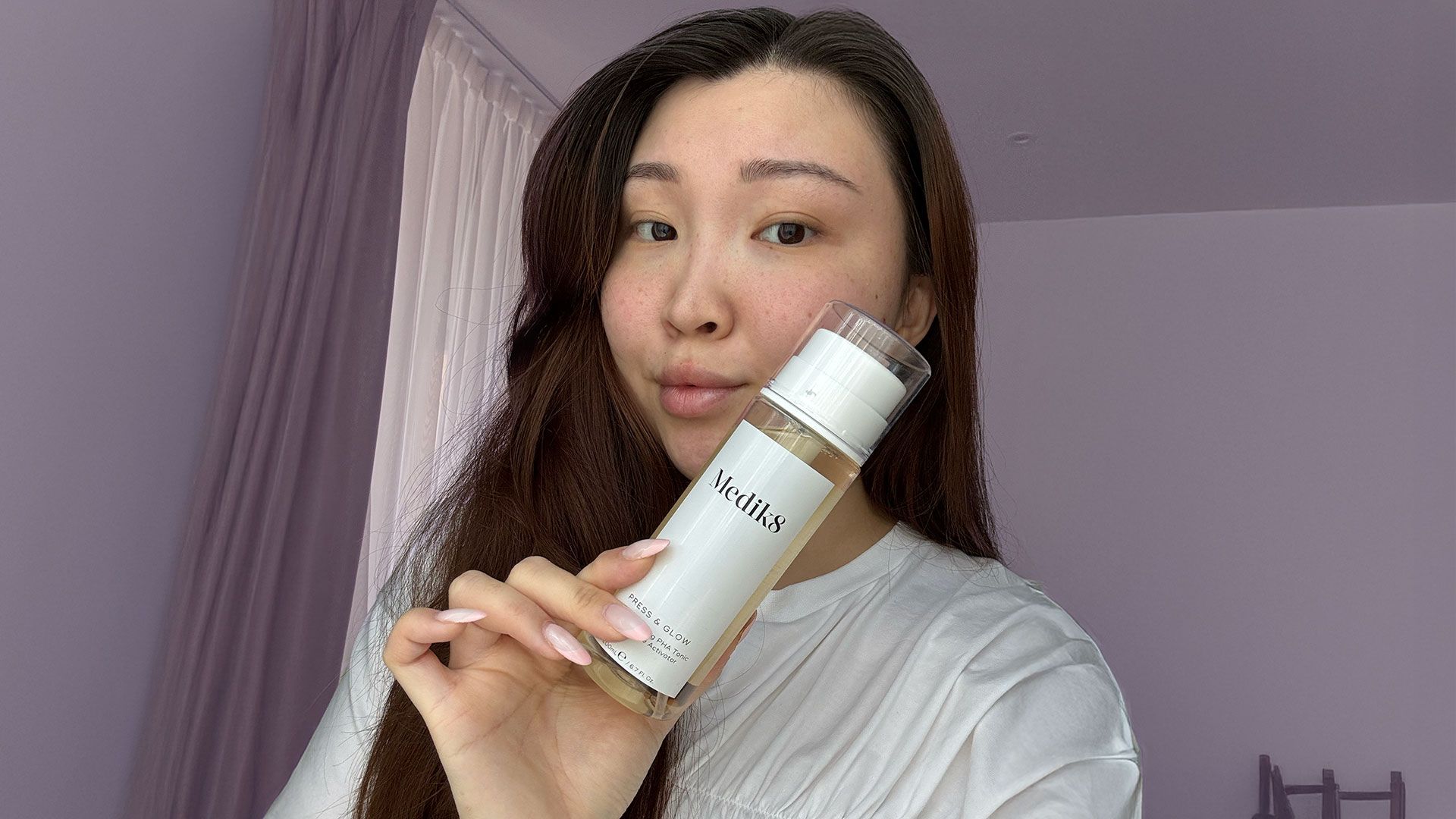
Face exfoliators have had a bad rap in the past, but thanks to the innovative formulas and gentler ingredients of today’s releases, their redemption arc has put them back on the radar. Now, a face exfoliant is as much of a big-league skincare hero as a retinol serum or face sunscreen is.
Whether you’re partial to a chemical formula that works overnight or a gentle physical scrub, face exfoliators are a fast track to smoother texture and de-congested skin. How do they work, you ask? According to Pamela Marshall, clinical aesthetician and co-founder of Mortar & Milk, “exfoliation promotes cell turnover, allowing old dead keratinocytes (that’s skin cells) to shed, which enables new healthy skin to come toward the surface.”
They can banish product build-up, buff away dead skin cells and clear clogged pores in a way that cleansers can’t quite match, which in turn, helps the rest of your skincare absorb even better. And if that wasn’t enough, consistent use of exfoliants will also help your makeup go on more smoothly and seamlessly, resulting in even application and a longer lasting finish.
So, the gist is simple: regardless of your skin type ( sensitive, dry, oily or acne-prone — you name it), when used right, the best facial exfoliators can help with a multitude of concerns. With that in mind, the GLAMOUR beauty team have rounded up the most effective formulas worth knowing about. Backed by expert advice and road-tested as part of our daily skincare routines, this edit has a glow-boosting option for every skin type, texture, and preference.
Meet the experts:
- Pamela Marshall, clinical aesthetician and co-founder of Mortar & Milk
- Daniel Isaacs, Chief Product Officer at Medik8
- Dr Angela Tewari, CeraVe’s Consultant Dermatologist
How we tested the best face exfoliators
When it comes to testing skincare, the GLAMOUR beauty team doesn’t cut corners — and our approach to testing the best face exfoliators is thorough. Collectively, our editors (and trusted freelance contributors) have trialled dozens of formulas, so we know exactly what separates the kind-to-skin heroes from the ones that don’t deliver. For this edit, we tested each exfoliator for a minimum of 4–6 weeks, giving us the chance to see beyond immediately noticeable results and understand how each formula performs with long-term use.
We tested across a wide range of skin types, tones, age groups and skin concerns — from oily and breakout-prone to dry, sensitive or dull skin. That way, we could assess whether each formula actually lived up to its claims (whether that was to slough away dead cells, unclog pores, or help fade dark spots for a brighter, more radiant complexion). To ensure a fair verdict, we also kept the rest of our routine unchanged.
When testing, we looked at various factors, including texture and the initial feel when first applied (did it feel gentle or too harsh?), efficacy (was there a sizeable improvement in skin smoothness, brightness or clarity over time?), and ingredients — with extra points for fragrance-free formulas suitable for sensitive skin. Most importantly, we avoided anything that risked irritation or over-exfoliation. Only the products that impressed us across the board — gentle yet brightening, effective yet kind, and genuinely glow-giving — earned their place in this final line-up. Find out more about how we test here.
Meet our testers:
- Ali Pantony, GLAMOUR’s Website Director: Ali is a highly experienced and award-winning editor and book author, currently serving as GLAMOUR’s Website Director who oversees all of the magazines digital content. Previously Acting Features Director roles at Grazia and ES Magazine, her writing and product testing expertise knows no bounds – whether it comes down to fashion, beauty or tech.
- Denise Primbet, GLAMOUR’s Beauty Contributor: Denise has half a decade’s worth of product testing experience under her belt, especially when it comes to skincare. Having written for esteemed international publications like Vogue, GQ, Who What Wear, Refinery29, Cosmopolitan and Marie Claire, she’s particularly passionate about identifying formulas that work on all skin tones and democratising information on skincare ingredients.
- Robyn Eugene, GLAMOUR’s Social Media Manager: Since joining GLAMOUR UK as the magazine’s Social Media Manager, Robyn has been leading the strategy, direction, and vision for GLAMOUR’s social channels. Elsewhere, she’s also heavily involved in the team’s effort to elevate the site’s shopping content – having reviewed dozens of fashion, interior and beauty products.
Which are better: physical face scrubs or chemical exfoliants?
There are two types of exfoliator to choose from: physical and chemical. Physical exfoliators like scrubs, flannels and cleansing brushes involve manually buffing the skin, with salt, grains, bristles or fibres. “A facial scrub is a physical exfoliant that is usually formulated with exfoliating beads or natural grains such as sugar, salt or jojoba,” says Daniel Isaacs, Chief Product Officer at Medik8. “These work by gently and ‘physically’ polishing the surface of the skin; removing dead skin cells to reveal a radiant, refreshed-looking complexion underneath.”
Elsewhere, Daniel explains that chemical (or liquid) exfoliators include products that contain acids such as glycolic acid, salicylic acid and mandelic acid that ‘chemically’ exfoliate the skin rather than physically polishing away dead skin cells through a few swipes of a cotton pad. Alternatively, some exfoliators also include fruit enzymes such as pumpkin and pineapple.
“There are many different types of exfoliating acids, but the main categories are AHAs (alpha hydroxy acids), BHAs (beta hydroxy acids) and PHAs (polyhydroxy acids). These acids help to break down the bonds between skin cells, allowing them to shed away more easily and therefore stimulating faster skin cell turnover.”
They work in a similar way to a nail polish remover, breaking down the bonds that hold dead skin cells together in order to lift them away. The difference, is they’re much, much gentler and more diluted compared to their physical counterparts.
Which skin types are suited to facial scrubs?
The face scrubs included in our edit below are gentle and formulated for daily or weekly use, but those with certain skin concerns should be careful with any type of exfoliation. If you’re dealing with a breakout more often than not, look for exfoliating acids, like the aforementioned BHAs and AHAs, over scrubs. For combination skin, derms often recommend a physical-chemical hybrid. The sandy texture removes dead skin cells with friction, while acids and enzymes get rid of oil without bothering your dry spots.
“It’s important not to overload the skin with too many exfoliants in one regime as this could lead to an impaired skin barrier and, ultimately, sensitised skin,” Daniel says. “If you’re using high-strength exfoliating treatments, we always recommend that you follow the product’s specific guidelines. Additionally, we recommend that you look at the ingredients in the rest of your skincare routine, to ensure that you’re not overloading your complexion with too many exfoliating acids.”
Dr Tewari agrees: “I think those that have rosacea, sensitive skin or have acne-prone skin and have treated their skin already with a number of acids need to be very careful and need to ensure if they want to use a scrub the kernels are very fine and don’t cause any skin abrasions.”
Which exfoliators do dermatologists recommend?
Most dermatologists have moved to chemical exfoliators as they tend to be less abrasive on skin, however, a light gentle scrub with soft particles is a good option, too. However, the latter is usually recommended to be used a lot less often to avoid any flare-ups or irritation.
In terms of ingredients, glycolic acid is a hero exfoliator and one of the most common ones you’ll spot in chemical exfoliators that will work on most skin types. That said, before deciding whether it will work for you, be sure to check the concentration on the bottle. For example, Pixi’s iconic best-selling product, the Glow Tonic, contains 5%, which is about average. More than that and you might want to limit your usage to once a week.
How do I exfoliate my face gently?
In general, depending on the type and strength of the exfoliator you’ve chosen, it’s a good idea to exfoliate 2-3 times a week in order to lift any dead skin cells, clean out your pores and reveal your skin’s natural glow. For a more thorough look at this, take a look at our complete guide to exfoliating.
It’s important to bear in mind that over-exfoliating can cause issues, so monitor your usage and keep an eye on how your skin responds. You can react accordingly by upping or lowering the frequency with which you use it. “Exfoliating more than your skin needs can deplete its barrier function and cause capillary damage, leaving skin dehydrated and weak,” explains Pamela.
Is exfoliation suitable for sensitive skin?
The short answer is yes, but only when incorporating the right gentle formulas and when used in moderation. If your skin appears red, flaky or irritated, you’re probably using a product that is too strong, or applying it too often, so pare it back.
As for sensitive skin or dry skin, lactic acid and enzyme exfoliators can be a more gentle alternative. And more importantly, don’t forget to supplement your skin with a reliable sunscreen or even a moisturiser with SPF (with soothing and hydrating ingredients such as green tea, niacinamide, hyaluronic acid and/or vitamin E), since exfoliation makes your skin more vulnerable to sun damage.



Follow