



Lisa advises finding the right application for you, however. “As with all trends, you should cherry-pick what you want from them and make them work for you,” she says.
“Not every trend suits every face. For example, at the moment, there’s a trend of having blush really high up on the cheeks – on me, because I have quite a long, thin face, if I blush up there, it just makes my face look longer! So I personally like to add blush to the front of my cheeks, in a way that sort of breaks up the length of my face.”
What’s the best tool to apply liquid blush?
You don’t need any specific tool to apply liquid blush – the warmth of your fingers can work just fine, but many MUAs prefer to use a brush or a sponge.
“For a seamless inner glow finish, I love using a soft, damp sponge,” says Mira, adding that it must be clean every time. “As for brushes, synthetic tools work best for liquids and creams because they don’t absorb as much product as natural bristles and give a softer finish.”
“If you do prefer a brush, go for something soft and not too dense,” adds Lisa.
Save when you shop with these LookFantastic discount codes at checkout.
Can you mix liquid blush with other products?
Because of its fluid quality, liquid blush makes a great mixing medium. “Depending on the quality of pigment, liquid blush can be mixed with foundation to soften the shade,” says Daniel. “Though if the foundation is not silicone based, the blush may wear off easily. You can also mix liquid blush with liquid bronzer to create a ‘blonzer’.”
“I love mixing liquid blushers (or even a lipstick, if you’re in a pinch!) with my Elevated Glow Highlighter to make a bespoke, illuminating blush,” says Lisa. “Mix together on the back of your hand, pick up with a brush and sweep across the apples of your cheeks for an easy, fresh and enlivening flush.”
How to find the right shade of liquid blush
There is no ‘right’ shade of liquid blush – it totally depends on the look you’re going for – but if you want to achieve a natural look, it’s worth looking at the undertones of your complexion.
“Look at your natural flush,” says Mira. “If you tend to go rosy when warm, go for soft pinks. Peaches and corals suit warmer or golden undertones; deeper skin tones look stunning with berry and terracotta shades. Choose shades that mimic your skin’s undertone.”
But there’s no reason to play by the rules if you don’t want to. “I often like to contrast – a cool-toned, blue-pink blush looks amazing on a warm, olive skin, for example, as the contrasting tones make the blush really pop. I also find that matching your blusher to your lip tone gives a pretty, polished, monochromatic effect,” says Lisa.
“But while I don’t like colour ‘rules’, and blusher is no exception, some combinations are best avoided,” she adds. “I don’t like to use red lipstick with a bronzed-toned blush as it can look ‘muddy’, and likewise I avoid teaming blue-toned pinks with coral, as it can look ‘off’.”
What skin type is liquid blush best for?
Generally, most of us can use it – you just need to choose a formula that’s right for you. “Liquid blush generally works beautifully on all skin types,” says Daniel. “On normal, dry, mature or combination skin, it adapts to suit and will glide on beautifully without emphasising texture or fine lines.”
“The exception would be very oily or blemish-prone skin where powder is preferable,” says Lisa. “If you do want to try it, silicone-based gel or cream blushes would be longer wearing, and if they’re waterproof, they’re perfect for the summer and holidays.”
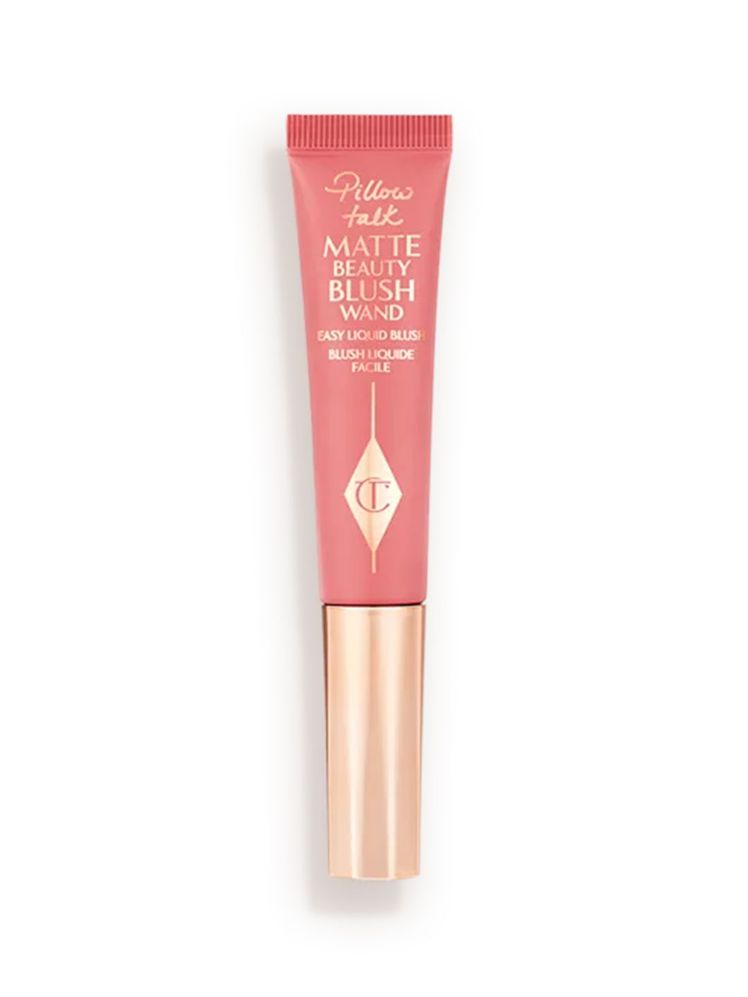
Matte Beauty Blush Wand



Follow