



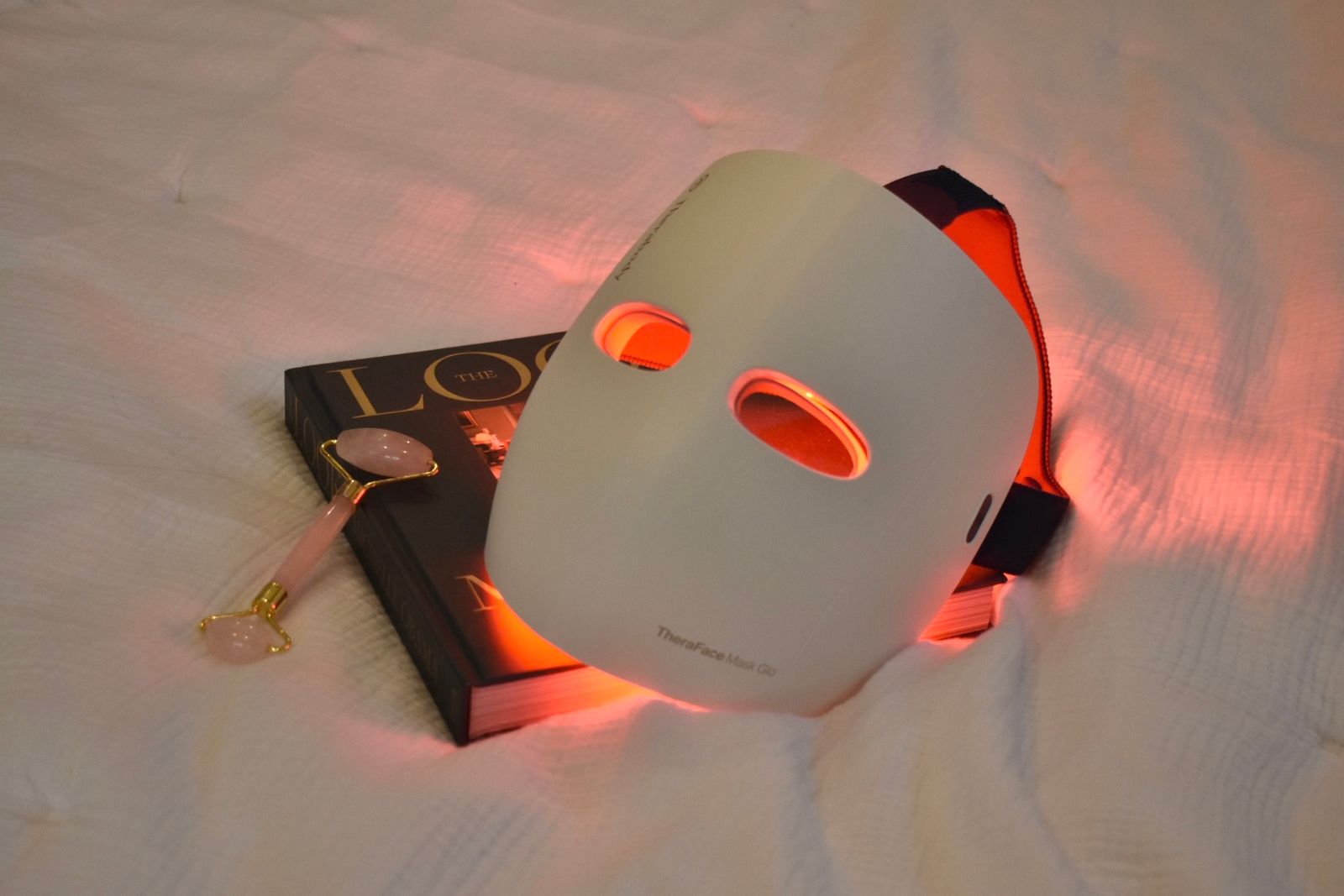
When the glowing, futuristic TheraFace Mask Glo entered my home, my two kids immediately dubbed it “Mummy’s dress-up helmet.” Fair. But the TheraFace Mask Glo isn’t just good for my toddler’s entertainment — it’s Therabody’s latest full-face at-home LED face mask, an expansion of the brand’s viral lineup of wellness tools. It arrives amid the surge of red light therapy devices dominating both TikTok and skincare shelves over the last couple of years, all promising brighter, firmer, clearer skin in less time than it takes to take a decent shower.
TheraFace Glo sets itself apart by slightly reducing the LED count compared with the original mask, but extending the session to a full 12 minutes — a deliberate choice that keeps the light “dose” effective while making the mask lighter, more breathable, and more comfortable for daily use (which is important for consistent use). Unlike competitor masks with shorter cycles — which are usually a selling point! — its timing ensures each wavelength gets enough time on the skin to trigger benefits before moving on, so you’re not sacrificing results for speed. And finally, because it doesn’t have a mouth hole, the mask delivers more uniform coverage across the lower face, where fine lines often show up.
After four weeks of testing — and plenty of expert input from dermatologists — I have thoughts. Here’s how it works, what sets it apart, and whether it truly deserves a spot in your routine (and on your face).
SKIP TO:
What Is the TheraFace Mask Glo?
The next iteration of the TheraFace LED Mask, the TheraFace Mask Glo is a full-face, cordless LED light therapy device that delivers three clinically supported wavelengths — red, blue, and infrared — meaning it uses the same light ranges shown in studies to stimulate collagen, reduce inflammation, and target acne-causing bacteria. In the simplest terms, it’s a wearable mask that beams targeted light into the skin to help improve firmness, texture, tone, and breakouts, all without downtime, pain, or lasers.
Therabody’s clinical testing, backed by the largest study of any LED mask on the market, shows that with consistent use (12-minute sessions, six times a week for 12 weeks), participants saw significant improvements. When it comes to the numbers, after 12 weeks of consistent use, the clinical results showed major wins: you can expect a 25.4% bump in radiance and luminosity, a noticeably smoother skin texture by 22.9%, and a 13.5% jump in firmness. Plus, the study recorded a 10% decrease in visible skin sagging and 11% improvement in overall skin tone evenness.
The brand pairs red and near-infrared light for aging concerns and blue light for breakouts. “I’ve seen real results from LED lights both in studies and in my own patients. These wavelengths can boost collagen production, improve skin texture, and calm mild acne,” says Hannah Kopelman, MD, a board-certified dermatologist.
Red, blue, and infrared each work best within specific wavelength ranges: 630–635nm for red, 405–450nm for blue, and 800–850nm for infrared. “Those are the sweet spots that effectively penetrate the skin, stimulate collagen, and reduce inflammation,” says Cheryl Karcher, MD, a board-certified dermatologist based in New York City.
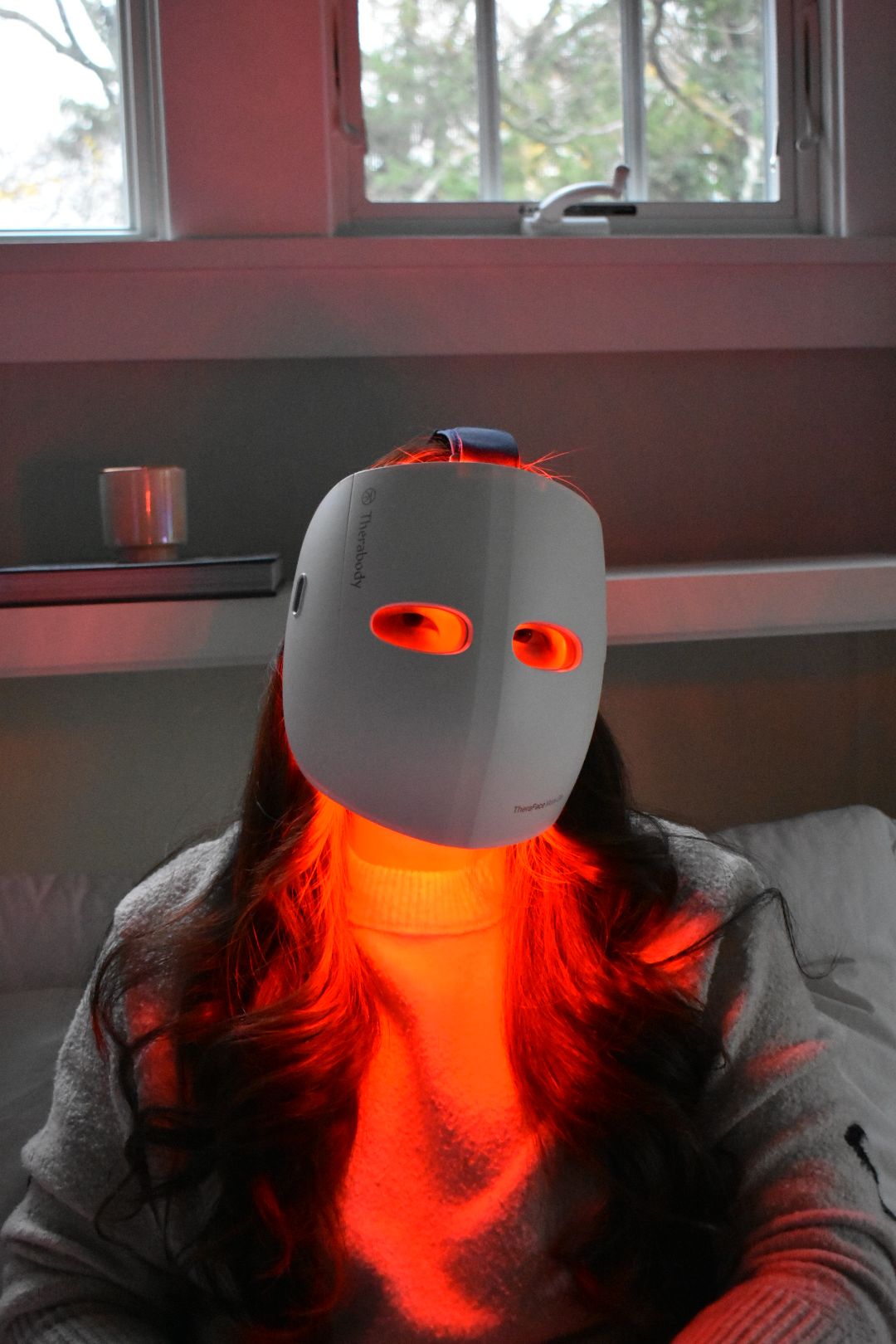
The TheraFace Mask Glo cycles through all three wavelengths in four-minute intervals, or you can stick with just one if you want to target a specific concern. So whether you’re trying to soften fine lines, keep the occasional breakout in check, or just brighten up dull skin, it’s basically a one-and-done device.
How the TheraFace Mask Glo Stands Out
The LED mask category has grown crowded, but the Glo stands apart in a few ways:
It’s a more contoured fit.
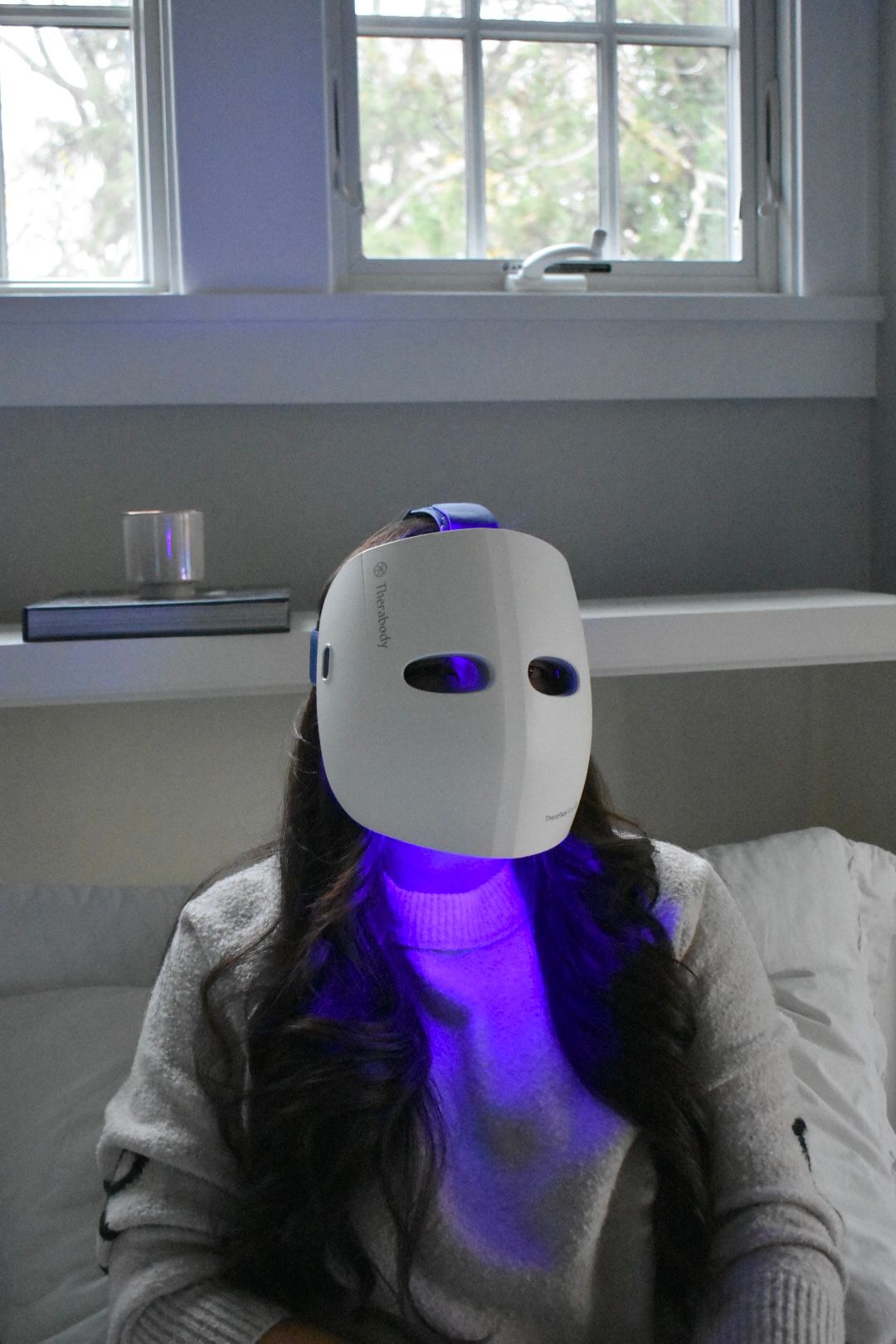
The TheraFace Mask Glo has a more sculpted, face-hugging shape than many LED masks on the market, thanks to its cushioned eye surrounds and adjustable Velcro strap that help it sit securely without slipping. One big difference: There’s no mouth hole, which makes the fit feel more enclosed but also allows the LEDs to treat the fine lines around the mouth more evenly than masks that leave that area uncovered.
It has three clinically proven wavelengths.
Some LED masks stick to just red light, while others toss in blue light but skip infrared altogether. The Glo, like the original TheraFace Mask, covers all three, bringing it much closer to the treatment combinations seen in actual clinical studies. And because LED results depend entirely on using the right wavelengths, Dr. Karcher notes that the Glo hits the sweet spot across the board: red light around 630nm to help soften fine lines and brighten dark spots, red and infrared at roughly 630nm and 830nm to dive deeper and support collagen, and blue light at 415nm to target acne-causing bacteria.
It’s lighter than the OG.
Yes, the original TheraFace Mask has more LEDs, but it’s also heavier and less practical. The Glo pares things down slightly (504 LEDs instead of 648) to make it more comfortable, which makes it more realistic to commit to using it multiple times a week.
It’s completely cordless.
Many LED masks require a wired controller or plug-in pack, which doesn’t encourage movement. The Glo is completely cordless, so yes, you could putter around the house while wearing it, but I found it much comfier just to stay still and enjoy the moment (more on that later).
It’s FDA-cleared.
FDA clearance means the device has undergone a specific review process and been deemed substantially equivalent to existing medical-grade LED technology—a level of scrutiny that no-name versions you might stumble across from third-party retailers don’t usually undergo. “It’s important to consider the certification, as only some LED devices are certified for medical purposes,” says Dr. Karcher.
My Skin Goals
At 38, my biggest skin-care complaints are probably pretty relatable for anyone with mature skin: dullness, fine lines settling in around my eyes, and the occasional stress-induced breakout. I have melasma, and the only thing that’s ever made a real dent in it has been prescription tretinoin, which I only use in the winter because of the sun sensitivity. The idea that an LED mask could support my skin year-round without those same limitations feels promising.
As a first-time full-face LED mask user, I didn’t know what to expect, but Dr. Karcher says LED masks can help with most of my skin concerns above — as long as you stick to them. “Most studies show the effect is modest and depends heavily on at least three to five treatments per week for at least four to 10 weeks,” she says. TheraFace actually recommends using the mask daily for 12 weeks, and since I barely deal with acne and often skipped the blue-light cycle, my sessions were more like eight minutes, which made the routine feel much more manageable.
How It Works
The TheraFace Mask Glo has a snug, face-hugging fit. The soft suction cups around the eyes help block light and keep the mask from sliding, and the adjustable Velcro strap lets you tighten or loosen it, depending on how cosy you want it to feel. There’s no mouth opening, which makes the mask feel a little more enclosed — and for me, that sometimes meant my breathing felt slightly restricted. But it also means the LEDs actually reach the fine line-prone area around your mouth, something many other masks miss. It may be a couple of ounces lighter than the original TheraFace Mask, but I still found it the most comfortable to use while lying down or reclining. While it’s cordless, the mask is thick enough that your peripheral vision disappears, so wandering around the house felt a bit risky.
Prep is pretty straightforward: Make sure you start with clean, dry skin, since that’s when LED works best. “I like to use LED therapy on clean skin before applying serums or moisturiser. It helps the skin absorb products more effectively and reduces irritation from active ingredients,” says Dr. Kopelman.
Using the skincare device is refreshingly uncomplicated as there’s zero setup, no syncing to an app, and no learning curve. The left button controls the vibration therapy, which is meant to boost circulation. The button on the right side powers it on and lets you flip between modes: four minutes of red light for collagen and tone, four minutes of red + infrared for deeper wrinkle and elasticity support, or four minutes of blue light for acne. You can also just let it run the full 12-minute cycle. In terms of frequency, “most studies show the effect depends heavily on at least three to five treatments per week for at least four to 10 weeks,” says Dr. Karcher. TheraFace actually recommends using the mask daily for 12 weeks.
My Experience and Results
LED masks are definitely an investment, but if you’re someone like me who’s juggling kids, deadlines, and an ever-expanding mental load, it was a bit tougher to stick to the TheraFace Mask Glo every single night. I ended up using it about four evenings a week, even though the ideal cadence is nightly — and, as Dr. Kopelman reminded me, “skipping sessions slows everything down.” And sure, a few minutes a day doesn’t sound like much, but after a long night wrestling through the bath-and-bedtime routine with my kids, even the idea of putting on night cream can feel like a heavy lift.
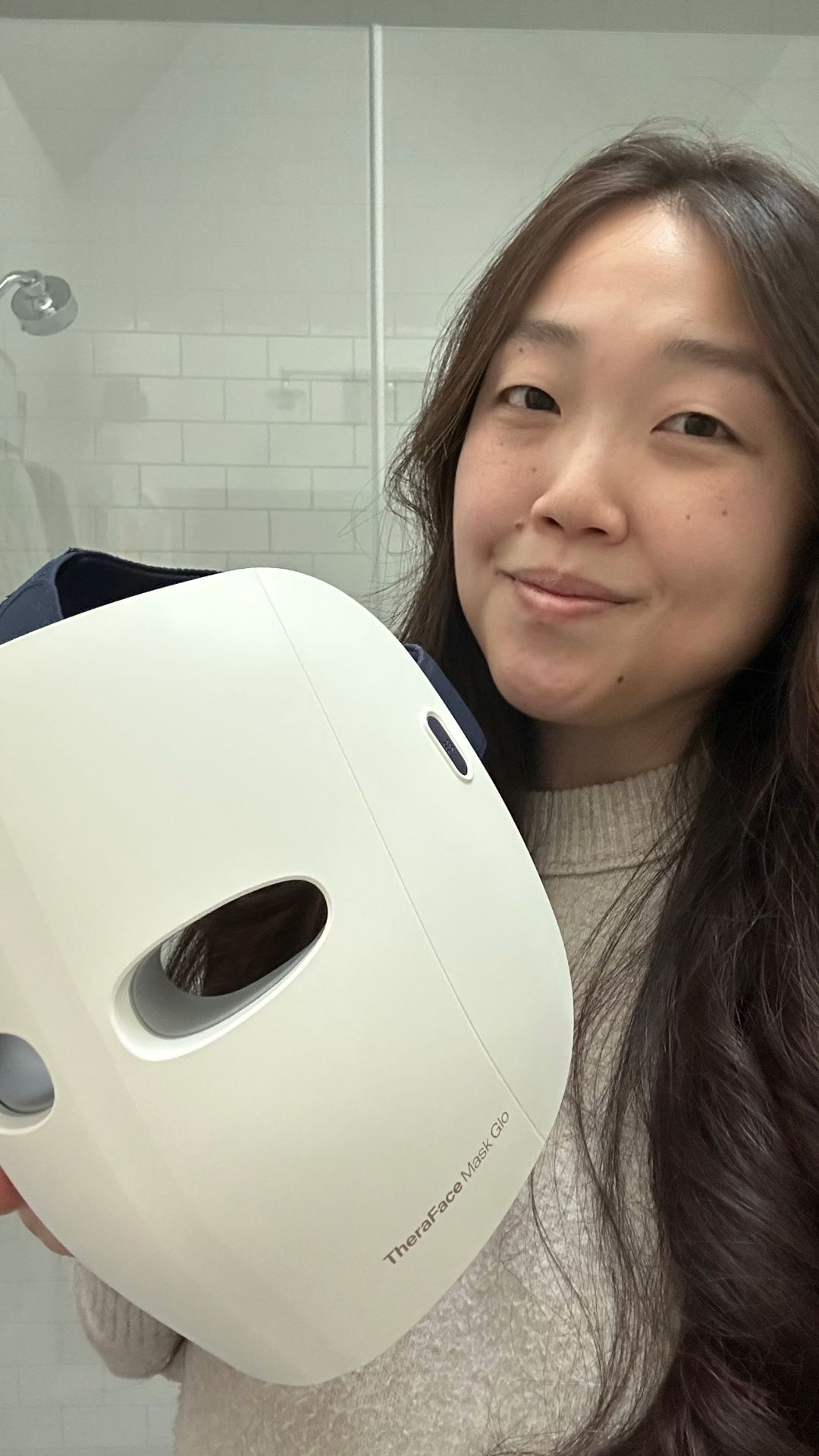
Because I rarely deal with acne and often skipped the blue-light step, my sessions were more like eight minutes, which made the routine feel far more manageable. Hoping to make them even shorter, I asked Dr. Karcher whether the infrared step was truly essential. Turns out, it is if you’re chasing smoother-looking skin: those longer wavelengths “increase collagen synthesis and improve skin elasticity more effectively than red light alone.” So I did what I could — not perfect consistency, but hey, that’s real life.
Still, after four weeks, my skin looked smoother and brighter, plus the fine lines around my eyes appeared noticeably softer. Even though I skipped the blue-light step most days, I (maybe not so coincidentally?) haven’t had a real breakout since. As for the experience, there’s no heat, pain, or tingling — just bright light, made comfortable by the eye shields, which meant I could even read a book during sessions. The vibration therapy is a nice addition, and unlike the original TheraFace Mask, it’s more dispersed and subtle across the face. However, for me, it wasn’t something I felt compelled to use every time.
The one thing I haven’t noticed much improvement in yet is my melasma. “For deeper wrinkles, significant sagging, or pigment issues like melasma, I rely on other treatments, and LED serves more as a supportive therapy,” says Dr. Kopelman. But since the most dramatic LED results typically show up closer to the 12-week mark, I’m cautiously optimistic that the best may still be ahead.
Is It Worth It?
You’d be hard-pressed to find a dermatologist who’d call any LED mask (or any beauty product) a miracle. But is this one of the most convenient, credible, and genuinely user-friendly at-home LED masks I’ve tested? Absolutely. The trio of clinically validated wavelengths, cordless design, thoughtful fit, and FDA clearance make it an easy yes in my book. And if “Mummy’s dress-up mask” keeps my skin smoother and buys me a few blissfully uninterrupted minutes in the name of “research” every day? That’s a kind of magic I can get behind.
Meet the experts
After something else? Shop the best LED neck masks, LED for hair growth devices, LED for lips and LED eye masks. This story originally appeared on Allure.



Follow