



Big news today in the mono because what we’ve been looking at today is the issue of whether British university campuses are being radicalised.
And it’s a question that we’re not only asking here in Britain. It’s a question that refuses to go away because now our allies in the Gulf are asking this very question.
The United Arab Emirates has restricted state funding for its own citizens who want to study here at UK universities.
This was not a bureaucratic oversight, according to a Telegraph source.
They were told the United Arab Emirates does not want its kids to be radicalised on campus.
The UAE operates a generous overseas scholarship system covering tuition fees, living costs, travel and health insurance.
Yet British universities, which were once a favoured destination, have been excluded from some funding streams. The question is why?
Because of concerns about the presence and influence of Islamist networks here in the UK, particularly those that are linked directly or indirectly to an organisation called the Muslim Brotherhood.
Now, the Muslim Brotherhood was founded in Egypt in the 1920s.
It’s an international Islamist movement that seeks to organise society around Islamic principles, blending religious revivalism, social activism and political mobilisation.
While it’s banned or designated a terrorist organisation in several Middle Eastern states and a couple of European ones too, the Muslim Brotherhood has not been proscribed here in the UK.
In fact, Britain has for decades been extremely liberal in its approach to this organisation.
In the mid to late 1990s, the UK was seen as a refuge for Islamist activists fleeing authoritarian regimes in the Middle East.
LATEST DEVELOPMENTS:
- Britain threatened with US sanctions if X banned as Labour warned: ‘There will be consequences!’
- Keir Starmer and EU leaders deliver warning to Iran regime to ‘stop the violence’ amid mass protests
- Tony Blair’s sister-in-law sparks fury after describing October 7 massacre as ‘legendary’
Strong asylum protections and expansive free speech laws made Britain an attractive base, and after 9/11, the UK state finally began paying closer attention.
Islamist movements were increasingly scrutinised, though often described as non-violent, while remaining ideologically committed to political Islam, Sharia law, and violence abroad.
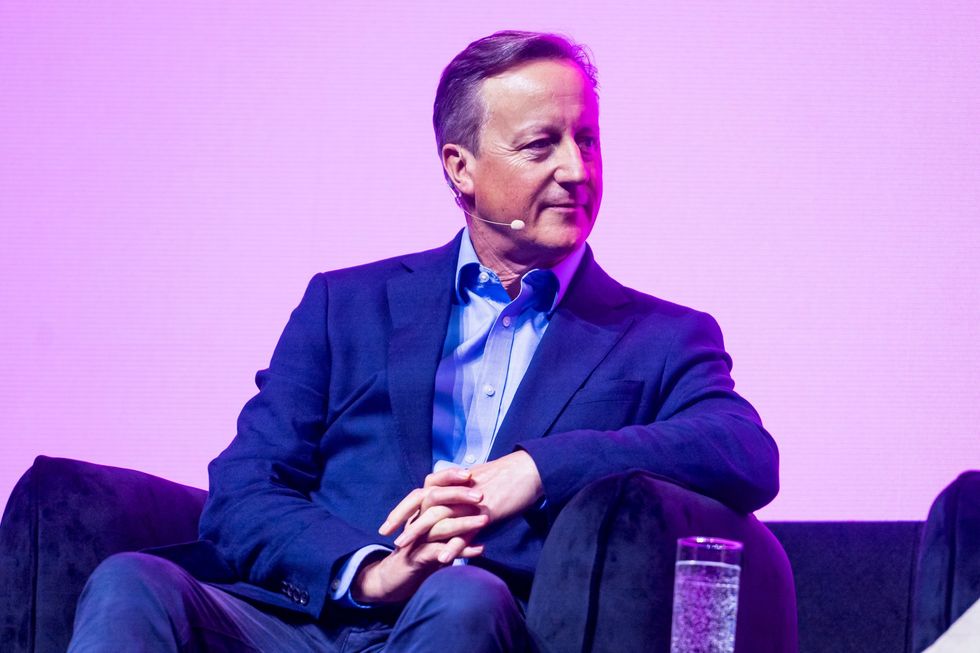
A key moment for the UK came in 2014, when then-Prime Minister David Cameron ordered a formal Government review of the Muslim Brotherhood and the findings, which were later published in 2015, revealed the Brotherhood was found not to operate as a single formal organisation in the UK.
But the review concluded that Brotherhood ideology could act as a possible indicator of extremism, even where violence was not openly endorsed.
The findings found several UK-based individuals and organisations were identified as having historic or ideological links to the movement.
Britain may have long functioned as a hub for Muslim Brotherhood influence activists, institutions and networks, it found.
The group was not banned, but monitoring was increased, and the UAE has repeatedly questioned why the UK refuses to proscribe the Muslim Brotherhood.
And in 2024, the Labour Government said the issue was under review but has still not banned this organisation.
And I think things are going to continue to be watched very, very closely in this country, not least as Nigel Farage and Reform have indeed pledged to ban this particular organisation.
Our Standards:
The GB News Editorial Charter



Follow