



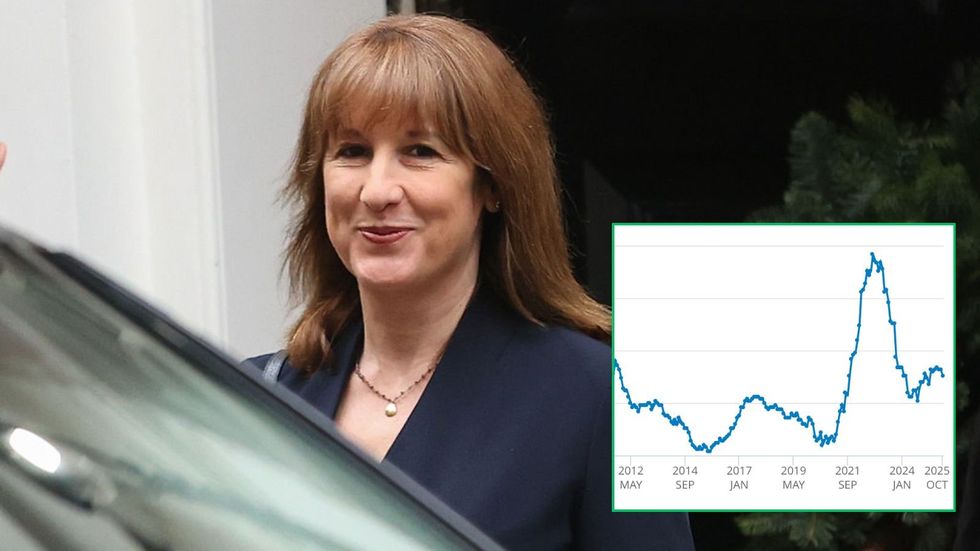
UK inflation is expected to have eased again last month, reinforcing signs that price pressures across the economy are gradually moderating.
Economists widely forecast that inflation fell to 3.5 per cent in November.
That would mark a slight decline from October’s reading of 3.6 per cent.
If confirmed, the fall would indicate that while prices are still rising, the pace of increases is continuing to slow.
The expected drop in the Consumer Prices Index (CPI) follows several months in which inflation proved stubbornly persistent.
October marked a turning point after inflation had remained elevated throughout the summer.
The October reading was the first decline in CPI since May.
Analysts believe November’s cooling was driven primarily by falling supermarket prices.
Lower food costs are thought to have offset higher prices in other areas of the economy.
Accommodation costs, particularly hotel prices, are expected to have risen sharply during the month.
Despite this, economists believe the decline in grocery prices was sufficient to pull the headline inflation rate lower.
Official data for October showed food inflation accelerating at a notable pace.
Everyday items including bread, cereals, milk and coffee all rose in price during that period.
Those increases placed additional strain on household budgets already under pressure from higher borrowing costs.
However, analysts say food prices retreated in November.
That shift is expected to have provided some relief for consumers.
LATEST DEVELOPMENTS
- Bank of England: Rachel Reeves’s Budget will cut inflation by up to 0.5%
- BBC licence fee set to rise AGAIN to almost £200 as millions of households stop paying levy
- Savings warning: Britons with £10,000 in the bank urged to act now or risk losing £400
Economists at Pantheon Macroeconomics said falling food prices played a key role in the inflation outlook.
Rob Wood and Elliott Jordan-Doak, economists at the firm, said: “Food prices falling month-on-month will help drag inflation down in November.”
They said the drop in supermarket costs should compensate for what they described as a “chunky hotel price rise”.
The pair also pointed to ongoing price pressures in the services sector.
They said inflation across catering, leisure and hospitality remained elevated throughout November.
Mr Wood and Mr Jordan-Doak attributed this persistence to labour costs.
They said: “Continued strong labour costs in part due to payroll tax hikes boost prices.”
Rising wage bills have been a particular challenge for hospitality businesses.
Many firms have passed higher employment costs on to customers.
As a result, prices in pubs, restaurants and hotels have remained high even as goods inflation eases.
This divergence highlights the uneven nature of inflation across the economy.
While goods prices appear to be cooling, services inflation continues to exert upward pressure.
Sanjay Raja, chief UK economist at Deutsche Bank, also expects inflation to fall to 3.5 per cent in November.
“After peaking in August, we expect inflation to continue on its downward trajectory.”
He said a combination of policy decisions and external factors are helping to ease price pressures.
Mr Raja pointed to measures announced in the Autumn Budget as a contributing factor.
He also cited lower energy costs as supporting the outlook for inflation.
Those developments have led economists to revise down their projections for the coming year.
“We see CPI landing pretty close to target from spring next year.”
He added: “Before more sustainably returning to target in 2027.”
The Bank of England has a mandate to keep inflation at two per cent.
Inflation has remained above that level for more than two years.
Fresh CPI data will be published one day before the Bank’s next interest rate decision.
The timing has increased scrutiny on the figures from policymakers and financial markets.
Most economists now expect the Bank to cut interest rates before Christmas.
That expectation reflects a broader slowdown in the economy.
Price growth is easing while joblessness is rising.
Economic output has also shown little momentum in recent months.
Together, those factors have strengthened the case for monetary easing.
Economists say a rate cut would aim to support growth without reigniting inflation.
The forthcoming data is expected to play a key role in shaping the Bank’s next move.
Our Standards:
The GB News Editorial Charter



Follow