



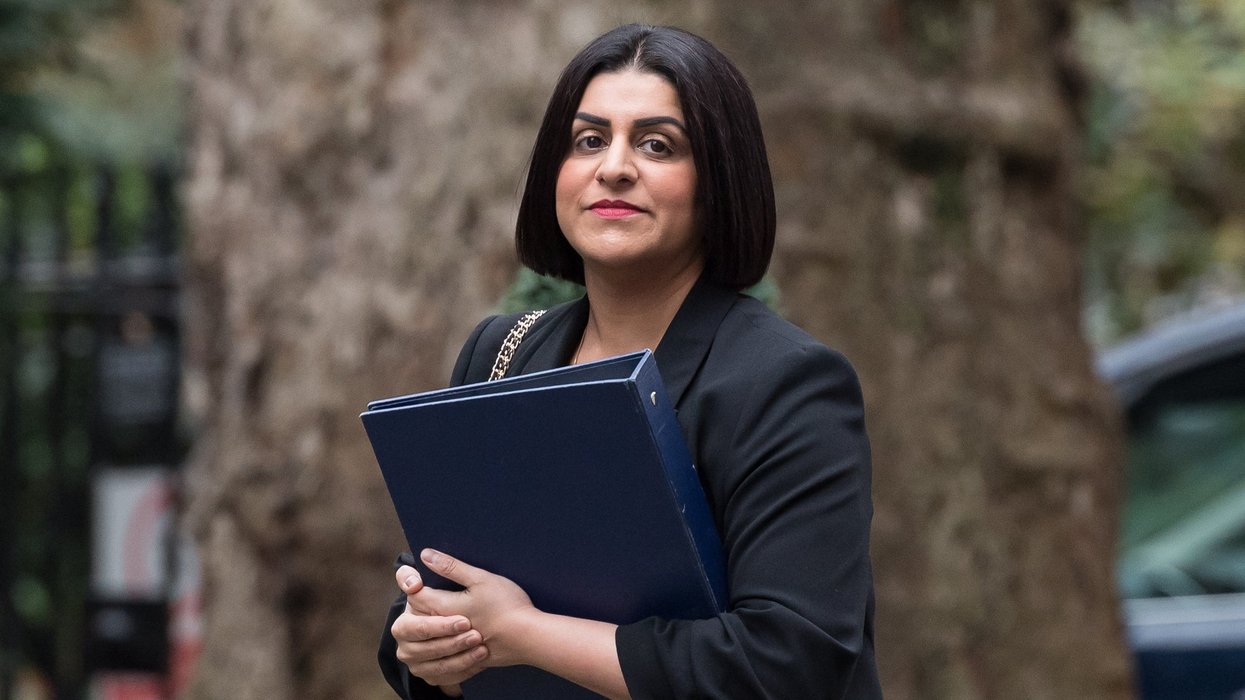
Nearly 50 Labour MPs have warned they are prepared to rebel over Shabana Mahmood’s migration crackdown, potentially the largest backbench revolt of Sir Keir Starmer’s premiership.
The Home Secretary plans to double the qualifying period for indefinite leave to remain (ILR) from five to ten years, with the changes applied retrospectively to migrants already living in the UK under existing rules.
Critics on the backbenches say the proposals are “shameful”, “unfair”, “un-British” and a “breach of trust”, warning they could damage public services, undermine business and harm Britain’s international reputation.
Tony Vaughan, the MP for Folkestone, said: “It makes Britain look unpredictable and like a country that does not keep its word.”
Gareth Thomas, MP for Harrow West, claimed the proposals “would be the height of unfairness” and would make it harder to attract talent, while Perran Moon, who represents Camborne and Redruth, added:
“It is not keeping our word. It is not fair play. Dare I say it, it is not British.”York Central MP Rachael Maskell pledged to vote against the plans, saying: “This is not a Labour policy.”
Meanwhile, Tanmanjeet Singh Dhesi, MP for Slough, warned “the goalposts are being moved”, calling retrospective application “truly unfair”.
Should all the dissenting MPs follow through on their threat, ministers could be compelled to abandon yet another flagship policy, following recent reversals on welfare reforms, digital identification schemes and support measures for pubs.
Concerns about the impact on essential services were raised by Euan Stainbank, the Falkirk MP, who warned the social care sector would be left “exposed” by the changes.
Scott Arthur, representing Edinburgh South West, echoed fears that Britain’s capacity to attract and retain skilled workers would suffer.
Meanwhile, York Central MP Rachael Maskell, who rebelled over welfare reforms last year, went furthest in her opposition, vowing to rally colleagues against the measures.
“If these proposals progress, I will vote against the Government and ensure that many of my colleagues join me in the Lobby, because this is not a Labour policy,” she said.
LATEST DEVELOPMENTS
- PM admits he KNEW about Lord Mandelson staying at Jeffrey Epstein’s house during vetting process
- ‘Do not travel’ warning issued to thousands of commuters after ‘multiple incidents’ on rail lines
- British holidaymakers locked in Spanish council row over ‘epic monstrosity’
Under current regulations, migrants can apply for indefinite leave to remain after residing in the country for five years, with settlement granted automatically except in cases of serious criminal activity.
The April reforms will extend this baseline period to a decade, with permanent residency no longer conferred as an automatic entitlement.
Instead, an “earned settlement” framework will replace the existing system, requiring migrants to demonstrate they are contributing to British society and the economy.
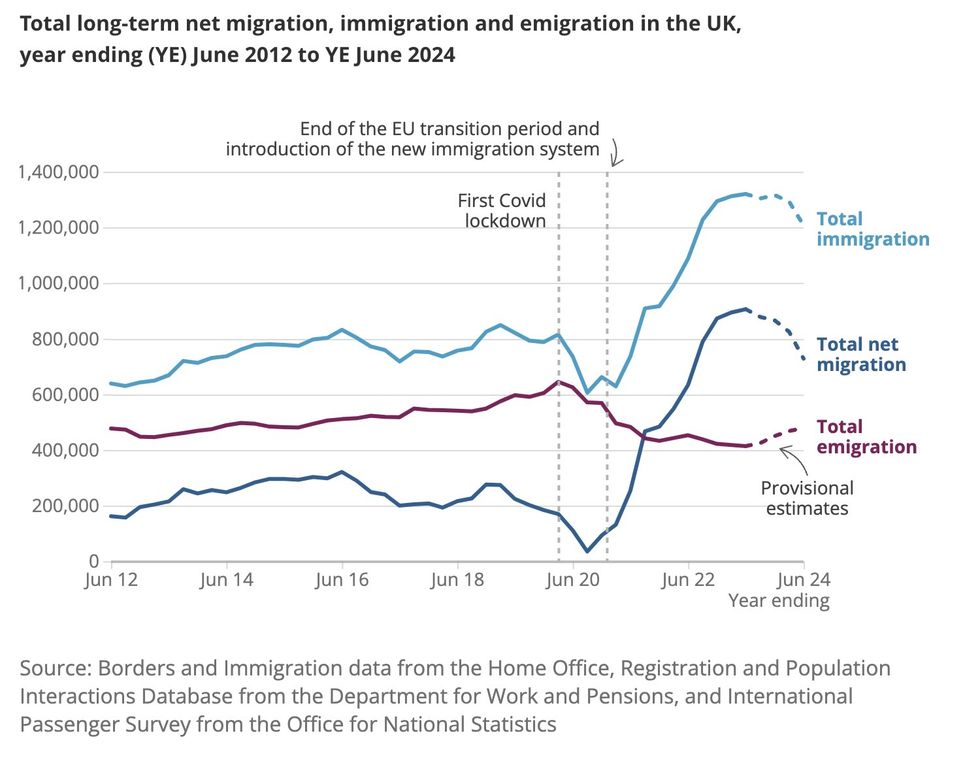
The policy targets the nearly two million migrants who arrived through the post-Brexit immigration framework established in 2021, a cohort that has become known as the “Boriswave” after the former Prime Minister who introduced the system.
Some individuals may qualify for earlier settlement by meeting specific criteria, while others face extended waiting periods through a penalty system.
Home Office Minister Mike Tapp defended the reforms, acknowledging concerns whilst pointing to the scale of recent migration.
He argued that the post-Brexit influx under Boris Johnson meant the country was “faced with the prospect of 2.2 million people being eligible to settle between 2026 and 2030,” with corresponding access to welfare and housing.
Official figures show net migration of 2.6 million between 2021 and 2024, meaning roughly one-in-thirty UK residents arrived within the past four years.
Our Standards:
The GB News Editorial Charter



Follow