



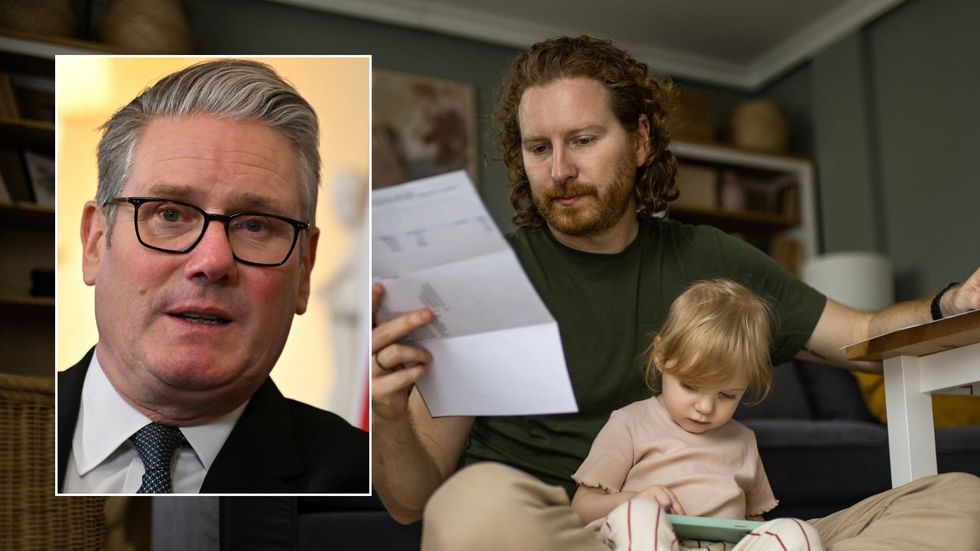
Reforms from the Department for Work and Pensions (DWP) will pull around 550,000 children out of poverty by 2030 in what will be the largest reduction in a single parliamentary term, the Labour Government claims.
Ministers have unveiled the Child Poverty Strategy, which includes scrapping the two-child benefit cap on Universal Credit payments which was introduced by the Conservatives in 2017.
The strategy addresses poverty’s root causes through three principal approaches; reducing the cost of essential goods, increasing household incomes, and enhancing local services.
Prime Minister Keir Starmer, who visited a children’s centre in Wales today alongside the Welsh First Minister, described the initiative as “a moral mission” focused on “fairness, opportunity, and unlocking potential”.
Some 7.1 million children will see their household incomes rise under the measures. Childcare costs represent one of the most significant obstacles for parents seeking employment, particularly those starting new positions or returning after having children.
From next year, eligibility for upfront childcare payments will extend to parents on Universal Credit who are returning from parental leave, preventing them from falling into a debt trap whilst waiting for their first wages.
The strategy also ensures that families receiving Universal Credit can access childcare support for all their children, removing a barrier that previously hindered parents with larger families from entering the workforce.
Lucy Bannister, Turn2us’ head of Policy and Influencing, welcomed the measures: “We welcome measures to better support working parents on Universal Credit, particularly with childcare.
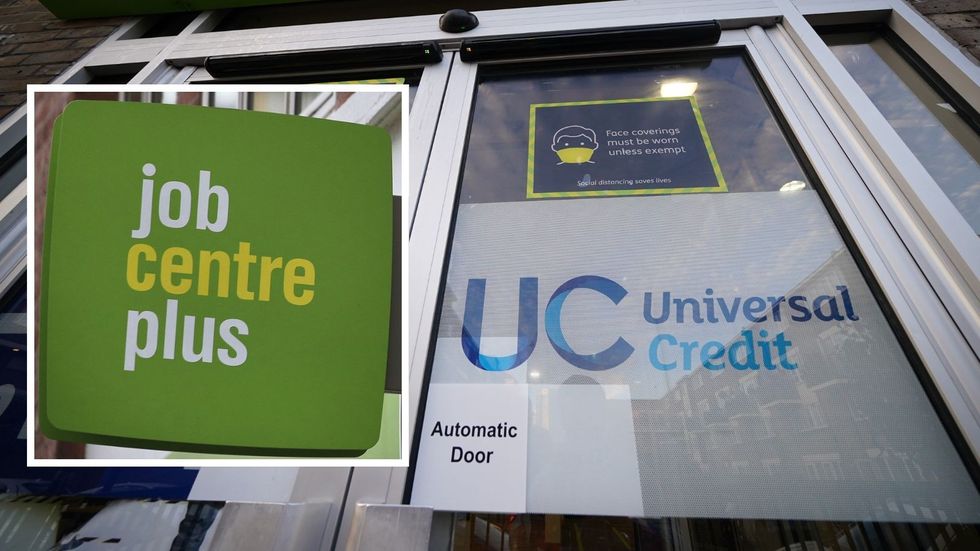
“However, genuine employment support that treats people with dignity and respect will be critical to supporting more parents in good jobs.”
Children residing in temporary accommodation face some of the most severe forms of deprivation, experiencing disrupted family life, missed education, and damage to both physical and mental wellbeing.
Furthermore, the Government will enforce an end to the unlawful practice of housing families in bed and breakfast accommodation beyond the six-week legal limit.
To achieve this, £8million will fund Emergency Accommodation Reduction Pilots across 20 local authorities with the highest rates of B&B usage for homeless families, continuing for three years.
A substantial £950million investment through the Local Authority Housing Fund from April 2026 will deliver up to 5,000 quality homes for improved temporary accommodation by the decade’s end.
Councils will face a new legal obligation to inform schools, health visitors, and GPs whenever a child enters temporary housing, ensuring coordinated support. The Government will also collaborate with the NHS to prevent mothers and newborns being discharged to unsuitable accommodation.
The Government will tackle the rising cost of infant formula, which has increased by 25 per cent over two years, placing considerable strain on families who cannot or choose not to breastfeed.
New guidance for retailers will permit families to use loyalty points, vouchers, and gift cards when purchasing formula, potentially saving parents up to £540 during their baby’s first year.
The scale of the challenge is stark: 4.5 million children, roughly 31 per cent, currently live in relative poverty after housing costs, an increase of 900,000 since 2010/11. Approximately 2.6 million children grow up in households lacking sufficient food, with 1.1 million relying on food banks last year.
In England alone, more than 172,000 children occupy temporary accommodation. Three quarters of children experiencing poverty come from working families, underscoring that employment alone does not guarantee financial security.
The Prime Minister declared: “Every child deserves the best possible start in life, with their future no longer determined by the circumstances of their birth. Yet too many children are growing up in poverty, held back from getting on in life, and too many families are struggling without the basics: a secure home, warm meals, and the support they need to make ends meet.”
Education Secretary Bridget Phillipson described child poverty as “a stain on our country,” adding that the strategy “represents an historic moment for generations of families now and into the future”.
Priya Edwards, senior research and policy manager at Save the Children UK, praised the approach: “Scrapping the two-child limit to benefits, expanding free school meals, and increasing childcare support for families including for those returning to work after maternity leave are bold measures to improve childhoods’ not the sticking plaster measures of the past.”
Our Standards: The GB News Editorial Charter



Follow