



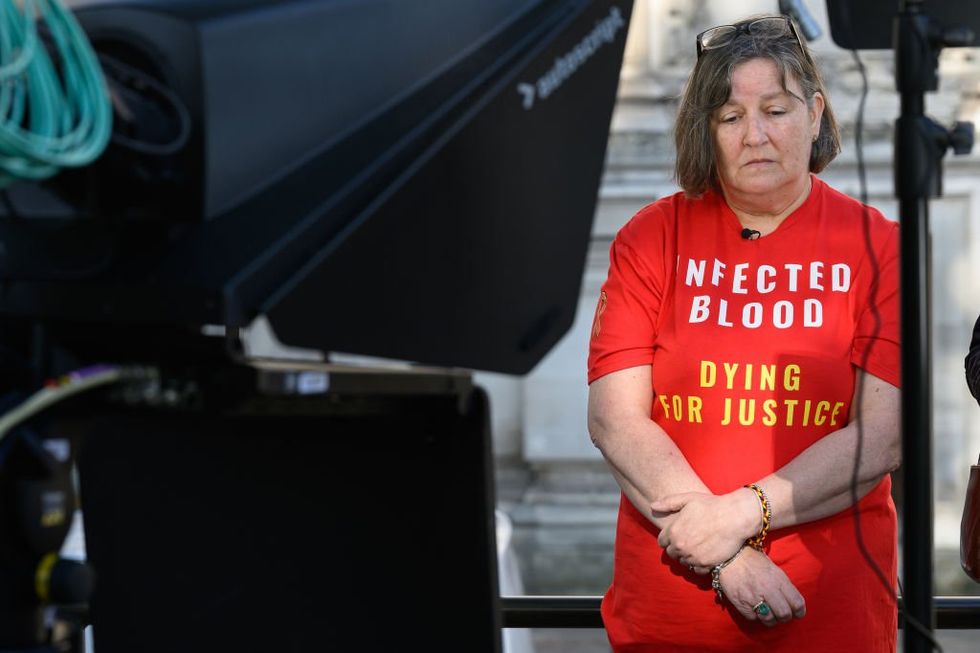
Bereaved families affected by the infected blood scandal have warned victims who died could receive up to £2million less compensation than those who are still alive under current Government payout rules.
Relatives of victims criticised what they described as unfairness in the scheme in a letter sent to Nick Thomas‑Symonds MP, Labour’s paymaster general, and Sir Brian Langstaff, chairman of the infected blood inquiry.
The letter, written alongside the Haemophilia Society and the Hepatitis C Trust, said, “The scheme disadvantages victims by creating a two‑tier system.
Infected victims are being financially penalised by the compensation framework for dying before the Government finally heeded calls to address this national treatment disaster.”
It added those who had died were “a uniquely vulnerable group” who were “not here to speak for themselves or to hold Government to account”.
More than 30,000 people were given blood infected with HIV, hepatitis B or hepatitis C by the NHS between the 1970s and early 1990s, including 6,000 haemophiliacs.
The public inquiry, which ran from 2018 to 2024, found the NHS had “knowingly exposed patients to unacceptable risks of infection”. The Government opened a compensation scheme in March 2025 following the inquiry’s findings.
Part of the compensation payout is designed to account for loss of potential earnings over a victim’s lifetime.
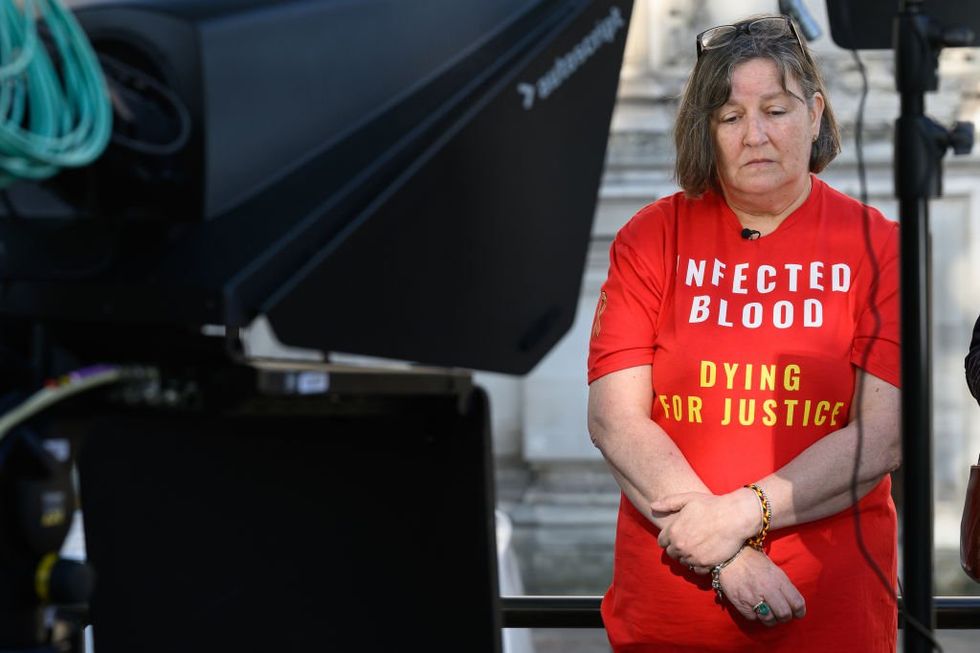
Under current rules, those who have died receive financial loss payments covering the period from infection until the date of death, while those still alive can receive payments covering projected losses until a healthy life expectancy, estimated at around 86 for men and 88 for women.
Families and charities say this creates major disparities.
Analysis shared by campaign groups suggests the estate of someone who died at 13 in 1992 after contracting HIV and hepatitis C would receive about £790,000. Had they survived until 2025, they could have received around £2.8million.
Kate Burt, chief executive of the Haemophilia Society, said: “Unless urgent changes are made, the infected blood compensation scheme is in danger of failing a significant proportion of bereaved families.”
LATEST DEVELOPMENTS
- Councils ‘threatened with insolvency’ as special needs spending blows £14bn hole in local budgets
- HMRC warning: Millions at risk of paying more tax than they need to by overlooking ‘key’ allowances
- Fears Rachel Reeves’ ISA ‘hurdles’ are making it HARDER for you to build wealth – ‘Wrong way to go’
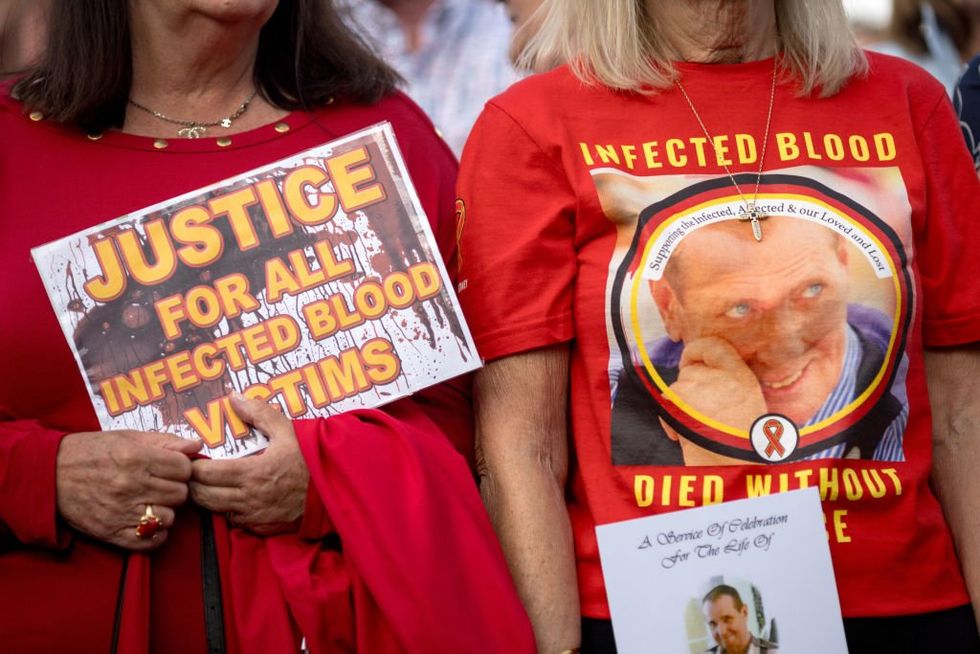
She said compensation should “value equally the lives of those infected, regardless of whether they survived to make a claim themselves or died before the scheme was set up”.
Sam Richards, a financial adviser helping families with claims and whose uncle was a victim, said: “It is up to the rest of us to fight to get parity for all victims, regardless of when they die.”
Ami Jai Presly, 38, and Meera Pierson, 36, lost their father, Jai Brahmbhatt, in 1993 after he contracted hepatitis C and HIV from contaminated blood. Mr Brahmbhatt, a professor at Brunel University, died aged 39.
His estate is expected to receive about £1.2million rather than the estimated £2.5million he could have received if he were still alive.
His wife is expected to receive spousal payments of around £650,000, leaving total compensation roughly £650,000 lower than if he had survived.
Ms Presly said: “It is a policy fiction that financial loss stops accumulating at the point of death. These are earnings that my dad lost due to being given contaminated blood and dying.”
Richard Newton, 48, lost his brother Mark in 1989 at the age of 24. He said his brother’s wife could receive about £700,000 less than she would have if he were still alive. “It is another kick from the Government,” he said.
“Not only have they disrespected my brother by giving him these viruses, but now there is this injustice after he is dead.”
The infected blood scandal is widely considered the biggest treatment disaster in NHS history.
Of the 30,000 people infected, at least 3,000 have died. In May 2024, then-prime minister Rishi Sunak apologised for what he called a “decades‑long moral failure” and said victims would receive compensation regardless of cost.
More than £11.8billion has been allocated to the scheme, which opened on March 31, 2025. More than £1.8billion has been paid out so far.
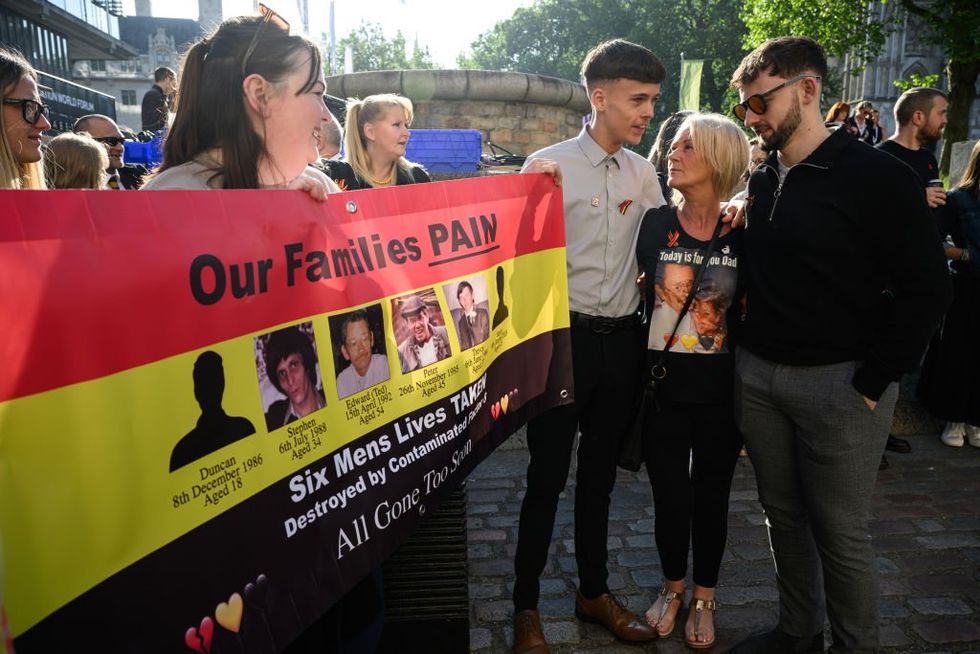
Compensation is split into five categories, including injury awards, social impact awards, autonomy awards, care costs and financial losses.
All infected victims, living or deceased, receive a basic financial loss award of £12,500. Additional financial loss payments are paid at a fixed rate of £29,657 per year until age 66 and £14,828 per year after that.
For living victims, payments are calculated from infection until around age 86 for men and 88 for women. For those who died before the scheme opened or before accepting a claim, payments stop at the date of death.
Spouses and children may receive some payments towards future financial loss. Spouses can receive 56.25 per cent of the amount a living victim would receive until age 88.
Children can receive 18.75 per cent until they turn 18. Parents and siblings receive nothing if the victim died without a spouse or children.
A Government spokesman said: “The victims of this scandal have suffered unspeakable wrongs and we are committed to listening to and working with them to ensure justice is not only delivered but reflected in the way compensation is treated for everyone.”
They said the Government was “committed to making the system as fair and compassionate as possible” and was considering responses to the recent consultation.
Our Standards:
The GB News Editorial Charter



Follow