



Labour has promised to look at the penalties for a major driving offence after a review raised fresh concerns about rising costs for motorists.
It follows a new report from the Motor Insurance Taskforce, which warned the financial burden created by uninsured drivers has soared in recent years, pushing up premiums for people who follow the law.
Ministers have now admitted the punishments for driving without insurance have barely changed for years, despite repeated calls in Parliament to toughen the rules.
At the moment, anyone caught behind the wheel without valid cover faces a £300 fixed penalty and six points on their licence.
But with uninsured driving still a major problem on Britain’s roads, the Department for Transport said it will review whether those penalties go far enough.
The Government has branded uninsured driving “unacceptable,” and said it wants the punishment to properly reflect the seriousness of the offence.
The taskforce report highlighted the cost of dealing with uninsured drivers, which has risen sharply, up around 37 per cent between 2019 and 2024.
When a crash involves a driver with no insurance, or someone who flees the scene, the Motor Insurers’ Bureau steps in to compensate victims.
The MIB is paid for by a compulsory levy on all insurance companies, which then passes the cost onto motorists through higher premiums.
The report detailed how cutting the number of uninsured drivers could lower these levies, which might help bring down the cost of insurance for everyone.
The Financial Conduct Authority warned in July this year that uninsured drivers have been one of the factors pushing up premiums between 2019 and 2023.
The Continuous Insurance Enforcement programme allows the MIB to send warning letters to the registered keepers of cars which appear to have no insurance. If drivers ignore the letter, they can be fined £100 and face further action if they still fail to comply.
LATEST DEVELOPMENTS
- Drivers demand tougher penalties for traffic offences this Christmas as thousands flout driving rules
- Drivers back larger, ‘more practical’ vehicles despite major safety risks to pedestrians and cyclists
- Congestion Charge costs to be scrapped just days before Sadiq Khan’s huge daily price hike
Another initiative, Operation Tutelage, involves police sending advisory notices to keepers of vehicles spotted on the road when insurance details are unclear. This helps separate genuine uninsured drivers from people caught out by admin errors.
Both schemes are credited with helping reduce the number of uninsured cars and keeping premiums stable for law-abiding drivers.
While the fixed penalty route for uninsured driving is widely used, the consequences can be much more severe if a case goes to court. Magistrates can issue unlimited fines, add six to eight penalty points, or even ban people from driving altogether.
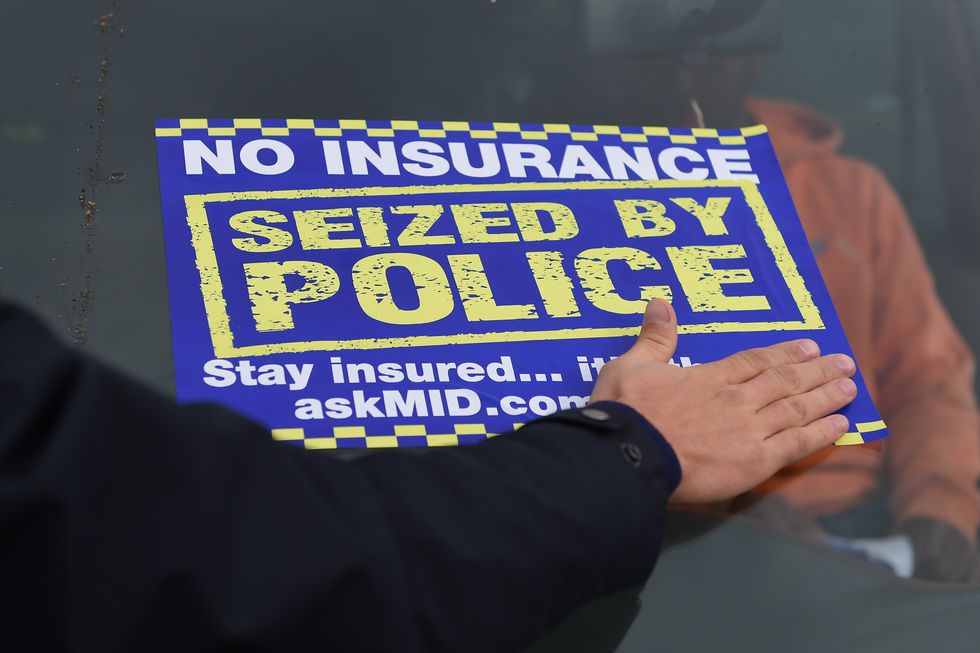
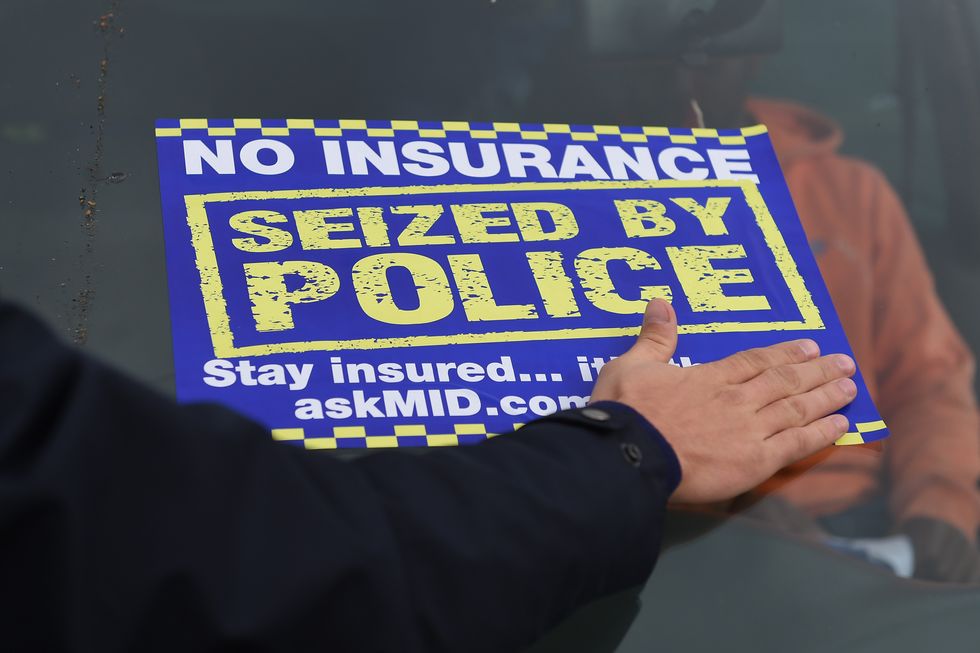
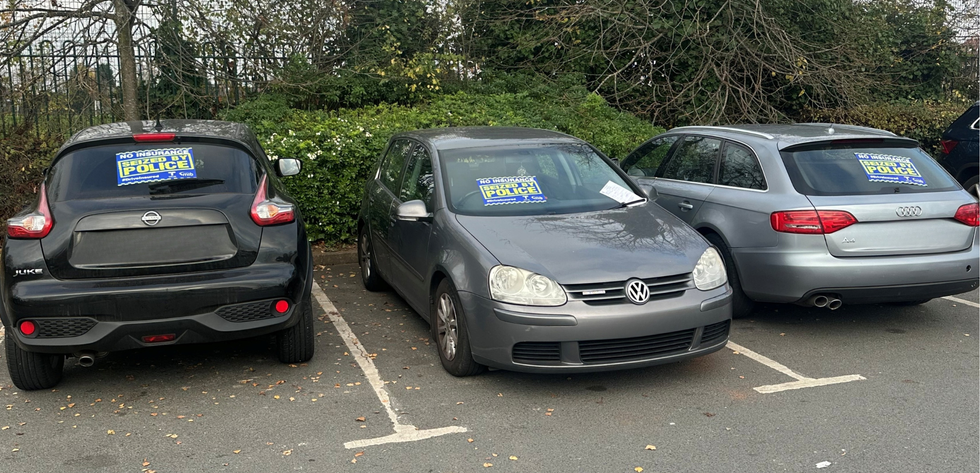
Police can also seize vehicles being driven without proper cover and, in some cases, destroy them. Even if the car itself is insured, a driver who is not personally covered faces the same penalties. Under the Road Traffic Act 1988, every motorist must have at least third-party insurance to drive on public roads.
The taskforce report also called for tougher action on fraud and vehicle crime, two issues which have also been found to push up insurance costs.
Confirmed insurance fraud cases rose from 4,423 (worth £49million) in 2019 to 6,263 (worth £65million) in 2023.
The Government’s Crime and Policing Bill include new offences targeting devices used to steal cars, with penalties of up to five years in prison and unlimited fines.
The Home Office also launched the Insurance Fraud Charter in October 2024 to improve data-sharing between police and insurers. Campaigns have focused on warning young drivers about illegal “ghost broking” scams that sell fake insurance.
The Association of British Insurers continues to work with the National Vehicle Crime Intelligence Service in Dover to stop stolen vehicles from being shipped abroad.
Our Standards:
The GB News Editorial Charter



Follow