



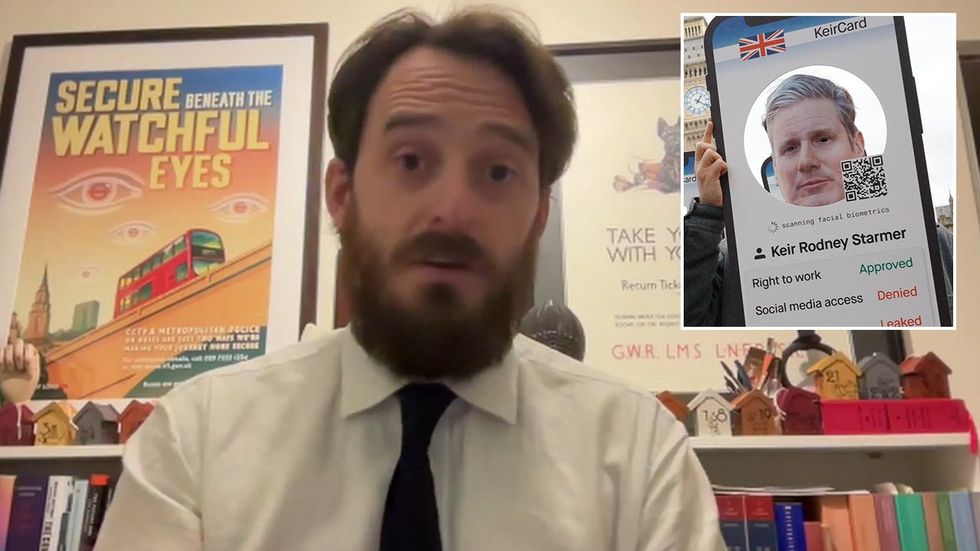
Prime Minister Sir Keir Starmer’s plans to introduce mandatory digital ID cards has been branded a “threat to civil liberties”.
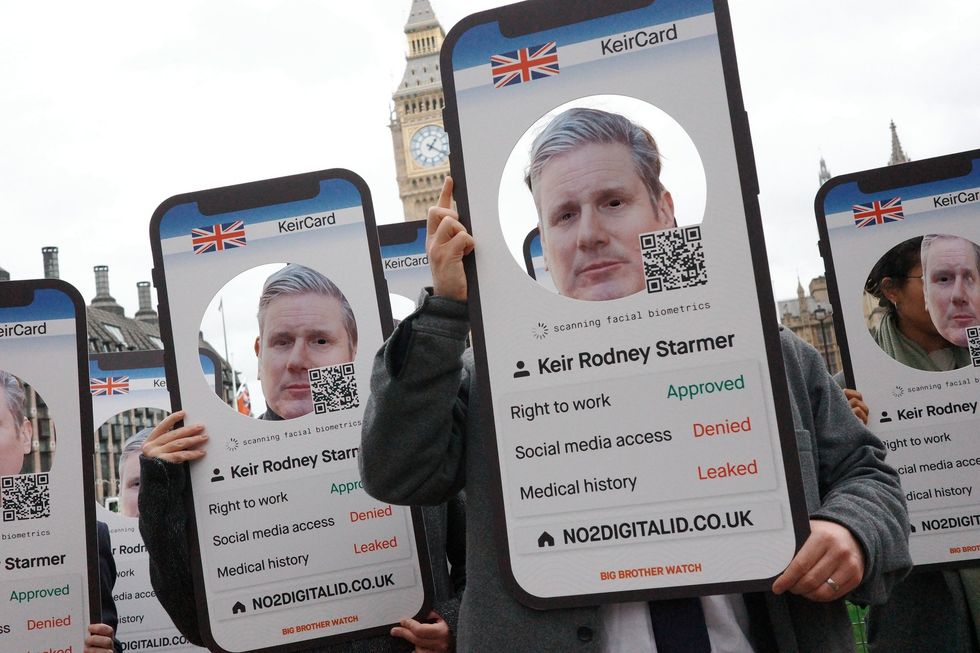
Speaking to GB News, Advocacy Manager at Big Brother Watch Matthew Feeney hit out at the policy, following a protest from the campaign group in Westminster today.
In further protest at the decision, a petition against the move by Labour has amassed almost three million signatures by furious Britons.
The petition, created by Maxim Sutcliff, has forced MPs to hold a debate on the policy, taking place in the House of Commons today.
Expressing his outrage at controversial plans, Mr Feeney told GB News: “Digital ID in Britain would be a revolution in our relationship between the citizen and the state.
“The Prime Minister might be pitching this as a means to make employment verification much easier, but I don’t think you need to have much of an imagination to think about how this could become very, very worrying if applied to other parts of our lives.”
Stressing the already “conflicting messages” already put out by the Government about the move, he added: “In fact, the Government has not been exactly clear.
“We’ve had conflicting messages about what this will be used for, but imagine this sort of scheme if it was around in February 2020, or given in the last year, how enthusiastic the Government has been to age-gate whole parts of the internet.”
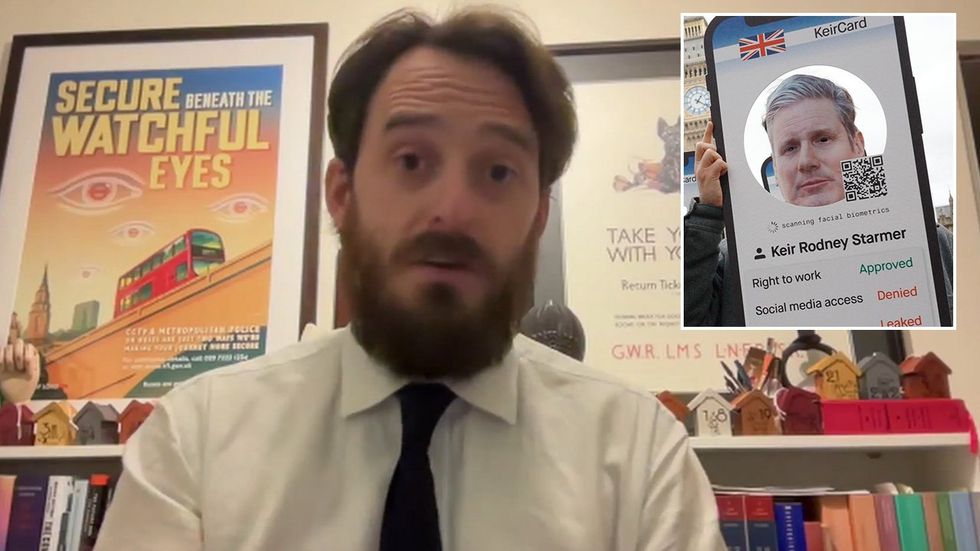
Criticising the scheme for posing a “significant threat” to Britons, the Big Brother Watch campaigner told the People’s Channel: “So I think not only is it unlikely that this scheme will not succeed in its stated goals, but it is a significant threat to our civil liberties.
“This country has thankfully traditionally not been a ‘papers please’ society – the last time we had anything like this was during World War two, but that’s a very telling example that was promised that it would only be something implemented during wartime.
“But it took until the 1950s for us to get our our freedoms back, so anyone telling you that a mandatory digital ID will only be used in certain circumstances just needs to take a look at history.”
Warning that the ID cards could be used increasingly against the freedom of Britons, Mr Feeney explained: “These kind of schemes very rarely stay in the box they arrived in, and often when it comes to pandemics, terrorist attacks and other tragedies, this sort of thing looks very attractive to Governments.”
LATEST DEVELOPMENTS
- Keir Starmer’s Digital ID scheme TORN APART after 2.9m sign petition opposing ‘mass surveillance’
- Keir Starmer’s ‘dystopian’ digital ID card scheme to cost £1.8BILLION over next three years
- Keir Starmer’s Digital ID scheme WILL ‘become target for Britain’s enemies’, former MI6 chief warns
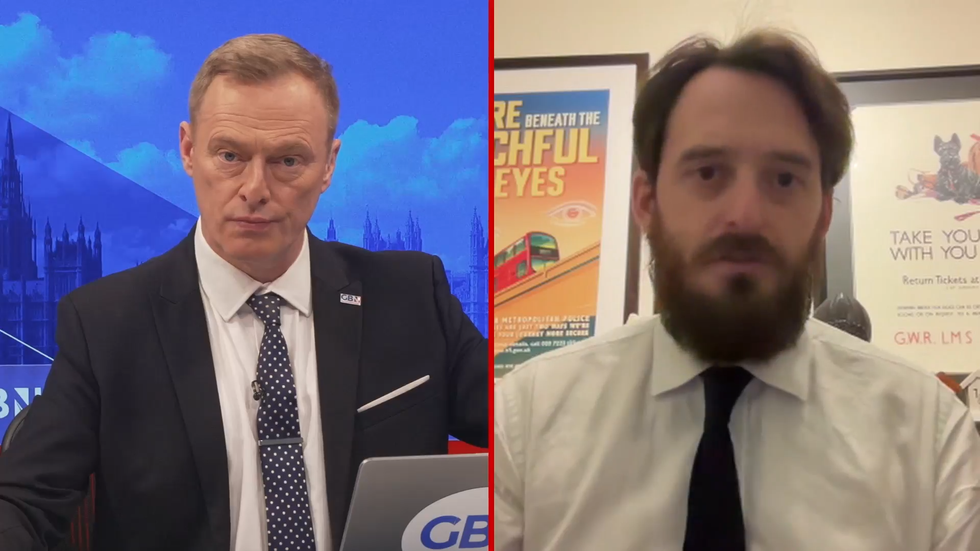
Hitting back at Mr Feeney, GB News Political Editor Christopher Hope questioned his “conspiracy theory” when it comes to digital IDs.
He fumed: “Oh come off it, Matthew. I think we are getting to a place where these are the conspiracy theorists gone wild, aren’t we? Why would you be denied social media access by the Government?”
Mr Feeney responded: “I don’t think it’s engaging in conspiracy theories, we’re just going off what the Government has said.
“We know that at least one minister has said that they want this to be the foundation of the revolution, to upend the legacy state. We’ve already seen the Government being enthusiastic about age-gating the internet by requiring people to see legal content online, to upload their faces or to verify their age.
“So it’s not at all conspiratorial or hyperbolic to think that a mandatory digital scheme for all people who want to work in the UK could be used for all different kinds of things in public services.”
He continued: “And I want to stress, we actually don’t have a codified real plan at the moment yet. It’s not clear at what age this will be required, if it’s for everyone who wants to work, or all kinds of details that I hope will be unveiled in the coming debate.
“But no, I don’t think it’s it’s hyperbolic or conspiratorial to base comments just on what the Government or its ministers have said.”
Casting severe doubt on the execution of the policy, Mr Feeney concluded: “It’s a lot of taxpayer money, and like many Government projects, I imagine it will be over budget and take longer than required.
“What I think is important to point out, though, is that this is being pitched and ultimately as an efficiency gain. But the Government hasn’t made the argument convincingly that this will save money on the front end.
“I think the answer to dealing with illegal immigration or employment fraud is not to put tens of millions of people into a digital ID scheme, especially given the history of Government shambles when it comes to digital infrastructure and leaks and so forth. This is not the right approach to a problem that I think many people are concerned about, but we really shouldn’t be sacrificing our civil liberties in this way.”
Our Standards:
The GB News Editorial Charter



Follow