



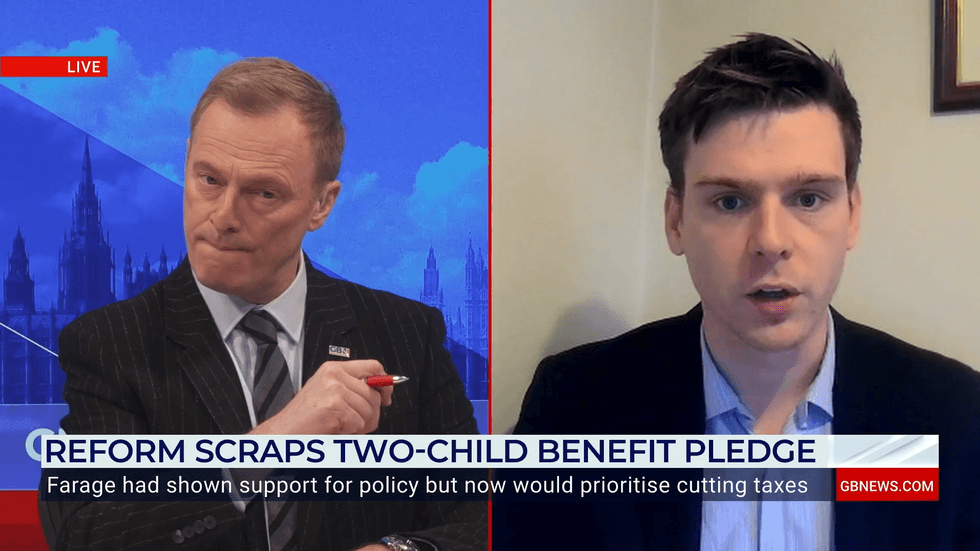
Rob Bates from the Centre for Migration Control has warned that the Department for Work and Pensions (DWP) is “reluctant” to release the full truth about who actually benefits from the multi-billion-pound two-child benefit cap policy, accusing the political establishment of ignoring the impact on the “White British working family”.
Mr Bates said on GB News a staggering discrepancy in family size exists across different demographics, arguing that the lifting of the cap creates a “perverse incentive structure” rather than helping the domestic fertility crisis.
Nigel Farage has promised to bring back the two-child benefit cap, just as Sir Keir Starmer’s Labour axed it in what critics are calling a multi-billion-pound “handout” for foreign-born families.
In a bold pivot, the Reform UK leader unveiled a plan to use the £3billion saved by reinstating the cap to slash the price of a pint and save the “dying” British pub.
Speaking to GB News, Mr Bates said: “I really think it is incumbent on politicians, frontbenchers and the Department for Work and Pensions to be honest with the British people about who is actually benefiting from this multi-billion-pound lifting of the cap.
“They are talking a good game about tackling child poverty, and there is an argument to be made that lifting the benefit cap could be a route to addressing a declining fertility rate.
“I would argue it is probably creating perverse incentive structures. A better way to do this is through tax relief and creating a more welcoming environment to bring children into the world.
“But I think this is really totemic of where the political class and the establishment are when it comes to the issue of migration they do not even consider it worthwhile investigating.
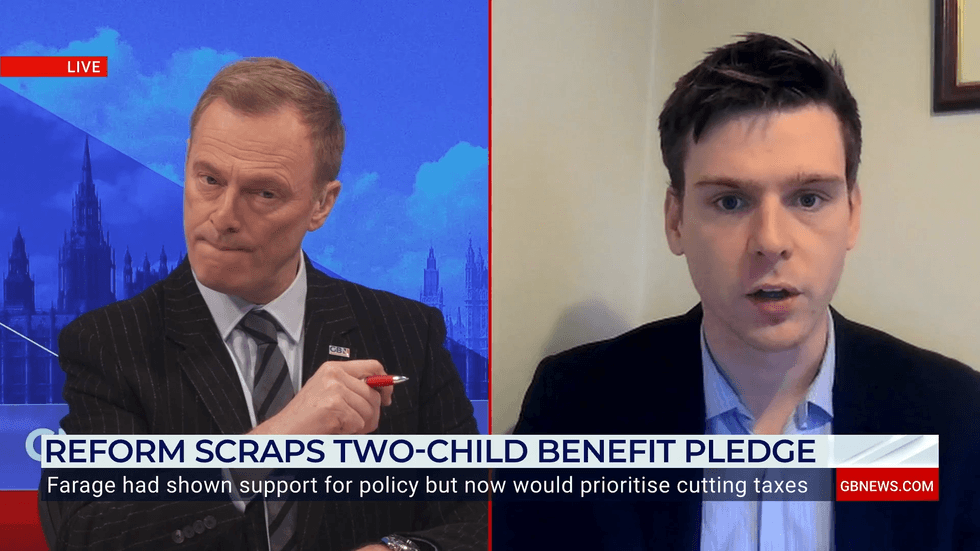
“The Department for Work and Pensions will have this information locked away somewhere, but it is very reluctant to produce it so the British public can see what is really going on.”
He added: “I think the way you go about backing families is by not burdening them with an ever-increasing tax bill, whether that is an escalating asylum budget or an escalating welfare budget for foreign nationals, and by giving them the tools to create a life for themselves where they are comfortable having more than two children.
“It does seem that we are stuck, as a country, in a declining fertility rate.
“Unfortunately, this Labour measure of lifting the cap is going to disproportionately benefit those that are more recent arrivals to the country, foreign-born families.”
LATEST IN UK POLITICS
- WATCH: Suella Braverman grills Keir Starmer on ‘abhorrent’ grooming gangs cover up in Rotherham
- Nigel Farage unveils plan to slash pint prices in bid to save Britain’s pubs
- Reform admits Kent County Council ‘Doge’ efforts failed to uncover major savings

Almost 350,000 families from foreign-born households are expected to benefit from changes announced in Chancellor Rachel Reeves’s latest Budget.
Analysis drawing on Freedom of Information requests and 2021 Census data suggests families with roots in Pakistan and Bangladesh are set to receive the largest share of the additional support.
The payments will go to households with three or more children after Ms Reeves scrapped the two-child benefit cap.
Research by Conservative MP Nick Timothy estimates that around 341,735 migrant families will gain as a result of the move.
Families with roots in Pakistan make up the largest group, with 59,948 households in the UK containing three or more children.
Bangladesh is next with 26,294 such families, followed by Nigeria and Somalia, which account for 22,838 and 17,407 households respectively.
Data from 2021 shows that foreign-born families made up around a third of all UK households with more than three children. That figure predates the surge in non-EU migration following the pandemic often referred to as the “Boriswave” suggesting the true proportion could now be significantly higher.
Overall, there are 710,882 households, British and foreign-born, with three or more children currently claiming Universal Credit.
Our Standards:
The GB News Editorial Charter



Follow