



Vladimir Putin’s press secretary on Sunday praised U.S. President Donald Trump’s controversial new National Security Strategy as largely in line with Russia’s view of the world.
Moscow’s public acknowledgement of the alignment between the former Cold War enemies underlines how much cozier their relationship has become since Trump returned to office earlier this year.
“The adjustments we are seeing, I would say, are largely consistent with our vision, and perhaps we can hope that this could be a modest guarantee that we will be able to constructively continue our joint work on finding a peaceful settlement in Ukraine, at the very least,” said Dmitriy Peskov per local media.
In an interview, Peskov said Trump’s administration differs fundamentally from previous U.S. governments and that the president is able to change the country’s foreign policy orientation because he is “strong”.
Trump’s strategic roadmap, released Dec. 4, announced no less than a realignment of the geopolitical order and echoed the themes of the racist “Great Replacement Theory” to claim that Europe faces ‘civilizational erasure’, including from migration.
The U.S., which has been an interventionist power globally since the end of the Second World War, is shifting its focus to the Western hemisphere, according to the document — which Peskov noted does not refer to Russia as an adversary, unlike previous iterations.
The document also casts doubt on whether some European nations are reliable long-term members of NATO. The alliance was forged between the U.S. and European nations to counter an expansionist Soviet Union at the end of the 1940s.
Critics of NATO often point to the alliance’s post-Cold War eastward enlargement as a provocation to Moscow. Whether Kyiv, too, should be able to join NATO after the end of Russia’s war on Ukraine remains a key point of disagreement in ceasefire negotiations.
The alliance — which Trump has publicly undermined on numerous occasions — has struggled for influence in U.S.-brokered peace talks between Russia and Ukraine.
The NSS document outlined Washington’s intention to focus on “ending the perception, and preventing the reality, of NATO as a perpetually expanding alliance.”
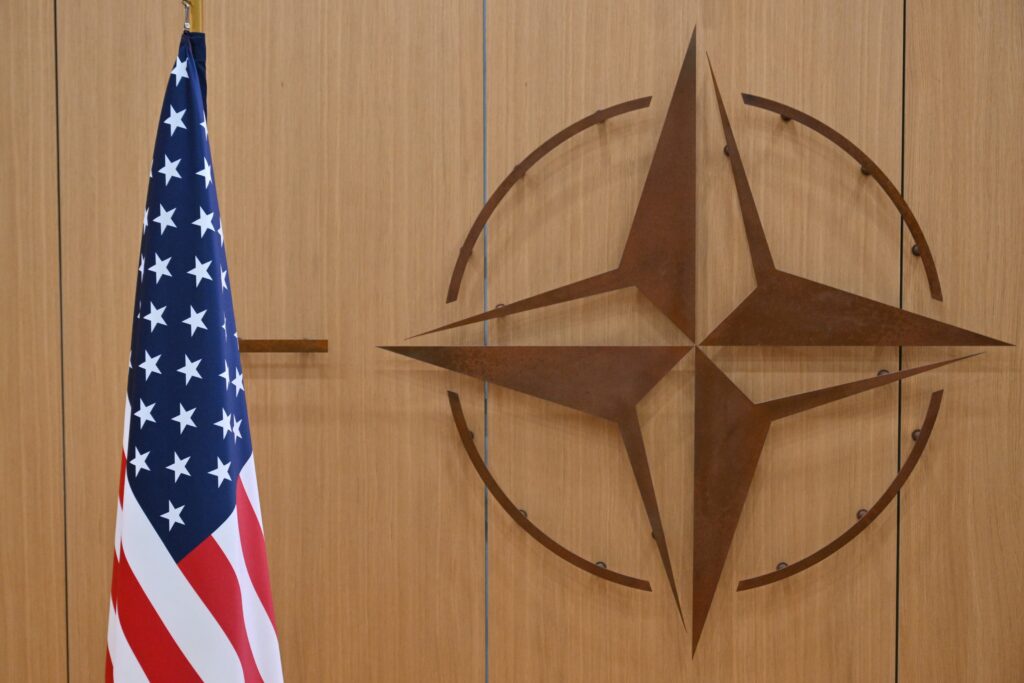
Peskov cautiously welcomed this aspect of the plan, calling it “gratifying on the one hand.”
“But on the other hand, we know that sometimes, while everything is conceptually beautifully written, what they call the deep state does things differently. That happens, too,” he added.
The so-called deep state, a rhetorical punching bag for Trump and his allies, as well as others including in European countries, can refer to anything from a slow-moving bureaucracy that prevents elected politicians from enacting change, to conspiracy theories about elites that allegedly control governments from the shadows.
France’s Valerie Hayer, head of the European Parliament’s centrist Renew grouping, called the NSS document “unacceptable and dangerous” while German Foreign Minister Johann Wadephul said that Europe does not need “outside advice” — but called the U.S. “our most important ally in the [NATO] alliance.”



Follow