



Yesterday, I was addressing the Free Speech Union at a dinner as we face a mighty assault on our liberties.
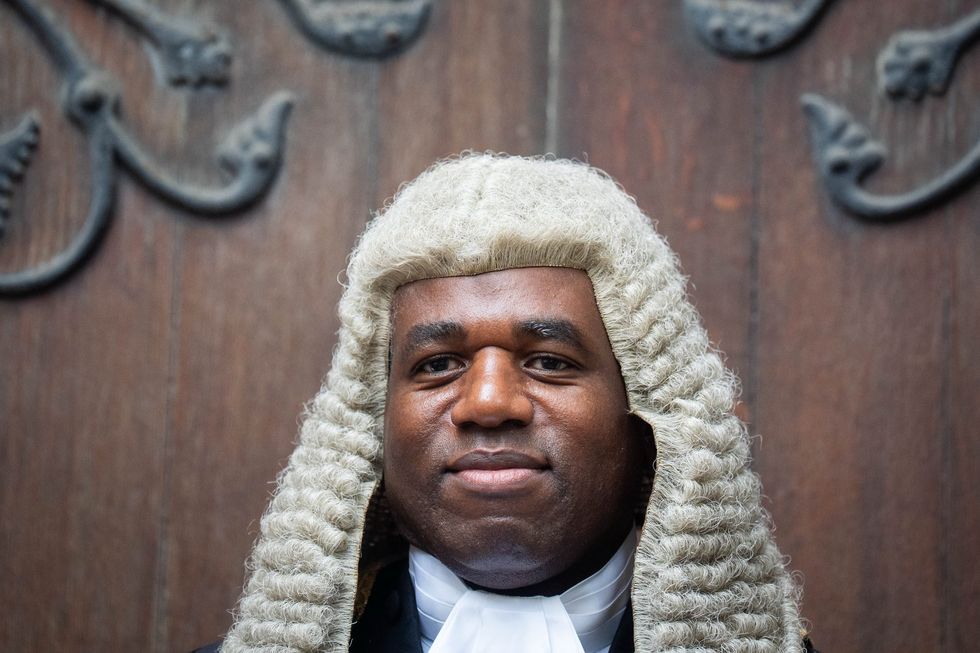
Today, the Lord Chancellor announced that the Government will remove jury trials for offences carrying a sentence of under three years.
Speaking in the Commons, David Lammy said: “First, I will create new swift courts within the Crown Court, with a judge alone deciding verdicts in either way cases with a likely sentence of three years or less, as Sir Brian recommends.
“Sir Brian estimates that they will deliver justice at least 20 per cent faster than jury trials.”
The decision is being presented as a pragmatic means to clear backlogs in the judicial system and delays in the Crown Court, but the principle of trial by jury is crucial in a free society.
Jury trials, amongst the oldest and most effective checks on state power, Britain is governed by consent, and when the Government pursues an aggressive or overzealous prosecution, the jury of 12 can prevent totalitarianism.
Juries can moderate the state. They can refuse to convict when the law is being applied unjustly.
Think of the Seven Bishops case in 1688, a landmark trial in which a jury acquitted seven Anglican bishops accused of seditious libel for petitioning King James II and becoming a public rejection of royal absolutism, and interestingly, leading directly to the Glorious Revolution.
Leading nobles wrote to invite William of Orange over on the day the acquittal was announced.
So the importance of the jury system in our Constitution is hard to overstate.
The jury acquitted not only because the Crown wanted it not to, but because the people saw the wider context. That is what the Government is removing.
Whenever a Government wants more control, it doesn’t announce it openly, but it quietly erodes the mechanisms that limit it. The latest example is, of course, digital ID cards.
LABOUR LATEST:
- WATCH: Robert Jenrick brutally slaps down Justice Secretary over plans to scrap juries
- Robert Jenrick issues dire free speech warning over David Lammy’s jury trials revamp: ‘Shameful!’
- David Lammy slammed by lawyers over ‘terrible’ plans to scrap juries as ‘appalling’ loss for liberty
What the state can track, it can tax, what it can identify, it can monitor, and when you can monitor people, it becomes easier to prosecute them without the tiresome inconvenience of a jury.
Actions that were once beyond state power become possible. That is how free societies become unfree, not in one leap, but by the erosion of the institutions that stand between the citizen and the state.
This is a free speech issue. The judiciary doesn’t much like being scrutinised.
The Lord Chief Justice moaned like a moaning Minnie when she was criticised by the leader of the opposition and the Prime Minister earlier this year, and they’d they hide behind privacy protections that they created.
And judges should be open to criticism. They’re insulated from the public and cannot be trusted or relied on to hold the state to account.
One of the founding Fathers of the United States, Benjamin Franklin, said those who would give up a central liberty to purchase a little temporary safety deserve neither liberty nor safety.
And the blob is, of course, trying to hide behind convenience.
We will be told that jury trials are slow, bothersome and that some shortening of the process makes things simpler and easier.
But convenience is not constitutionally correct. It’s ludicrous to remove ancient safeguards because the Government of the day finds them inconvenient and it’s too incompetent to make sure trials happen in a timely way.
We actually need more juries, not fewer. We need more decisions made by citizens, not more power in the hands of lefty judges.
And we don’t need judges protected by privacy laws that distance them from the public.
The danger is that once these changes become normal, and we accept that the state can track, identify and prosecute more easily, these fundamental freedoms are not easily won back.
The erosion of liberty is not sudden, but incremental. Removing trial by jury is the start of something more worrying.
Our Standards:
The GB News Editorial Charter



Follow