




Universal Credit claims have surged over the past year with more than three million individuals applying for health-related support to the Department for Work and Pensions (DWP), new figures have found.
These new claims for the primary out-of-work benefit have risen by nearly one million since Labour returned to Government, with said claims being primarily for those with a disability or health condition.
Based on the latest DWP figures, the number of Britons claiming Universal Credit because of poor health has increased by 41 per cent in the 12 months to September 2025 .
For context, this represents a jump of 933,000 claims which brings the total number of people claiming Universal Credit in Britain to a record 3.2 million for this financial year.

Some 2.5 million, or 77 per cent, of claimants were considered to have a “limited capability for work and work-related activity”, which means they can claim payments without having to look for a job.
DWP data found the proportion of people claiming Universal Credit health payments with no requirement to look for work soared by 54 per cent between 2020 and 2025.
Furthermore, the Government department notes most of the 933,000 new claimants over the past year is due to benefit recipients being moved from the old Employment and Support Allowance (ESA) onto the Universal Credit health component.
Without this “migration” to Universal Credit, the number of Britons in receipt of incapacity benefits had increased by about 208,000 people over the past year, the DWP claims.
Despite this, the department’s figures revealed that there was 1.1 million individuals getting the health component of Universal Credit who had been transitioned from ESA out of the total 3.2 million as of September 2025.
Some 90 of this subgroup are not required by the DWP to looking for employment despite getting benefits, which has received pushback from Conservative Party MPs.
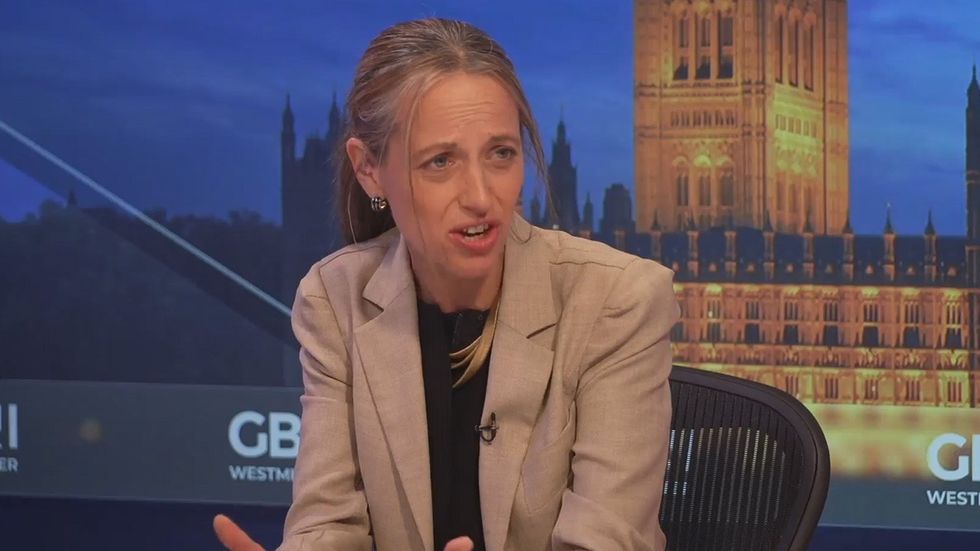
Shadow Work and pensions secretary Helen Whately accused Labour has “no grip on welfare” with “more money going out to people with no requirement to work or look for work”.
She said: “We know some people are too sick to work, but even if you put to one side those transitioning from older sickness benefits, this is still a 10 per cent increase. The UK can’t be getting that much sicker, that fast.”
“That’s why the Conservatives are reviewing the benefits system, and we will limit support for those claiming only with low-level mental health conditions and bring down the ballooning welfare bill.”
These latest figures from the DWP come after a new study found thousands of Britons have switched to claiming disability benefits after seeing their welfare payments cut.
A report from the Institute for Fiscal Studies (IFS) looked into multiple benefit cuts carried out by the previous Conservative Government, with many cases finding each welfare reform pushed people to claim disability support.
Eduin Latimer, one of the report’s authors, said: ‘Across four different reforms, we find an unintended consequence of benefit cuts – that they lead to more people claiming disability benefits. These effects will likely also have a long-term legacy, as people often stay on disability benefits for many years.”
LATEST DEVELOPMENTS
- State pension ‘timebomb’ as 25 MILLION retirees at risk if triple lock axed
- State pension triple lock ‘BANKRUPTING’ Britain as Labour begged to axe payment hike for retirees
- DWP issues £105 extra state pension payment for a specific age group
DWP statistics reveal that almost two in five people claiming Universal Credit are now doing so because of their health , which is up by seven percentage points from September 2024.
As of September 2025, around 294,000 people were awaiting the decision of a Work Capability Assessment (WCA), 430,000 had a limited capability for work (LCW), and 2.5 million were found to have as limited capability for work and work-related activity (LCWRA) so are “not required to undertake any interviews or work-related activity”.
On the figures, a DWP spokesman: ‘The number of people on incapacity benefits has increased by 6 per cent over the past year. The vast majority of the increase in the UC Health caseload is because the decision was taken by the last government to move sick and disabled people from Employment and Support Allowance onto Universal Credit – a transition we inherited, along with a system where the incentives were wrong and health claims had been growing since 2019.
“We’re determined to fix the broken system we inherited and are removing the financial incentives in Universal Credit that discourage work, and we have redeployed 1,000 work coaches to help thousands of sick and disabled people who were previously left without contact for years.”
Our Standards:
The GB News Editorial Charter



Follow