



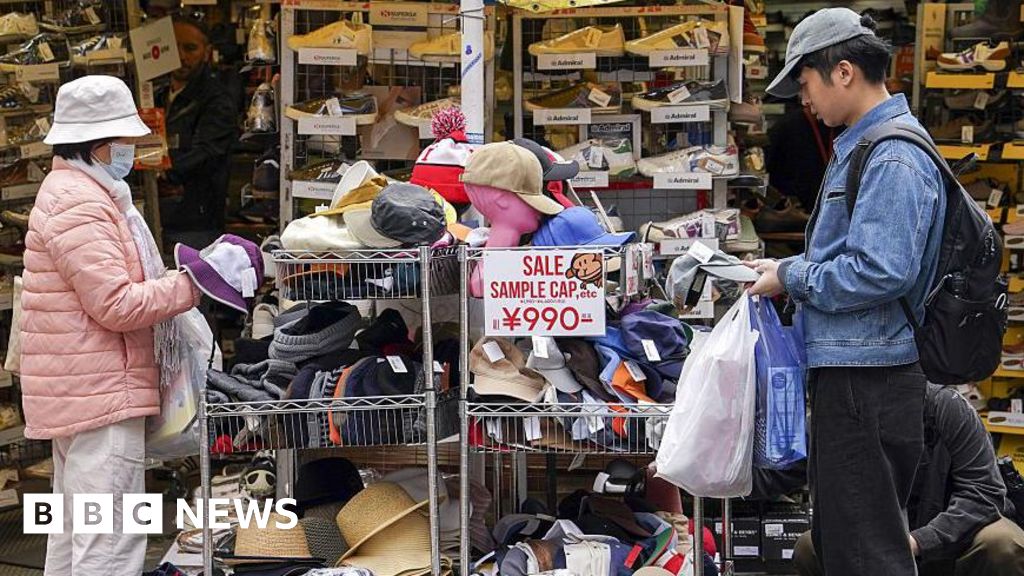
Japan’s central bank has raised its main interest rate to the highest level in 30 years as the country faces a cost-of-living squeeze.
In a widely expected decision, the Bank of Japan’s policy board, led by governor Kazuo Ueda, increased its benchmark rate by a quarter of a percentage point to “around 0.75%” on Friday.
The move comes as new Prime Minister Sanae Takaichi is keen that inflation comes down but also needs the cost of government borrowing to be cheap.
It marks both the first time the BOJ has hiked rates since January and the first rise since both Takaichi and Ueda took up their current roles.
When a central bank raises interest rates it tends to have the effect of increasing the value of the country’s currency.
In Japan’s case, it has the potential of easing inflation as the yen’s low value versus other major currencies, like the US dollar and the euro, has pushed up the cost of imports, which in turn has helped to fuel inflation.
At the same time, higher interest rates push up government borrowing costs because when rates go up governments, like anyone else, have to pay more to borrow money.
Last year, Takaichi described the idea of a rate hike as “stupid” although she has not publicly criticised Ueda’s policies since she took office in October.
Still, Takaichi has made the fight against inflation a priority as rising costs have eroded support for her party, the LDP.
On Friday, official figures showed Japan’s inflation, excluding food and fuel, rose by 3% in November. That remains above the bank’s target rate of 2%.
But Shoki Omori, chief strategist at Mizuho in Tokyo, told the BBC that the interest rate rise will do little to ease inflation as it has already been priced in by currency markets and the yen remains relatively weak.
Most economists expect the BOJ to raise its benchmark interest rate once more next year to hit 1%.
It marks a major change in Japanese policy makers’ approach to interest rates.
“What we’re seeing is a historic shift after nearly three decades of long standing low rates in Japan,” said Julia Lee from Pacific FTSE Russell, part of the London Stock Exchange Group.
But Takaichi’s stance on monetary policy may make it harder for the bank to hike again, said Shigeto Nagai, head of Japan economics at Oxford Economics.
“The BoJ will need time, probably around six months, to monitor the impact of the rate hike on the real economy before it makes its final move,” he said.
The BOJ’s latest rate rise comes as other major central banks around the world are moving in the opposite direction – lowering the cost of borrowing.
On Thursday, the Bank of England cut its main interest rate to 3.75%, the lowest level since February 2023.
Last week, the US Federal Reserve lowered interest rates for the third time this year, even as internal divisions create uncertainty about additional cuts in the coming months.
The central bank said it was lowering the target for its key lending rate by 0.25 percentage points, putting it in a range of 3.50% to 3.75% – its lowest level in three years.



Follow