



 Danielle Kaye
New York business reporter
 Reuters
Last week, the Federal Reserve lowered interest rates for the third time this year – but the decision was not unanimous. Internal divisions are creating uncertainty about additional cuts in the coming months.
A lot could depend on incoming data on the jobs market and inflation.
Policymakers disagree about how the US central bank should balance competing priorities: a weakening job market on the one hand, and rising prices on the other. The Fed typically cuts interest rates when it thinks the job market needs a boost and raises them when it thinks prices are rising too quickly.
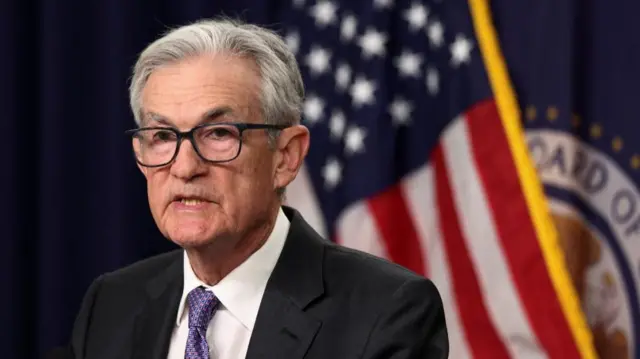
Fed chair Jerome Powell said last week that central bankers needed time to see how the Fed’s three cuts this year work their way through the US economy, adding that they will closely examine new data ahead of the Fed’s next meeting in January.
“We are well-positioned to wait to see how the economy evolves,” Powell told reporters.
The Fed is facing a “very challenging situation” as it confronts risks of rising inflation and unemployment, Powell said, adding: “You can’t do two things at once”. He warned that jobs data could be overestimating hiring.
Wall Street investors will also be monitoring today’s jobs numbers for signs of how they might influence future interest rate decisions.
“As long as the numbers don’t suggest employment is falling off a cliff, the markets may embrace soft data because it could lead to a more-dovish Fed,” says Chris Larkin, managing director of trading and investing at E*TRADE from Morgan Stanley.



Follow