



While U.S. President Donald Trump brashly cited the Monroe Doctrine to explain the capture of Venezuelan strongman Nicolás Maduro, he didn’t leave it there. He also underscored a crude tenet guiding his foreign adventures: “It’s important to make me happy,” he told reporters.
Maduro had failed in that task after shunning a surrender order by Trump — hence, he was plucked in the dead of night by Delta Force commandos from his Caracas compound, and unceremoniously deposited at New York’s Metropolitan Detention Center.
Yet despite the U.S. president’s admonishment about needing to be kept happy — an exhortation accompanied by teasing hints of possible future raids on the likes of Cuba, Colombia and Mexico — one continent has stood out in its readiness to defy him.
Maduro’s capture has been widely denounced by African governments and the continent’s regional organizations alike. South Africa has been among the most outspoken, with its envoy to the U.N. warning that such actions left unpunished risk “a regression into a world preceding the United Nations, a world that gave us two brutal world wars, and an international system prone to severe structural instability and lawlessness.”
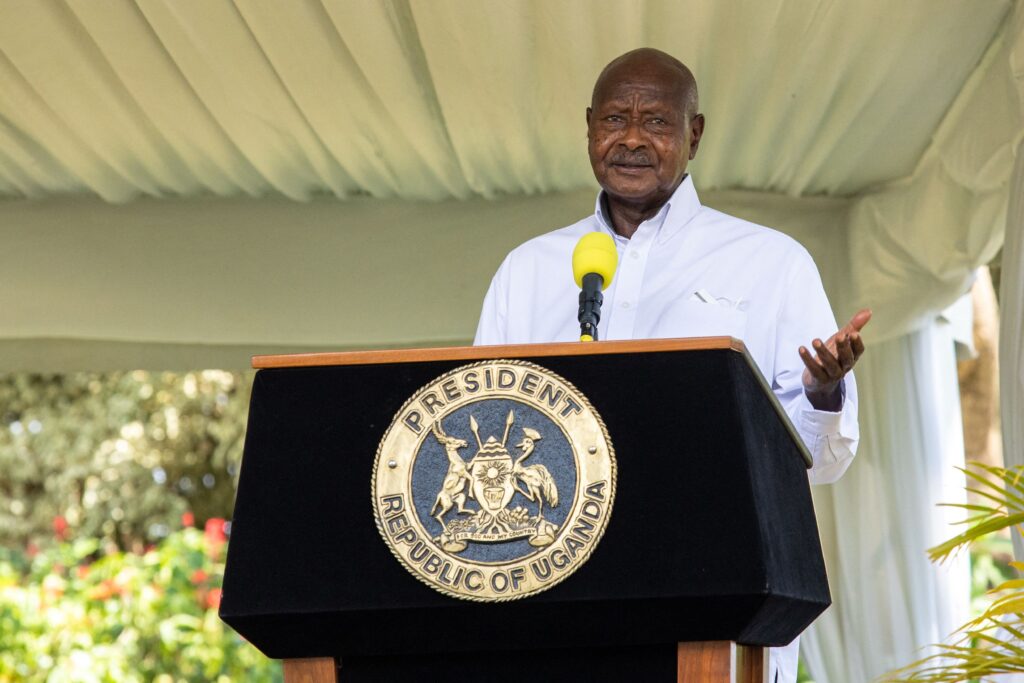
Both the African Union, a continent-wide body comprising 54 recognized nations, and the 15-member Economic Community of West African States have categorically condemned Trump’s gunboat diplomacy as well. Ugandan President Yoweri Museveni even had the temerity to issue a blunt dare to Washington: If American forces attempt the same trick in his country, he bragged, “we can defeat them” — a reversal of his 2018 bromance with the U.S. president, when he said he “loves Trump” because of his frankness.
Africa’s forthrightness and unity over Maduro greatly contrasts with the more fractured response from Latin America, as well as the largely hedged responses coming from Europe, which is more focused on Trump’s coveting of Greenland.
Fearful of risking an open rift with Washington, British Prime Minister Keir Starmer waited 16 hours after Maduro and his wife were seized before gingerly stepping on a diplomatic tightrope, careful to avoid falling one way or the other. While highlighting his preference for observing international law, he said: “We shed no tears about the end of his regime.”
Others similarly avoided incurring Trump’s anger, with Greek Prime Minister Kyriakos Mitsotakis flatly saying now isn’t the right time to discuss Trump’s muscular methods — a position shared by German Chancellor Friedrich Merz.
So, why haven’t African leaders danced to the same circumspect European tune?
Partly because they have less to lose. Europe still harbors hope it can influence Trump, soften him and avoid an irreparable breach in the transatlantic alliance, especially when it comes to Greenland, suggested Tighisti Amare of Britain’s Chatham House.
“With dramatic cuts in U.S. development funds to Africa already implemented by Trump, Washington’s leverage is not as strong as it once was. And the U.S. doesn’t really give much importance to Africa, unless it’s the [Democratic Republic of the Congo], where there are clear U.S. interests on critical minerals,” Amare told POLITICO.
“In terms of trade volume, the EU remains the most important region for Africa, followed by China, and with the Gulf States increasingly becoming more important,” she added.
Certainly, Trump hasn’t gone out of his way to make friends in Africa. Quite the reverse — he’s used the continent as a punching bag, delivering controversial remarks stretching back to his first term, when he described African nations as “shithole countries.” And there have since been rifts galore over travel bans, steep tariffs and the dismantling of the U.S. Agency for International Development, which is credited with saving millions of African lives over decades.
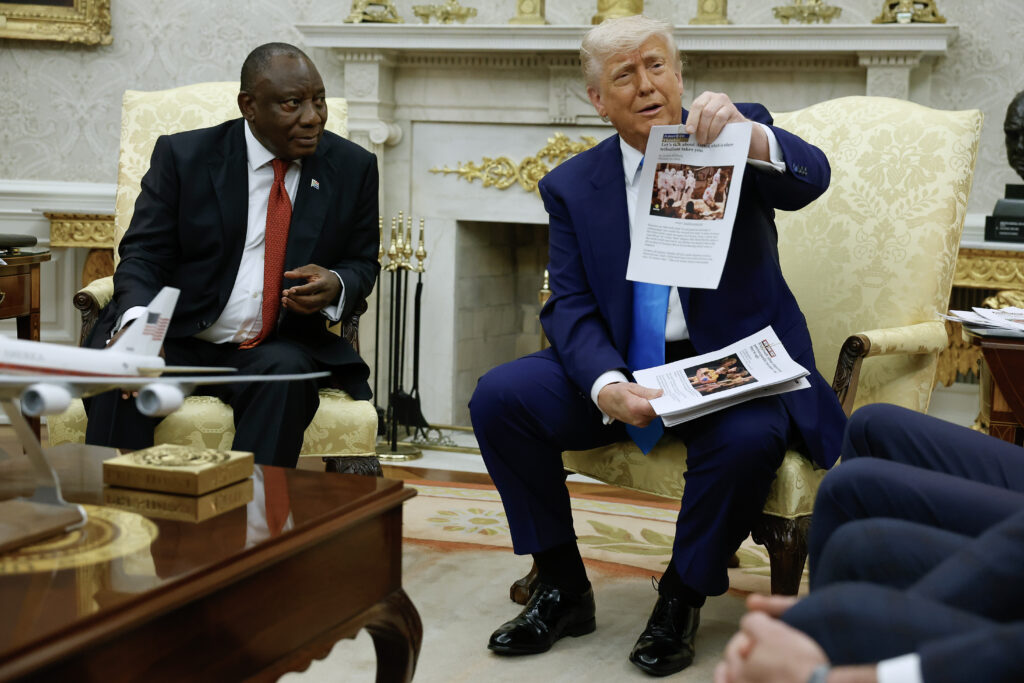
In May, Trump also lectured South African President Cyril Ramaphosa in the Oval Office over what he claimed amounted to genocide against white South Africans, at one point ordering the lights be dimmed to show clips of leaders from a South African minority party encouraging attacks on the country’s white population. Washington then boycotted the G20 summit hosted by South Africa in November, and disinvited the country from this year’s gathering, which will be hosted by the U.S.
According to Amare, Africa’s denunciation of Maduro’s abduction doesn’t just display concern about Venezuela; in some part, it’s also fed by the memory of colonialism. “It’s not just about solidarity, but it’s also about safeguarding the rules that limit how powerful states can use force against more vulnerable states,” she said. African countries see Trump’s move against Maduro “as a genuine threat to international law and norms that protect the survival of the sovereignty of small states.”
Indeed, African leaders might also be feeling their own collars tighten, and worrying about being in the firing line. “There’s an element of self-preservation kicking in here because some African leaders share similarities with the Maduro government,” said Oge Onubogu, director of the Africa Program at the Center for Strategic and International Studies. “In some countries, people on the street and in even civil society have a different take, and actually see the removal of Maduro as a good thing.”
The question is, will African leaders be wary of aligning with either Russian President Vladimir Putin or China’s Xi Jinping, now that Trump has exposed the impotence of friendship with either by deposing the Venezuelan strongman? According to Onubogu, even before Maduro’s ouster, African leaders understood the world order had changed dramatically, and that we’re back in the era of great power competition.
“Individual leaders will make their own specific calculations based on what’s in their favor and their interests. I wouldn’t want to generalize and say some African countries might step back from engaging with China or Russia. They will play the game as they try to figure out how they can come out on top.”



Follow