



ANTWERP, Belgium — European leaders can’t just blame the red tape merchants in Brussels for the EU’s economic weakness and must slash back their own national bureaucracies and protectionist rulebooks.
That’s the message European Commission President Ursula von der Leyen is delivering as she heads into Thursday’s European Council retreat in the castle of Alden Biesen in the Belgian countryside for a meeting dedicated to reviving flagging EU competitiveness.
Fears about Europe’s waning industrial power relative to the U.S. and China are reaching fever pitch, but the EU institutions in Brussels are at loggerheads with national capitals such as Berlin and Rome over who to blame for bureaucratic overkill.
Sensing Thursday’s Council meeting could turn into an ambush, with European leaders ganging up to bash Brussels for overburdening industry with rules on everything from chemicals to cattle, von der Leyen hit back in two pre-Council speeches on Wednesday.
“We must also look at the national level … the extra layers of national legislation that just make businesses’ lives harder and create new barriers in our single market,” she said in her first speech, to the European Parliament in Strasbourg.
She was identifying long-standing grievances that Europe is still awash with regulatory hurdles that prevent the 27 member countries from effectively working as one joint commercial zone.
These complaints range from national barriers thwarting the formation of a Continent-wide capital market, through to non-recognition of professional qualifications across EU countries and labeling rules that prevent resale of products abroad.
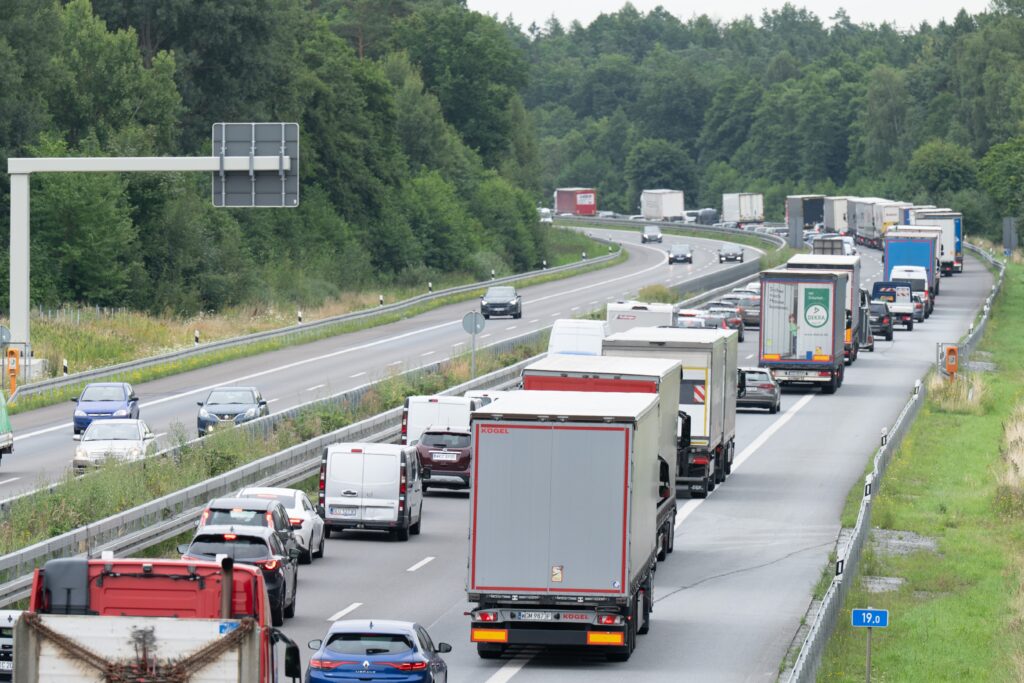
Offering one frustrating example of failure in the internal market, she explained that a truck can carry 44 tonnes on Belgian roads, but only 40 tonnes on French roads, creating problems for cross-border trade.
“We proposed legislation to harmonize this. Almost two years later, it is still under discussion,” she complained.
Von der Leyen has already introduced 10 omnibuses — legislation-slashing packages designed to reduce the burden of red tape, part of a plan to save €15 billion a year. But she is insistent that others aren’t doing their part.
In her second speech, at an industrial summit in Antwerp, she tackled the same theme, underlining dysfunction among the national capitals.
“Shipping waste from one member state to another should be efficient, easy, and quick. But different national practices … make it extremely complex. And some member states, for example, only accept correspondence by fax. It can take several months for traders to get a green light from the authorities depending on the different rules of the different member states,” she said.
Still bashing Brussels
If you ask the capitals who’s to blame for overregulation strangling business, it’s Brussels.
In the run-up to the Alden Biesen meeting, Germany and Italy drafted a document insisting the EU should “limit itself” in pursuit of new rules. “New legislative proposals that are expected to introduce [an] excessive additional administrative burden, should be withdrawn or not be tabled in the first place,” Rome and Berlin said in the joint paper.
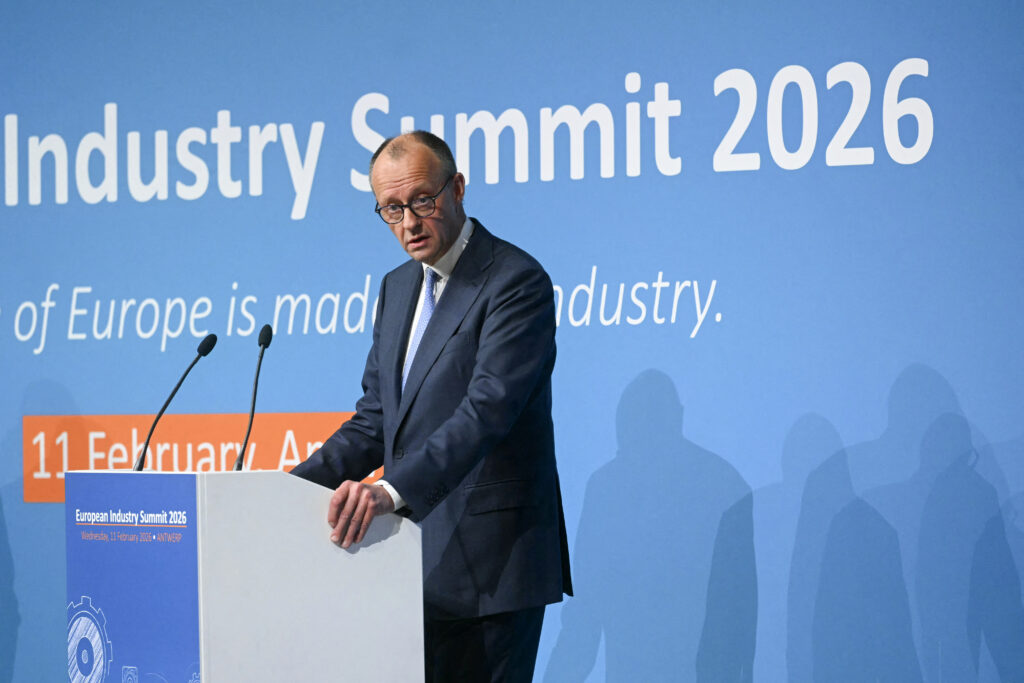
German Chancellor Friedrich Merz doubled down on that line, deflecting responsibility for his country’s sluggish growth onto Brussels in a speech Wednesday night.
When it comes to cutting red tape, “I know that these institutions in the European Union are not as fast as they should be,” he said. “We are fighting against the machinery which is working and working, and producing and producing new regulations.”
“The bottleneck for us is parts of the European Commission and unfortunately parts of European Parliament,” he continued. “I’m hearing that Ursula von der Leyen and others are making the way open to reduce red tape fundamentally. But we are frankly, we are not there where we should be. And this is hard work, but we are doing that work.”
One European diplomat, granted anonymity to speak frankly, said capitals attacking Brussels “is a part of the game” — even if that “blame game” stood in the way of delivering concrete changes to improve the economy.
“National policymakers want to stick to their very national solutions that are, of course, undermining the internal market,” said Georg Zachmann, an economic policy expert at the Bruegel think tank in Brussels. The result, he said, is “a power struggle that leads to this bureaucratization” as the EU and its member countries try to out-legislate each other.
Merz’s arguments are indeed receiving short shrift in the Brussels institutions.
One EU official was quick to point the finger at capitals: “Leaders need to give a clear signal to their capitals to work on bringing down barriers and cutting red tape. From the EU institutions’ side, it is important to see what else can be done to avoid different interpretations of our decisions. This will be part of the discussions in Alden Biesen.”
Long frustration
The frustration from the European Commission has been building for a long time.
The EU’s industry commissioner, Stéphane Séjourné, has emerged as a key enforcer of closer internal market integration, coming up against skeptical national governments.
In a letter sent to capitals late last year, seen by POLITICO, the French centrist politician warned the bloc’s actions “need to be complemented with urgent and concrete actions by all Member States to champion the Single Market and, not least, to address specific barriers at national level.”
As part of that drive, Séjourné mapped out a list of the “Terrible Ten” barriers harming the single market and called on capitals to give prior notice of legislation that could create new obstacles. In addition, he said, governments should “name a high-level Single Market Sherpa” who can act as a point person for the critical policy area in Brussels amid fears it too often falls through the gaps between ambassadors and ministers.
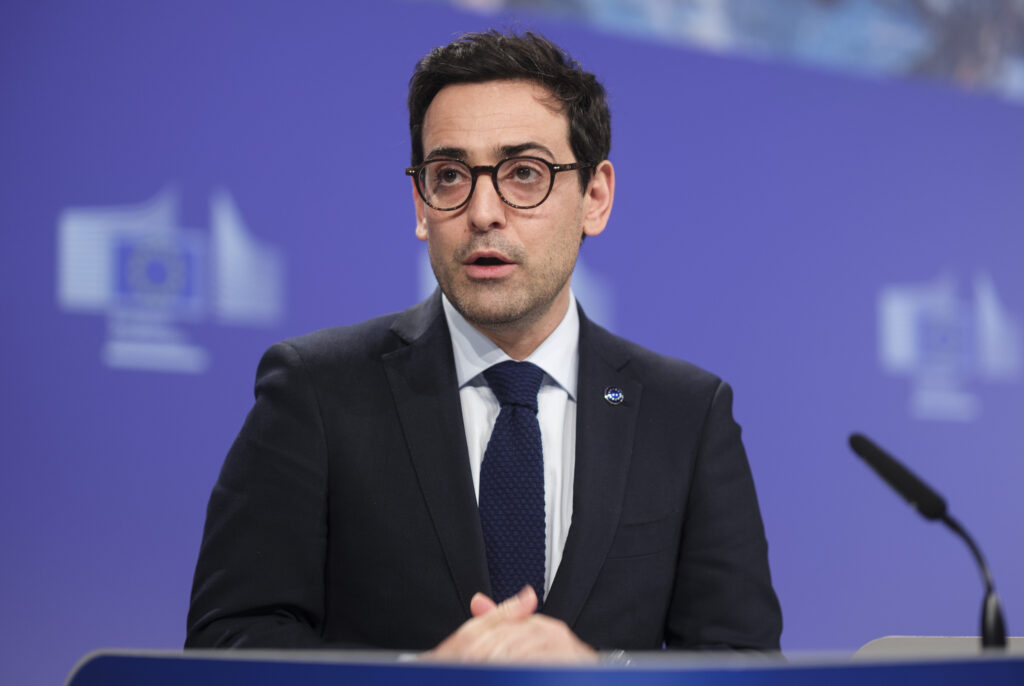
“Discussions on the single market have lasted long enough,” Séjourné told POLITICO ahead of Thursday’s talks. “The Commission has done its job identifying single market barriers, country by country, and sector by sector. But it is now for member states to take their responsibilities and actively remove those barriers. We will chase them as far, and fast, as we need to.”
A second national diplomat said those pushing the Commission to act “have a bit of a point” because the bloc’s executive has powers to strengthen the single market it is not using. The reason it isn’t using them, though, the diplomat admitted, is because “they are afraid of political backlash if they touch some national holy cows, like Italian beaches or French skiing instructors,” referring to two notorious cases of alleged protectionism.
“It’s a bit like this Spider-Man meme … The Commission will continue to propose legislation as the main solution to any problem they identify. But I’m not sure member states as a group are much better.”



Follow