



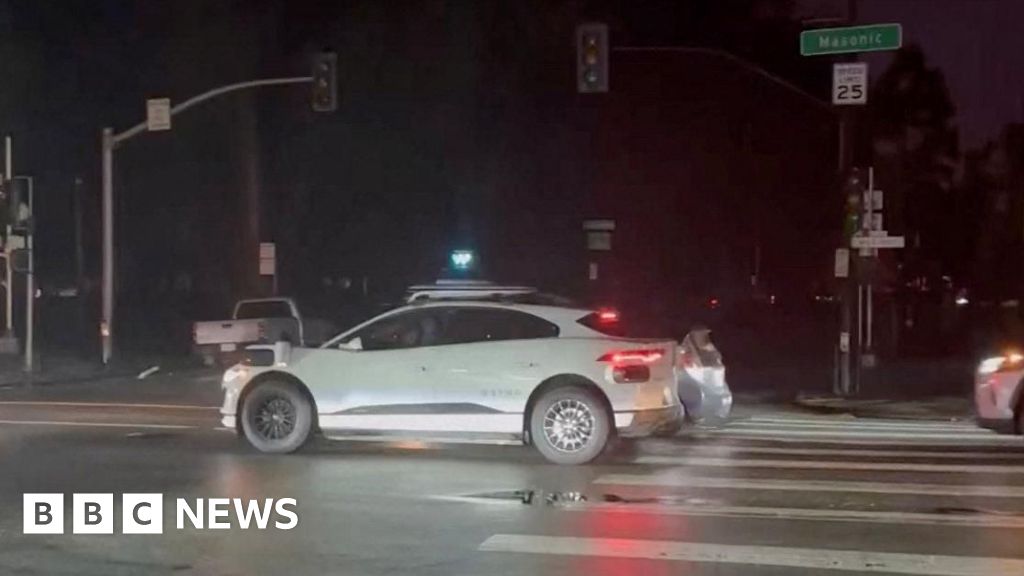
A massive power outage in San Francisco over the weekend led Waymo self-driving taxis to stop working around the city.
“Significant and extensive” damage from a fire in a substation caused the Saturday afternoon outage that left more than 100,000 customers without power, utility provider PG&E said in a statement.
Videos posted to social media showed Waymo robotaxis halted in the middle of city streets and intersections with their hazard lights flashing, as traffic jams grew and drivers zigzagged around the stopped cars.
Waymo initially paused all service in the Bay Area following the outage, but has since resumed its operations, a spokesperson said in a statement.
During the outage, many traffic signals stopped working, city officials said, and Mayor Daniel Lurie deployed police officers, fire crews, and others to help with the flow of cars on the roads. Some commuter train lines and stations shut down, as well.
Waymo said it was working with city officials throughout the outage
“While the Waymo Driver is designed to treat non-functional signals as four-way stops, the sheer scale of the outage led to instances where vehicles remained stationary longer than usual to confirm the state of the affected intersections,” a Waymo spokesperson said in a statement provided to the BBC.
That “contributed to traffic friction during the height of the congestion,” they added.
But, the majority of Waymo’s active trips were completed before vehicles were returned to depots or pulled over, the spokesperson said.
As of Sunday afternoon, PG&E said it had restored power to all but 17,000 customers and that it expected to bring power back to the remaining customers by Monday afternoon.
Waymo said its ride-hailing services in the city have resumed.
Owned by same the same parent company as Google, Waymo operates throughout the San Francisco Bay Area as well as Los Angeles, Phoenix, Austin, Atlanta, Miami and other cities in Texas. It expects to offer rides in London and Washington, DC, next year. The company recently said it provided more than 14 million trips in 2025, three times the number of rides in 2024.



Follow